



Young Innovators From TIP Manila Sign Deal With DOST To Develop Bio-Cutlery
The biodegradable utensils will be made primarily of mycelium, which is what “mushrooms are made of.”
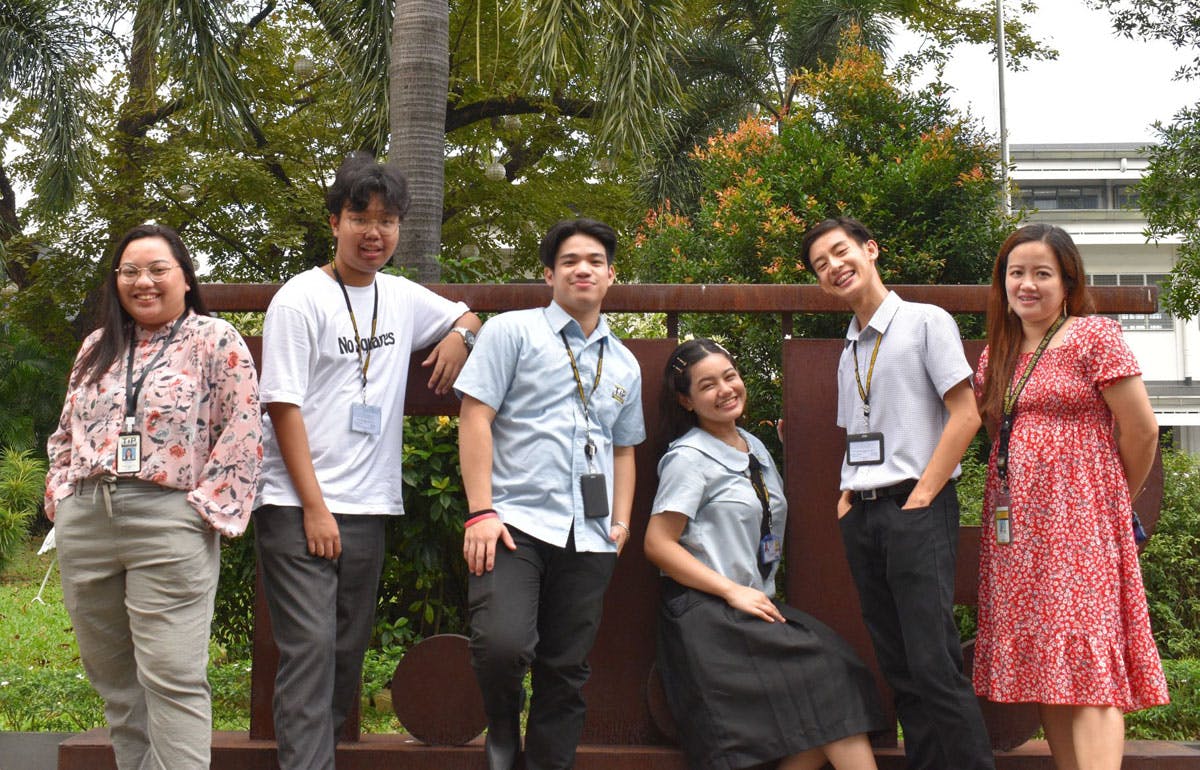
Citing the need to help the foodservice industry and its consumers cut back on plastic wastes, a team of senior high school (SHS) researchers from the Technological Institute of the Philippines (TIP) Manila is developing biodegradable utensils using the fast-growing fibers of a fungus called “mycelium.”
Mycelium is what “mushrooms are made of” and, when harnessed using existing technologies, can help “replace plastics that are rapidly accumulating in the environment,” according to Scientific American. Many industries overseas are already applying it as a sustainable alternative to plastic-based packaging materials.
TIP Manila recently signed a memorandum of agreement with the Department of Science and Technology (DOST) to adopt the same under Project “BioHoshi,” which received a P451,000 research grant from the agency through its Young Innovators Program (YIP).
“We will use it as a binder (for the wood and other organic materials) and we chose it because, as we have found in our research, mycelium is often called ‘nature's biggest recycler,’” said Mary Nicole Alejandrino, a Grade 12 STEM (Science, Technology, Engineering, Mathematics) student.
Alejandrino has been working on this project with her fellow STEM students – Rayvhen Dominique Rada, Paulo Luis Bautista, and Will Andrew Mercado – since they were in Grade 11. They are guided by their mentors Ms. Ellaysa Esplago and TIP Manila SHS principal Dr. Glorielyn Camerino.
Esplago, the chief project adviser, said the team has been given a 10-month timeframe to create a prototype of food grade single-use utensils made of mycelium. They submitted their proposal last June 2022 and are currently approaching the experimentation stage of the project.
“Aside from the main objective of the team, which is to help combat the unending and alarming waste management problem, another goal for us–hopefully, when the project becomes successful–is to make this as a startup,” Esplago said.
Camerino is proud that their students have developed keen interest in research and development this early. “They should not be afraid of trying to showcase their talents and to show that they are innovators,” she noted.
Like Esplago, Camerino hopes that their students would keep living by the TIP mantra of becoming “lifelong learners, problem solvers, and innovators,” who are capable of making positive contributions to Filipino society and the world at large.
The YIP is an annual project of the DOST in collaboration with the Philippine Council for Industry, Energy and Emerging Technology Research and Development (PCIEERD) to support promising students who engage in scientific exploration in the said sectors.
According to reports, the DOST-PCIEERD awarded a total of P4.3-million worth of research funding in 2022 under the YIP to encourage more students into the field of R&D by helping them turn their innovative ideas into actual technological products.