



Tropical Storm Ondoy Still Worse Than Typhoon Ulysses – MMDA
Based on data, Tropical Storm Ondoy dumped more rainwater than Typhoon Ulysses though both caused catastrophic floods.
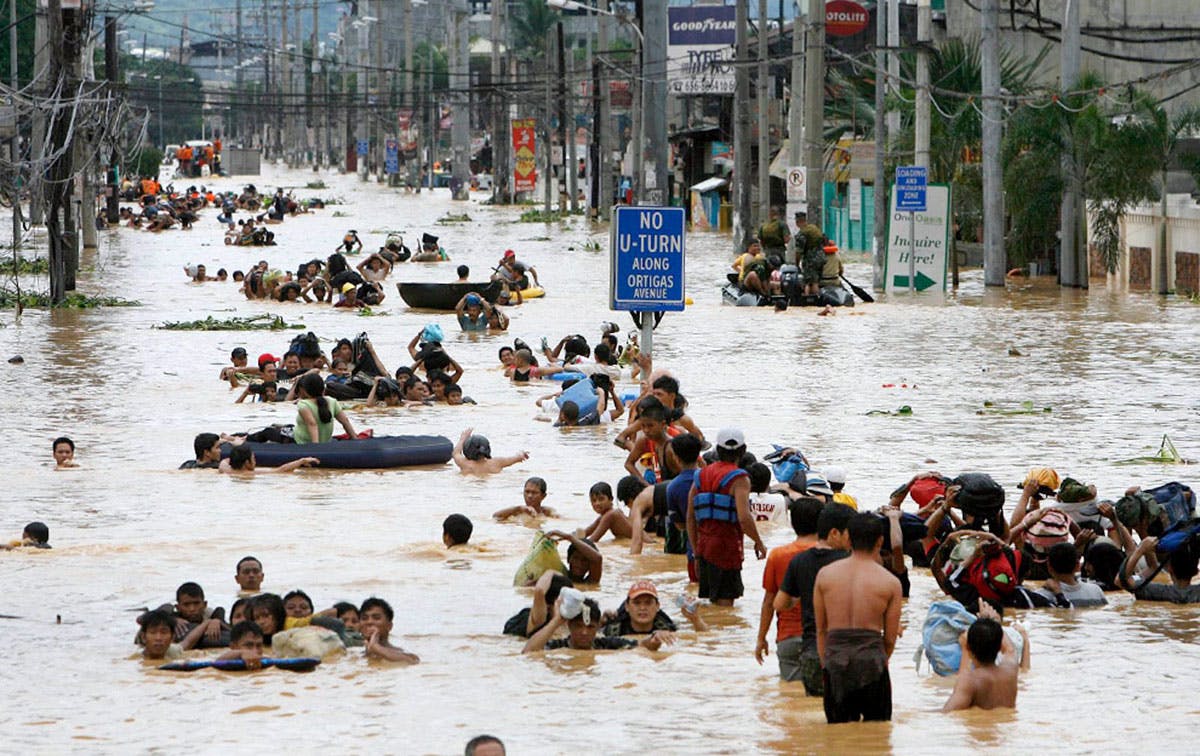
Tropical Storm Ondoy was worse than Typhoon Ulysses in terms of rainfall intensity although the Marikina River reached the same critical levels because of this, data from the Metropolitan Manila Development Authority (MMDA) showed.
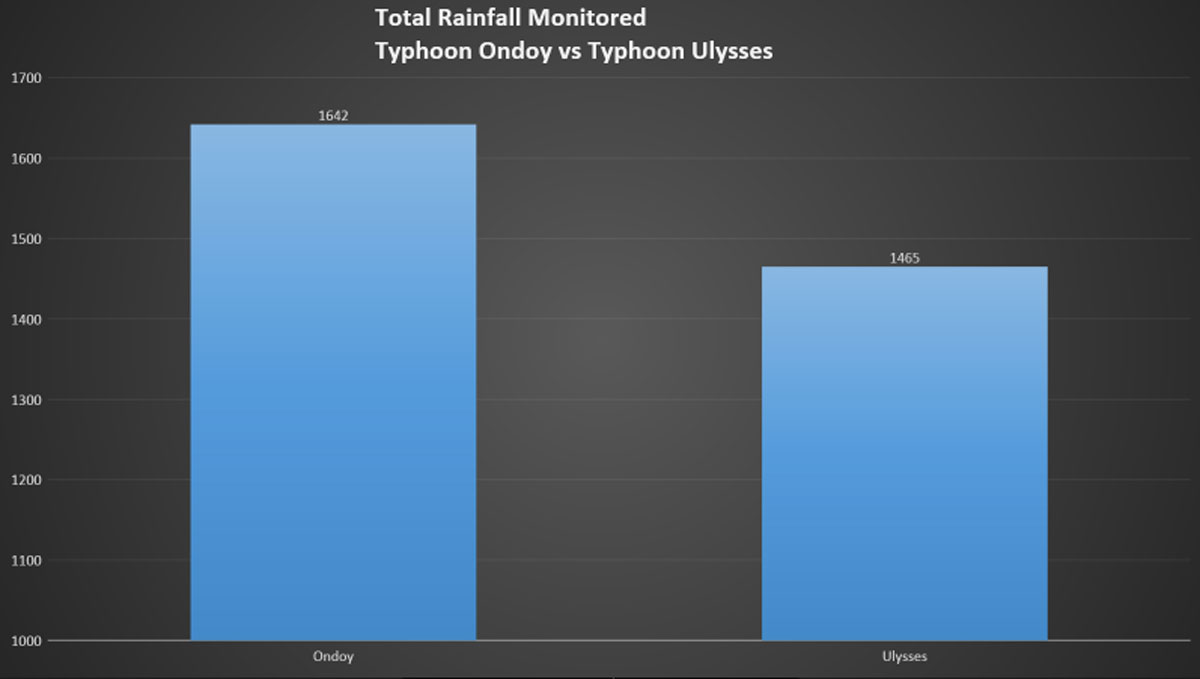
Based on data obtained by The Philippine STAR from the MMDA’s Flood Control and Sewerage Management Office-Effective Flood Control Operation System (EFCOS), Ondoy dumped a total of 1,642 mm of rain at the upstream of the Pasig-Marikina River from Sept. 25 to 27, 2009.
Ulysses, meanwhile, brought a total of 1,465 mm of rain from Nov. 11 to 12.
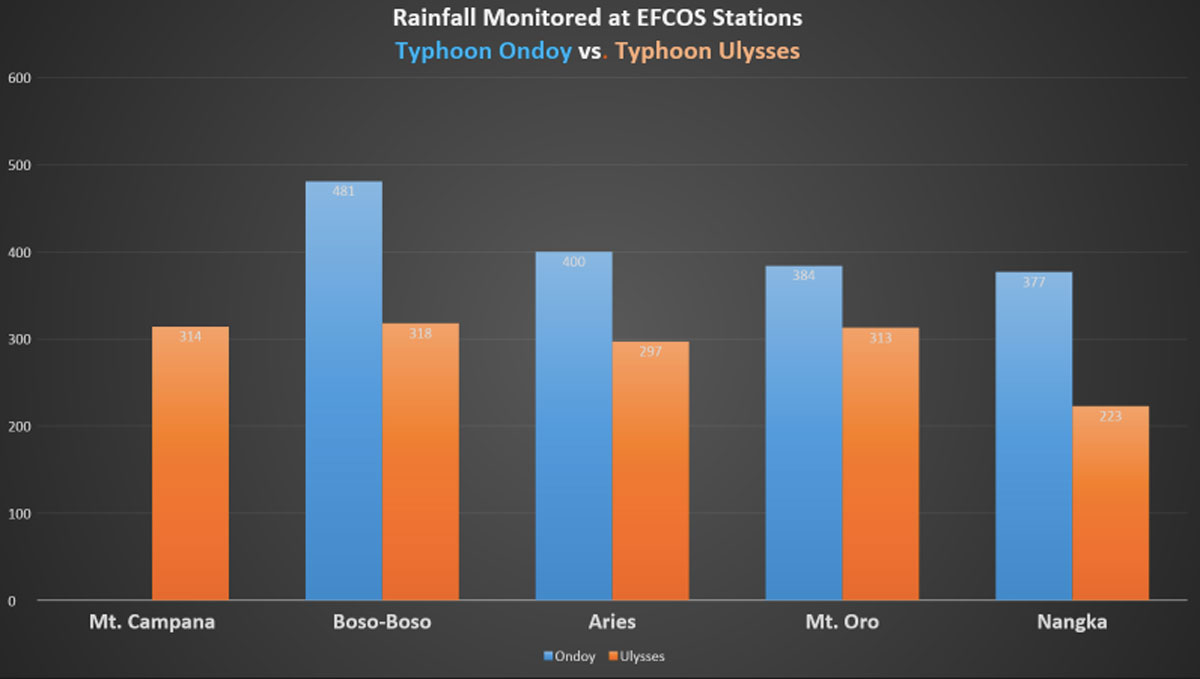
According to the MMDA’s five rainfall gauging stations, Ulysses’ rainfall intensity at the upstream of the Pasig-Marikina River was comparatively lower than Ondoy’s as recorded before, during, and after the storm from Sept. 25 to 27, 2009 – 481 mm at Boso Boso station, 400 mm at Aries, 384 mm at Mt. Oro and 377 mm at Nangka.
Ulysses dumped 314 mm at the Mt. Campana station, 318 mm at Boso Boso, 297 mm at Aries, 313 mm at Mt. Oro and 223 mm at Nangka.
Ondoy’s rainfall was recorded for 32 hours while Ulysses’ lasted for 30 hours. Ondoy’s rainfall spiked at 8 a.m. on Sept. 26, 2009 while Ulysses’ rainfall gradually increased over time, according to EFCOS.
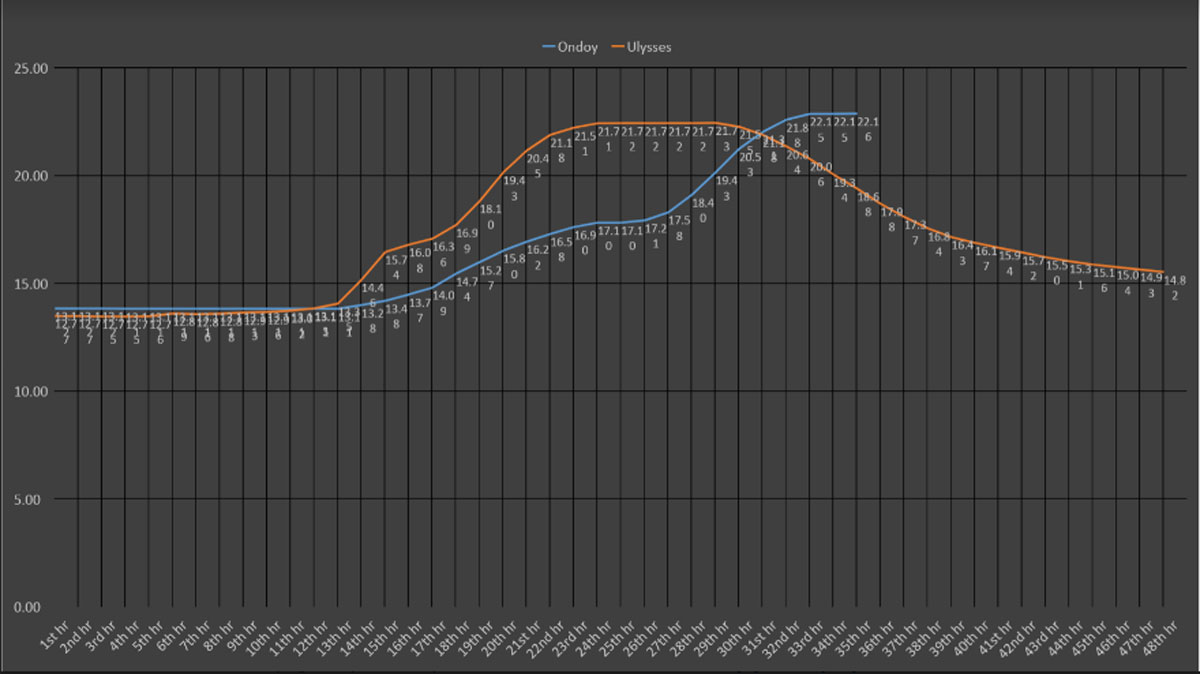
The water level of the Marikina River rose to critical levels during Ulysses, close to the above critical level reached during Ondoy.
The water level at the upstream of Marikina River in Montalban and a tributary in Nangka reached critical levels of 29.74 meters and 24.58 meters, respectively, during Ulysses’ onslaught.
Meanwhile, the water level reached above critical levels at 29.67 meters in Montalban and 22.47 meters in Nangka during Ondoy.
The Marikina River upstream water level in Sto. Niño and Rosario Junction Side also reached critical levels at 21.73 meters and 16.78 meters, respectively during Ulysses.
The Sto. Niño and Rosario Junction Side upstream areas reached above critical levels at 22.16 meters and 17.92 meters during Ondoy.
The Philippine Atmospheric, Geophysical and Astronomical Services Administration earlier said that although Ulysses dumped less water than Ondoy, flooding was as destructive due to accumulated stormwater from the previous typhoons, including the world’s strongest this year, Super Typhoon Rolly, which saturated the mountains and soil ahead of Ulysses.
Marikina City residents and its local government also blamed the release of dam water for the quick rise of flood water.
Marikina Mayor Marcelino Teodoro said they did not expect Marikina River to swell up to 22 meters on Nov. 12 as Ulysses made landfall the night before.
Teodoro described Ulysses as different compared to other tropical cyclones that hit the city, including Ondoy. He noted that with Ulysses, water rose quickly even in areas not largely seen as flood-prone.
He said Marikina River’s water level had previously reached a high of only 21.5 meters.
“The height of the flood exceeds the first floor of a house,” he said in Filipino. “We haven’t experienced this kind of flooding for so many months or years. That’s why everyone was surprised.”
Last Nov. 13, Teodoro said he was planning to sue the management of Angat Dam for negligence over the alleged failure to inform the city government that it would be releasing water.
Teodoro pointed out that weather specialists and disaster management officials anticipated the water level from Marikina River to reach up to only 18 meters. But because of the opening of Angat Dam’s floodgate without sufficient advisory, the water level reached 22 meters, higher than the 21.5 meters recorded during Ondoy.
However, presidential spokesman Harry Roque said on Nov. 16 that a lawsuit against dam administrators who ordered the release of water during the onslaught of Ulysses might not prosper as there were other factors that caused the floods.


