


These Millennials Are Into Farming, And They Are Thriving
The four young farmers who mostly grow vegetables are well-versed in environmentally conscious techniques.
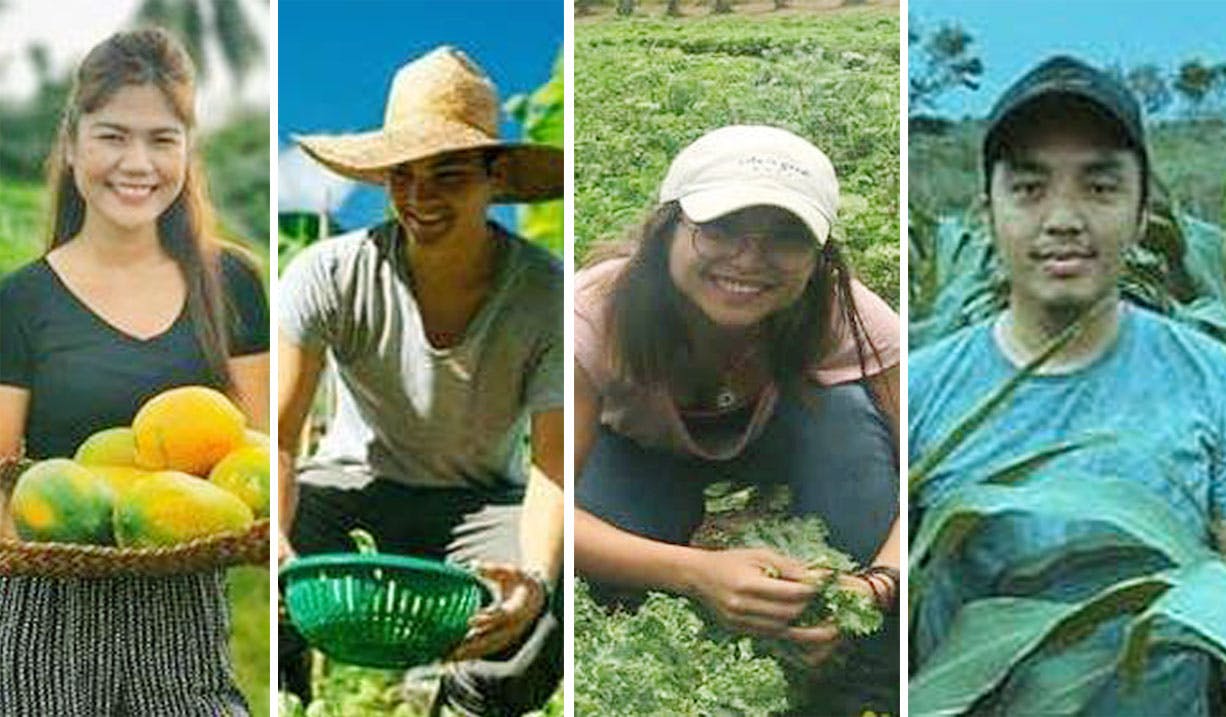
There is a new breed of farmers in the latest chapter of this agricultural country’s long history – and they are young, well-off, tech-savvy millennials.
In an episode of her series “Stories for a Better Normal” livestreamed via Facebook on Aug. 6, Antique Rep. and Deputy House Speaker Loren Legarda trained the spotlight on four such young farmers who mostly grow vegetables and are well-versed in environmentally conscious techniques.
From advocacy – and diet – to business
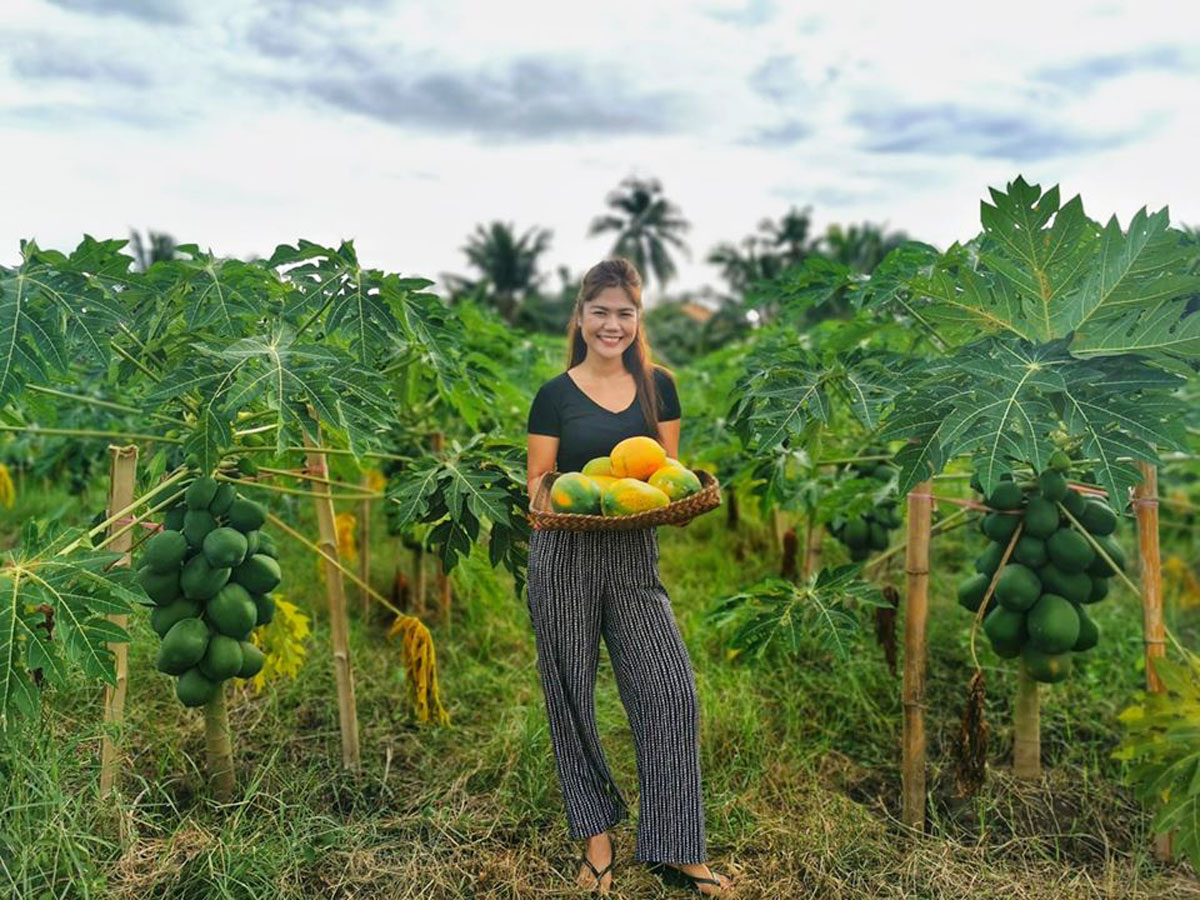
Antique provincial board member Karmila Rose Dimamay owns a one-hectare mini-farm called Milay’s Garden in Tibiao municipality, where she grows quick-maturing plants that can be harvested in 30 to 45 days, like eggplants, chili, okra and red lady papaya trees.
The advantage of such plants for Dimamay is this: “Mapi-feel mo ’yung saya na makaka-harvest ka na (You will feel right away the joy of harvesting). You will be invigorated, you will be encouraged to plant more.”
She specifically grew the papaya for her personal consumption – to lose weight. “That’s the papaya I want to eat,” she said, referring to the red lady – a high-yielding Mexican variety that can produce 50 to 120 fruits per plant each season.
In between the papaya, she plants chilis in mulch made of rice straw that neighboring farmers would often just burn off. She said she wanted to discourage burning and show farmers that decomposing mulch could become fertilizer.
Dimamay, who is now in her 30s, started backyard gardening in the aftermath of typhoon Yolanda in 2013. As a municipal councilor at the time, she realized that disasters tend to block roads and break the normal food supply chain. She found out that some local families were able to grow their own food.
“We need to encourage people to be food-sufficient in times of calamities and disasters,” she said.
She started by buying big packs of seeds and repacking them to be given away to people. But she said this was a “hard sell” because “they don’t like to plant.” So she started her backyard garden to “lead by example.”
Now, organizations like UP Antiqueño and Pag-ulikid Pamatan-on, as well as Sangguniang Kabataan chairpersons of Bugasong municipality, have launched a Gulayan sa Barangay project “to encourage the youth to plant.”
What started as an advocacy eventually turned into an income-generating project for Dimamay. She said she sells some of her produce online, so she would not have to exert much effort in promotions.
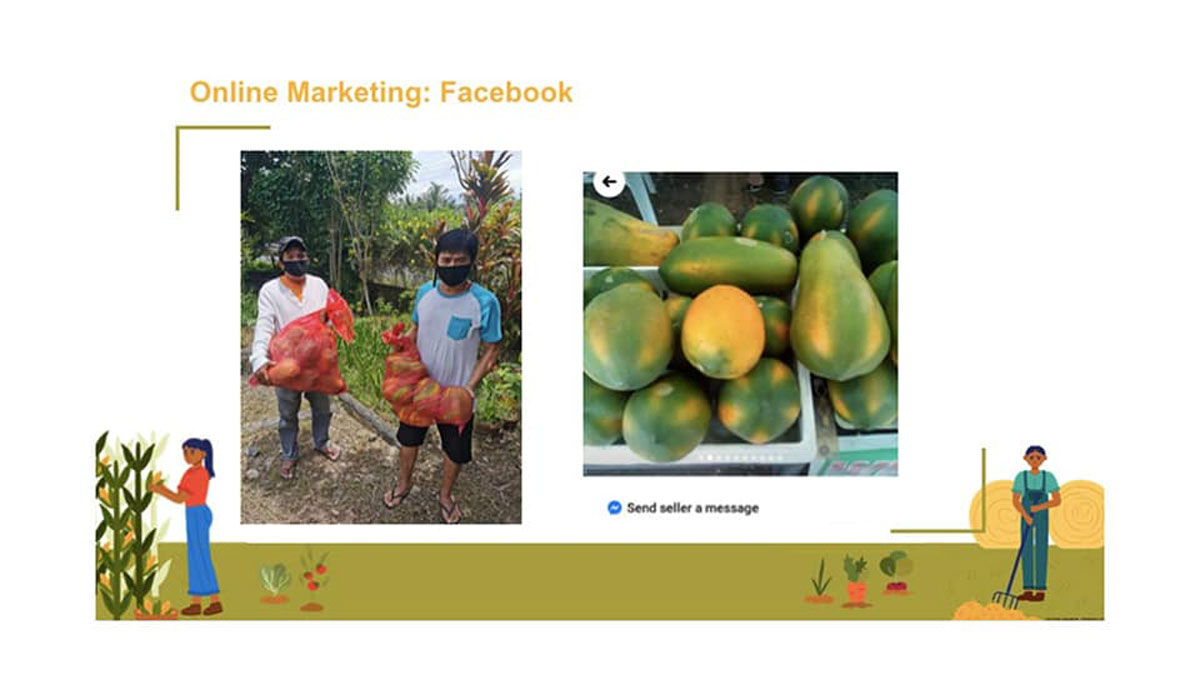
At the same time, by posting photos of bottles of cash that she earns from selling her produce, Dimamay gets to encourage the youth more to “please also plant” as it can be a source of income.
With her 500 red lady papaya trees (each of which can be ready for harvest six months after planting), she said she harvests 60 to 80 kilograms of fruit and earns around P2,000 every day.
Acknowledging farmers’ problems
Enzo Pinga has a different story. He did not have roots in San Pablo City, Laguna but found that “that’s where the opportunity was.”
So, together with partner investors, he put up the one-hectare Earthbeat Farms, in which vegetables, high-value crops and fruit trees are grown for commercial production.
“The idea of farming grew on me. We were serving hotels, restaurants and consumers in Manila,” said Pinga, whose interest was piqued by his work with aquaponics (a combination of aquaculture and hydroponics, or the cultivation of plants in water).
Pinga, who is also in his 30s, said that “seeing the state of agriculture around the Philippines and learning more about the market demands in Manila, this led me to start Earthbeat Farms.”
He acknowledged that land, capital and manpower serve as “barriers” for young people to go into farming.
“This must be treated as a business… There are different business units – suppliers, logistics, operations, employees – just like any other company, and this is something that is often missing or often lost when people talk about successful agribusiness and starting their own farms,” Pinga said.

The pandemic showed that farmers are the backbone of society by providing healthy food, and that there is a long way to go in educating the market to stoke demand for the right kind of food, Pinga underscored.
Most importantly, he saw how “the current system does not support the small farmers.”
“Sad it is to say, but this has been how it is running… The small farmers are most affected by different natural disasters, by the pandemic. They are the most affected because they cannot get their goods to the proper market, or there’s an oversupply… They don’t control the price of their produce. They have little means to get out of this dilemma,” Pinga pointed out. “In this current system, those who are risking the most are rewarded the least.”
Pinga said his farm seeks to promote “objective real regenerative farming practices,” and debunk the common understanding that organic farming is just about avoiding the use of chemicals.
It is more about sustainability. “Organic farming is replenishing the soil. It’s putting in more than you take out,” he explained. Techniques used include the collection of rainwater, mulching and turning food waste into compost.
Pinga’s farm conducts mentorship programs and events to encourage young people to get into farming. At the same time, it also partners with different farms to link them to the markets.
“We need to show that farming is a viable livelihood. Otherwise, we will run out of farmers. Children of farmers won’t get into agriculture because they see they can’t create a good life out of it,” he said.
Exposed to Japanese ways
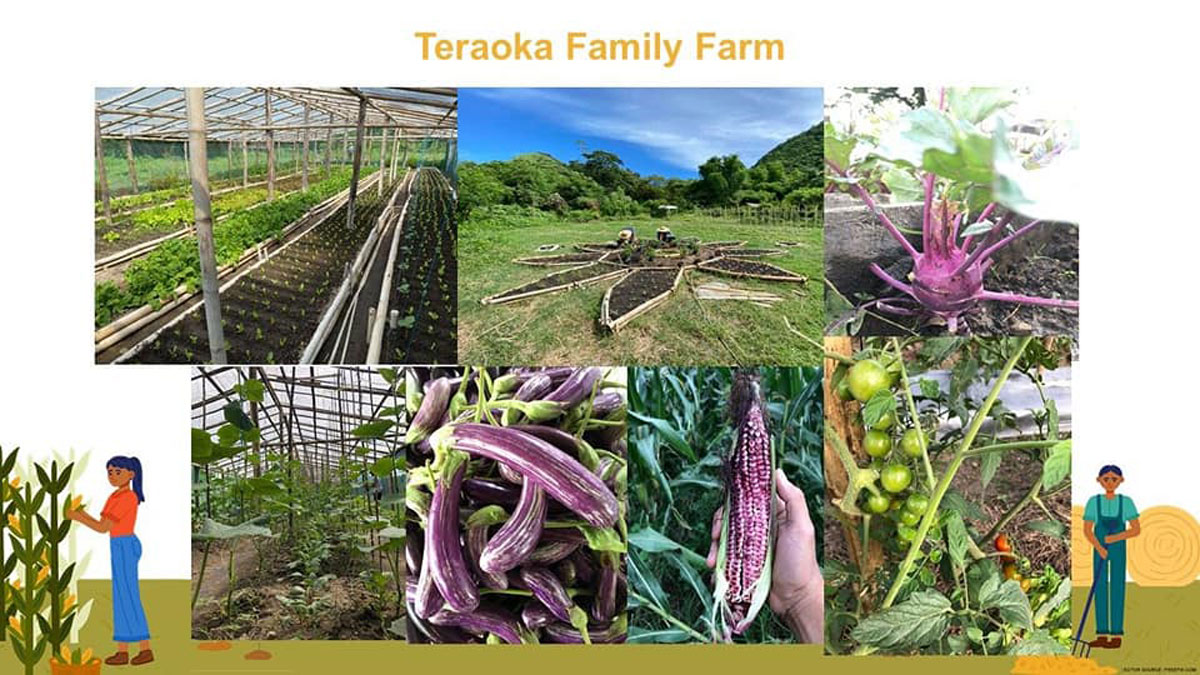
Meanwhile, Raphael Dacones named the five-year-old, six-hectare Teraoka Family Farm after the maiden name of his Japanese mother. The farm is the first in the Ilocos Region to be certified organic by a third-party certifier.
The farm in Mangatarem, Pangasinan caters mostly to Metro Manila clients and produces salad greens like romaine lettuce, kale and arugula as well as native crops endemic to the Philippines.
“We want to promote how awesome our Philippine produce is and how... we should support local produce because it grows well in the Philippines,” the 33-year-old Dacones said.
In the farm, he applies a little of Japanese techniques such as bokashi, or fermenting compost and kitchen waste to turn into fertilizer. But he said his techniques are mostly indigenous, which he learned by consulting with other organic farmers around the country. This highlights how different methods are appropriate for different countries.
“It’s more adapted to our area, since the Philippines and Japan are different. They both have different cultures,” Dacones said.
“I think practicing more of our indigenous way of farming in the Philippines is more practical for us, but of course, with a little technology involved,” he added.
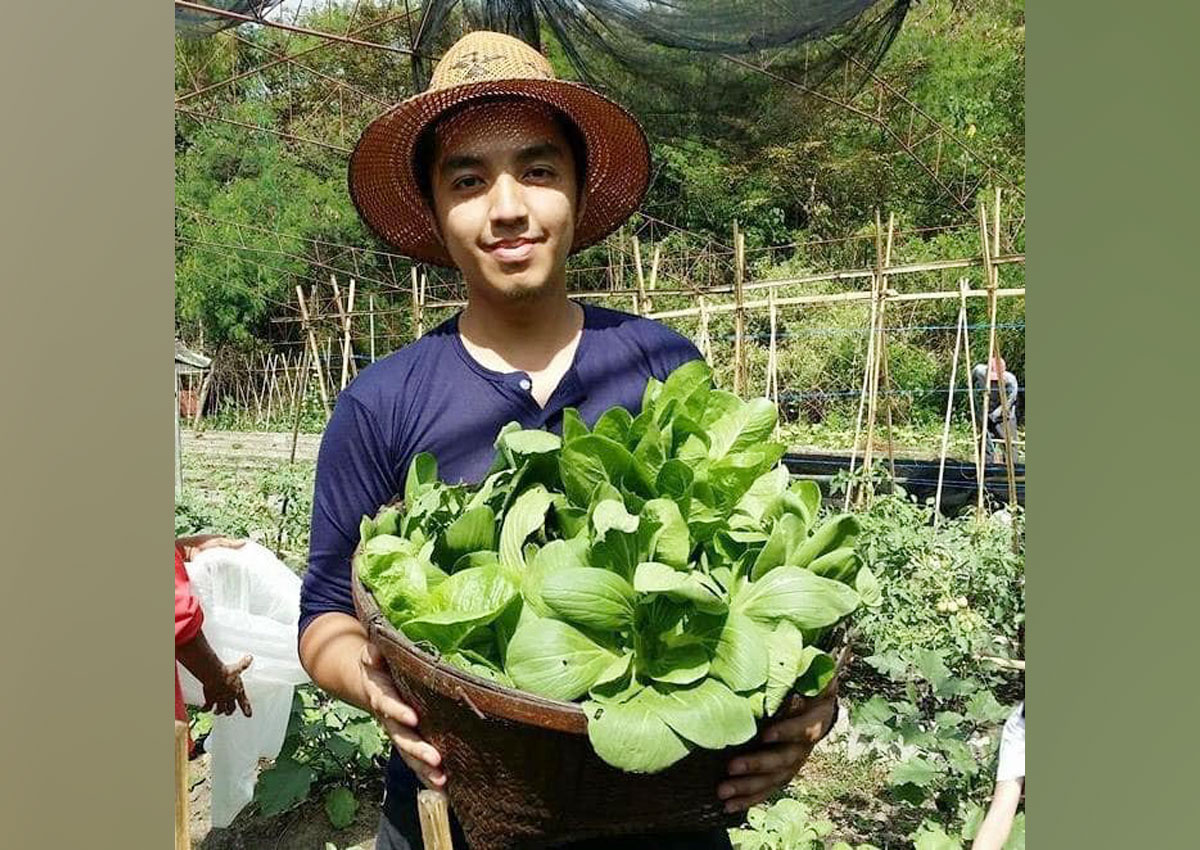
Dacones lived and worked in Japan for four years before deciding to come home in 2015. “Not knowing what to do gave me an idea – why not use my grandfather’s land since no one actually uses it?” he recounted.
He noted that farmers in Japan do well unlike here in the Philippines. “They’re not just wealthy, they’re very productive and they’re respected,” he said.
“Filipino farmers are always looked down upon,” Dacones bewailed. “I want to change that by the way I could – by being young, energetic, trying to start my own farm on my own, and practice organic farming.”
He started small by using 500 square meters of the land and planting lettuce on the small plot. He relied on his stock knowledge, information he could get from Google and YouTube videos, and advice from his uncle. Even then, he knew the feeling of disappointment.
“I thought planting, putting the seeds there would make things grow already. But when I did that, nothing was growing and it really made me wonder, what did I get myself into?” Dacones said.
“Being, working in Japan for several years taught me so much perseverance and trying to get things done, so I never gave up,” he added. Eventually, he grew more varieties of lettuce before expanding to other kinds of produce.
Monocropping to multicropping
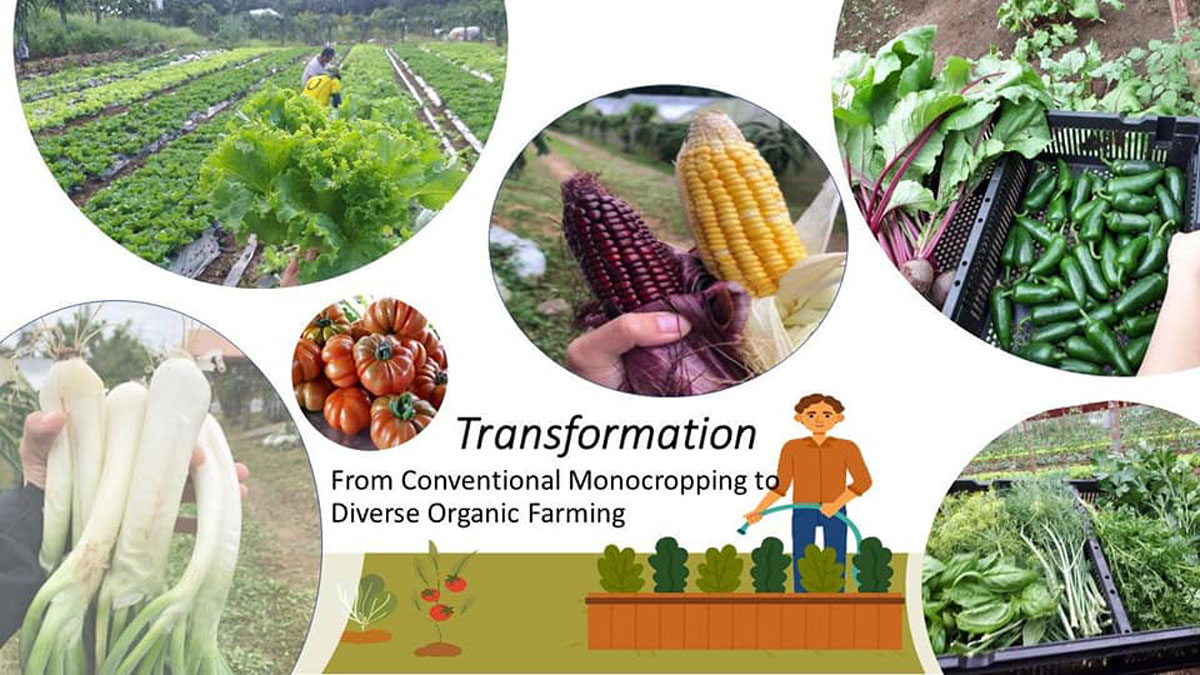
Lastly, Stephanie Mendiola, who just turned 30, found new appreciation for multicropping.
Her Independencia Farms (or Indie Farms named after Independence Day because she was born on June 12) in Silang, Cavite used to grow just three varieties of lettuce, but the market became saturated with new lettuce farms popping up in the area and cutting into the demand for her produce.
She disclosed that her farmers did not have much use for the excess lettuce. “Hindi sila kumakain ng salad, eh (They don’t eat salad). It’s not native to our menu,” she said.

Then Mendiola started diversifying her produce to include kale as her cousin owns a brand of kale chips. She also met a wholesale buyer of arugula.
Afterwards, she began retailing straight to customers in Manila – and “they're asking me, ‘do you have something more than kale and arugula, kasi (because) we're not goats.’ ”
This encouraged her farm to grow wansoy or coriander, parsley and other herbs, as well as eggplant and even dragon fruit.
“A square foot can feed a family, so the more diverse our crops became, the more we could sell. Even for the farmers, they were happy because all of the extra crops went to them, went to their household,” Mendiola, who had to study the sustainabiity of a farming business given the people she had to to employ, declared.