Taxis Plying NCR Down 40% Due To Fuel Costs
An organization of taxi operators is urging the Land Transportation Franchising and Regulatory Board to approve their request for P20 provisional fare increase to help them cope with the rising cost of fuel.
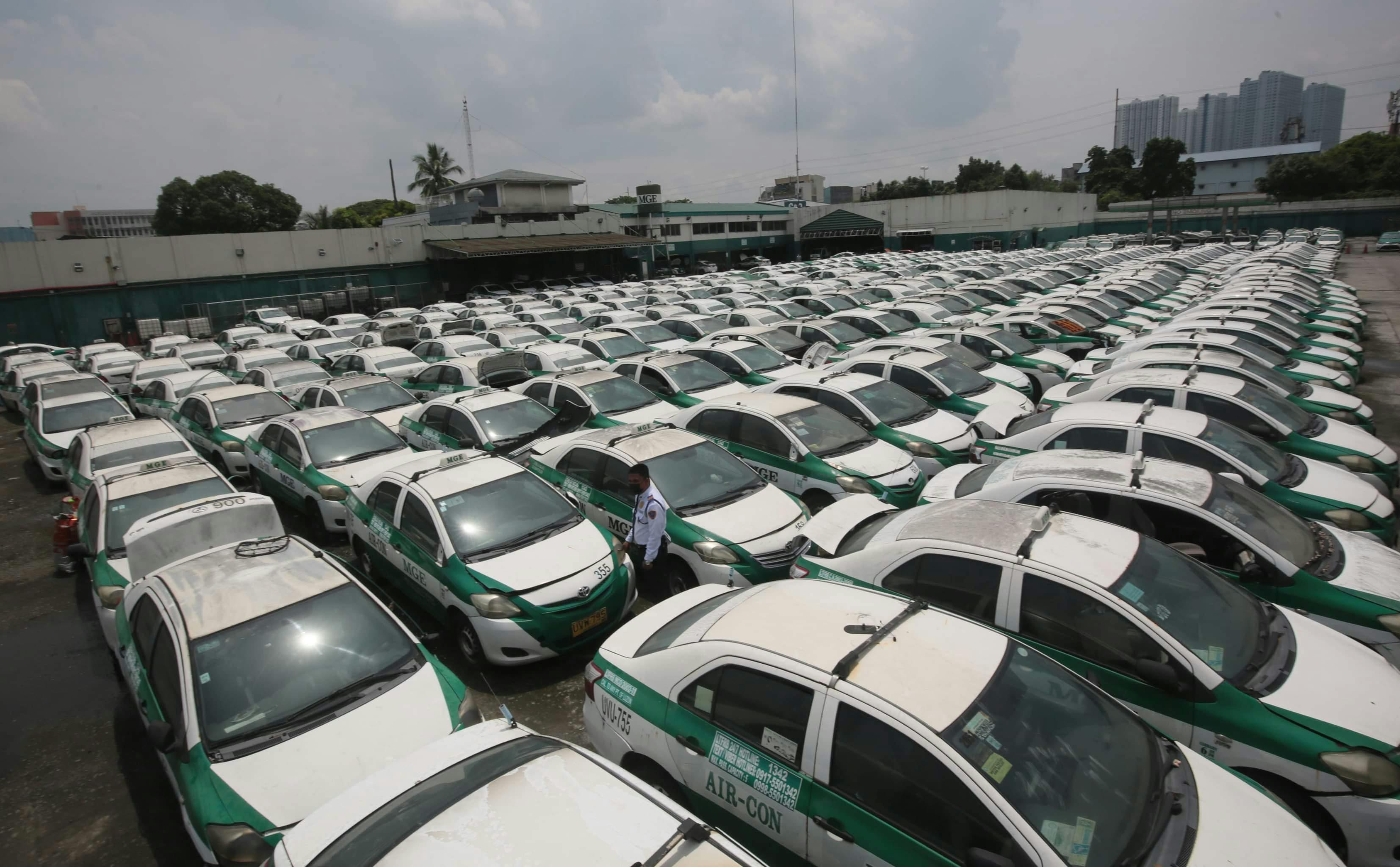
Supply and demand for taxis in Metro Manila have dropped by almost half since the outbreak of the COVID-19 pandemic as passengers have become fewer and fuel costs atrociously high, an organization of taxi operators said Friday, June 24.
“From before the pandemic there were around 27,000 cabs going around Metro Manila. Now, I think the number is down to 15,000 at certain times,” Philippine National Taxi Operators Association president Bong Suntay said in an interview with “The Chiefs” over Cignal TV’s One News.
Suntay said passenger demand for taxis has gone down by about 55 percent, as more people are staying and working at home despite the easing of travel restrictions.
He said they hope the Land Transportation Franchising and Regulatory Board would approve their request for P20 provisional fare increase to help them cope with the rising cost of fuel.
“There’s still a need for public transport. Hopefully if the petition for provisional fare increase is granted, there will be reprieve for drivers,” he added.
He said many drivers opted not to ply routes while some operators just sold their units, as their monthly fuel expenses threatened to breach P40,000.
“The last fare increase given was in 2017 when prices were hovering from P38-P40 (per liter). Now, the price of gas is P80-P84. It has doubled. It’s not surprising that a lot of operators and drivers have chosen not to bring out taxis anymore,” he added.
Suntay said that taxi drivers were earning about P1,200 to P1,500 per day before the pandemic, but now many are barely taking home P400 daily due to the prevailing situation.
He also emphasized that a fuel subsidy of P6,500 is too small to have a meaningful impact on drivers and operators.
Meanwhile, a congressman-elect from Quezon said the government should either suspend the collection of fuel excise tax for 90 days or use the revenues from the collection to fund targeted subsidies for most affected sectors like workers, small and medium enterprises and indigent households.
In a statement, Reynan Arrogancia said based on “macroeconomic and revenue settings” in the 2022 General Appropriation Act or national budget, the government expects to generate some P346.9 billion in revenues from various excise taxes this year.
Of the total, P106.7 billion would come from excise taxes on fuel. Arrogancia said the figures are based on the budget hearings conducted last year.
“Assuming the incoming administration decides to suspend the excise tax on fuel, the monthly revenue loss would be about P8.9 billion,” he said.
Quarterly revenue loss for 90 days would be about P27 billion.
“Aside from or on top of suspending the fuel excise taxes for 90 days which will result in forgone revenue of P27 billion, the revenues collected by the government can be spent on targeted subsidies that will directly benefit workers, SMEs and households that are poor, low income and lower middle income,” he said.
“The total impact of this is about P54 billion which means all of the departments in the executive branch will give up P27 billion in revenues they were supposed to get for their services de-livery and P27 billion which they will pool together to give away as subsidies and aid to Filipinos,” he added. – With Sheila Crisostomo