



Study: Phl Girls Outperform Boys In Math
The new publication by UNESCO’s Global Education Monitoring Report released on Wednesday, April 27, said in mathematics, the gender gap favoring boys in early grades gradually disappears. Girls are also doing better than boys in reading and science.
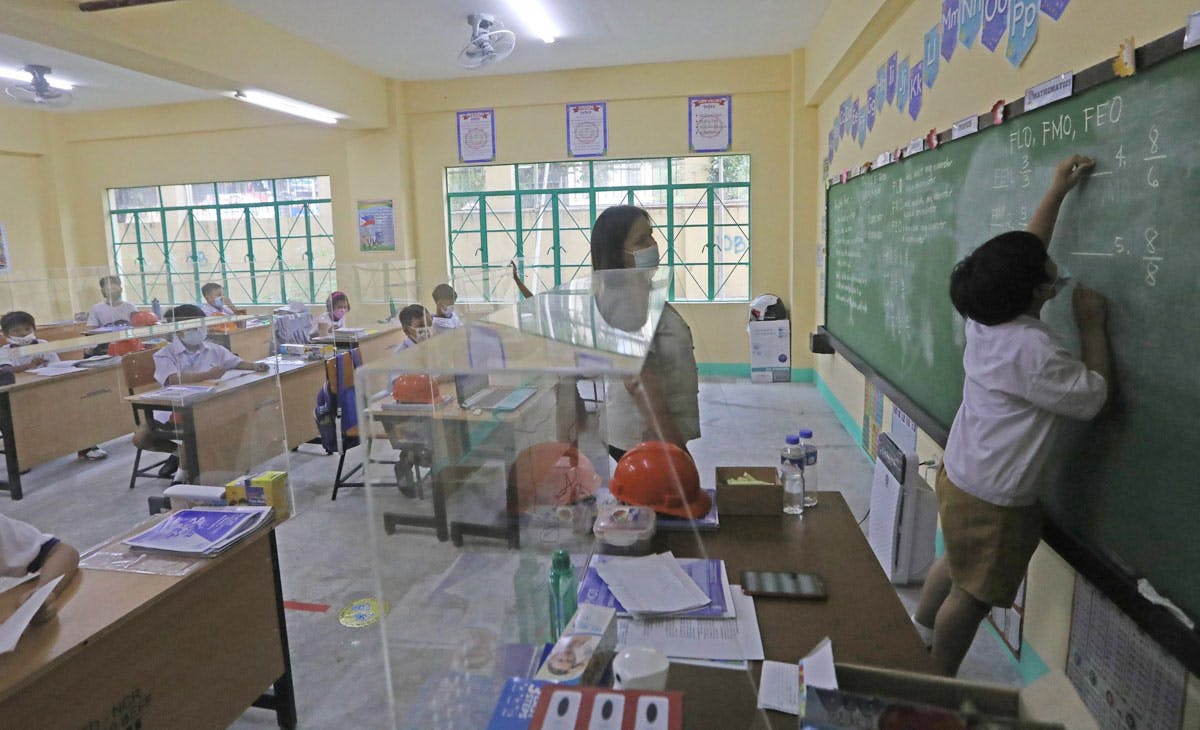
The Philippines is one of three Southeast Asian countries that saw girls performing better than boys in mathematics, according to a report by the United Nations Educational, Scientific and Cultural Organization (UNESCO).
The new publication by UNESCO’s Global Education Monitoring Report released on Wednesday, April 27, said in mathematics, the gender gap favoring boys in early grades gradually disappears. Girls are also doing better than boys in reading and science.
The agency’s annual gender report analyzed data from 120 countries in primary and secondary education to offer a global picture.
Although boys perform better than girls in mathematics in the early years, researchers found that this gender gap disappears in secondary school – even in the world’s poorest countries.
Some countries even saw girls do better than boys in math, including Malaysia, where by age 14, girls have a seven percent lead on boys, Cambodia (three percent) and the Philippines (1.4 percent).
Despite this progress, UNESCO warned that gender “biases and stereotypes” are still likely to affect girls’ schooling, as boys “are far more likely to be overrepresented” at the top level of mathematics in all countries.
The problem extends to science, with data from middle and high-income countries showing that although girls in secondary school score significantly higher in scientific studies, they are still less likely to opt for careers in science, technology, engineering and mathematics.
While girls perform well in mathematics and science, they show even greater proficiency in reading, with more of them achieving minimum proficiency in reading than boys.
The largest gap in primary education is in Saudi Arabia, where 77 percent of girls but only 51 percent of boys in grade 4 (age 9-10), achieve minimum proficiency in reading, UNESCO said.
In Thailand, girls outperform boys in reading by 18 percentage points, in the Dominican Republic by 11 points and in Morocco by 10 points.
Even in countries where girls and boys have the same level of reading in the early grades – as in Lithuania and Norway – by the age of 15, girls are roughly 15 percentage points ahead of boys.
“Girls are demonstrating how well they can do in school when they have access to education,” said Malala Yousafzai, co-founder of Malala Fund cited by UNESCO.
“But many, and particularly the most disadvantaged, are not getting the chance to learn at all. We shouldn’t be afraid of this potential,” she added.
Although more data is needed, Manos Antoninis, director of UNESCO’s Global Education Monitoring Report, said recent releases have helped paint an almost global picture of gender gaps in learning outcomes right before the pandemic.
“Girls are doing better than boys in reading and in science and are catching up in mathematics. But they are still far less likely to be top performers in mathematics because of continuing biases and stereotypes. We need gender equality in learning and ensure that every learner fulfills their potential,” Antoninis said.


