



Shipping Lines Cut Trips, Raise Fares
The reduction in trips and increase in fares of domestic shipping lines are expected to become a factor on whether Filipinos would proceed with their Holy Week plans this year.
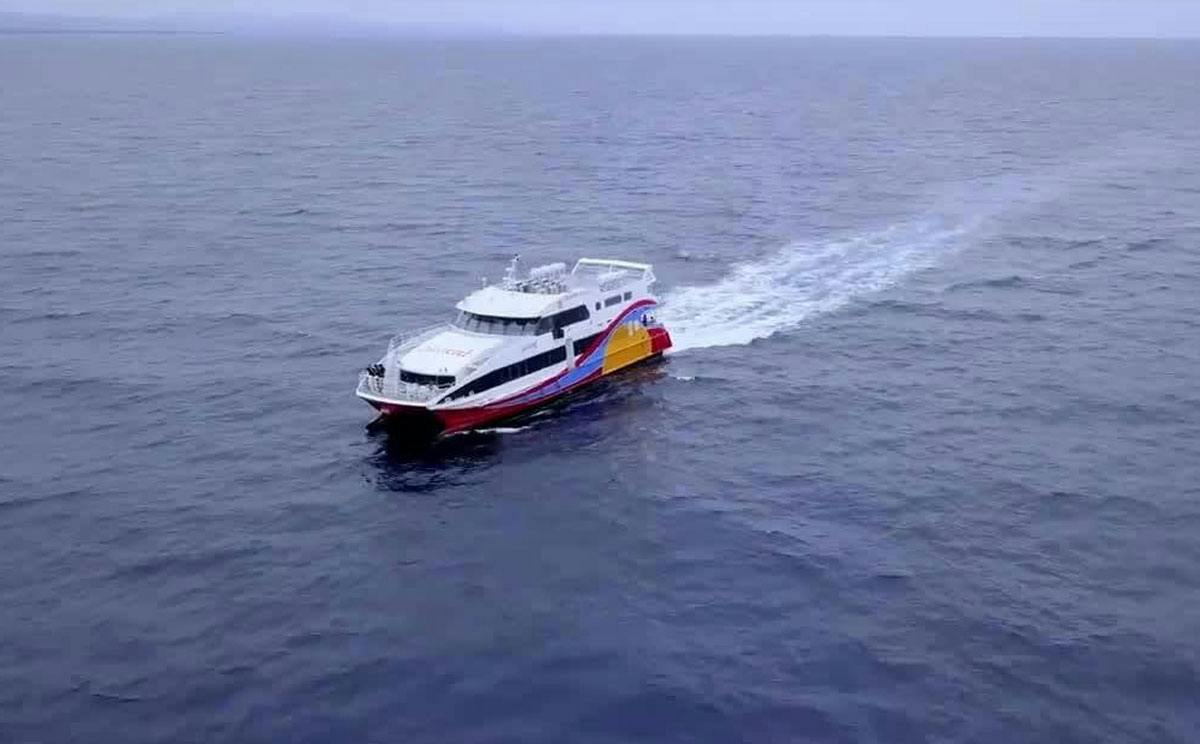
Local shipping lines have resorted to trimming their daily trips and increasing passenger fares to cope with spiking fuel costs, affecting Filipinos planning to travel during the Holy Week.
In an advisory on March 9, OceanJet, operator of high-speed watercraft in Cebu, said it has suspended eight daily trips until March 20 to manage fuel expenses in the face of global uncertainty.
OceanJet’s suspended trips cover Cebu, Dumaguete, Getafe, Palompon, Siquijor and Tagbilaran, with passengers told to take alternative trips scheduled for another time.
SeaCat by Grand Ferries also took off Cebu-Catbalogan and Cebu-Baybay trips from its calendar indefinitely to regulate fuel consumption. Meanwhile, it raised fares across the board for Cebu-Hilongos and Cebu-Calbayog voyages.
“We assure everyone this adjustment is only temporary. Once fuel prices return to normal levels, our fares will also be reviewed and adjusted accordingly,” SeaCat by Grand Ferries said in an advisory on March 7.
Likewise, Montenegro Shipping Lines Inc. said in a March 6 advisory that it will impose a fare hike of up to 20 percent depending on the route starting March 23 to partly cover the 40 percent increase in fuel costs.
Jomalia Shipping Corp. started collecting a fuel surcharge of 20 percent on passenger and freight trips on March 9, promising to recall the fare hike as soon as petroleum prices go down.
Super Shuttle Ferry also slapped an additional 20 percent fare on customers starting March 9, justifying the price hike as necessary to sustain the reliability of ferry services.
The reduction in trips and increase in fares of domestic shipping lines are expected to become a factor on whether Filipinos would proceed with their Holy Week plans this year. Historically, the Lenten season has given Filipinos time to go on vacation or visit their hometown.
The Philippine Ports Authority (PPA) recorded a 37 percent growth in passenger volume to 2.29 million during the Holy Week in 2025. Filipinos tend to travel by sea during Lent to avoid pricier airfares, which are typical on peak seasons.
As early as last week, PPA general manager Jay Santiago told The Philippine STAR that freight rates would balloon, as shippers absorb the impact of higher fuel prices consequent to geopolitical tensions in the Middle East.
Pricier airfare?
By April, travelers are likely to be met with pricier airfares based on initial tracking of jet fuel prices.
Based on its latest monitor, the International Air Transport Association (IATA) reported that jet fuel prices have gone up by 58 percent to $157.41 per barrel as of March 6.
This is far costlier compared to the prior average of $99.40 per barrel on Feb. 27, a day before US-Israel attacks on Iran set off a domino of violence in the Middle East.
Jet fuel prices rose the steepest in Asia, by 77 percent, because of its reliance on oil coming from the Middle East. Asia also recorded the highest increase on a monthly basis (85 percent) and on a yearly comparison (90 percent).
The situation will likely force the Civil Aeronautics Board to adjust fuel surcharge for the first time in eight months. CAB has set the fuel surcharge steady at Level 4 since August 2025.
At Level 4, airlines can collect a fuel surcharge of P117 to P342 for domestic flights and P385.7 to P2,867.82 for international trips, depending on the distance.
Airlines also leaned on the steadiness of jet fuel prices to promote air travel in the Philippines, as Filipinos are sensitive to price changes in non-essential items like leisure trips.
The country’s largest carriers Cebu Pacific and Philippine Airlines have canceled 48 flights to the Middle East to date, and the number could go up if geopolitical tensions worsen.
Travel tax
The Senate ways and means committee tackled on Tuesday, March 10, bills seeking to abolish the travel tax, an administration priority measure that had the support of the Department of Finance (DOF).
Sen. Pia Cayetano presided over the hearing, where senators who authored the measure said the travel tax is now an outdated levy that prevents Filipinos from exercising their constitutional right to travel.
Cayetano said there is a need to balance the interest of travelers to get rid of this expense and the need to generate revenue for government projects.
“Today, critics argue that it has become an added cost that disproportionately impacts ordinary Filipinos who travel for work, family reason, education or leisure. They contend this barrier is misaligned with modern economic realities and ASEAN commitments aimed at facilitating seamless regional mobility,” Cayetano said.
“At the same time, we also acknowledge that revenue from the travel tax currently supports vital programs. This includes tourism infrastructure, higher education and cultural funds, which many institutions fear may face funding gaps if this source is eliminated without an alternative mechanism in place,” she added.
DOF Undersecretary Karlo Adriano said travel tax abolition – whether total or partial that affect only Filipino travelers and ASEAN nationals – has a revenue impact ranging from P1.018 billion to P9.3 billion.
Travel tax collections averaged P4.56 billion from 2017 to the first half of 2025, he added.
Travel tax funds the projects of the Tourism Infrastructure and Enterprise Zone Authority, Commission on Higher Education and the National Commission for Culture and the Arts.
With the travel tax abolition, funds for the programs will instead be included in the agencies’ appropriations, Adriano said.
When Sen. Sherwin Gatchalian asked for the history of the travel tax, Adriano said it was imposed during the Marcos Sr. administration to “conserve foreign exchange” by “discouraging international travel.”
“Times have changed after 70 years. Imposing travel tax is now an added friction cost,” Gatchalian said.
Cayetano said budget travel is more accessible now, which makes travel tax a financial burden on the ordinary Filipino household traveling. – With Marc Jayson Cayabyab