



Sans Divorce, Pinoy Couples Turn To Cohabitation, Annulment
As the divorce bill languishes in the halls of Congress and the cost of annulment makes it difficult for Filipinos to obtain a union dissolution, more and more Filipinos are resorting to cohabitation and co-parenting.

Early this year, Angela (not her real name) gave birth to a son with her boyfriend Andy. Although in a relationship for the past three years and now with a child, Angela and Andy aren’t married. Instead, they’ve decided to cohabitate and co-parent their child.
“I cried. I was so afraid. I had just moved into a new condo and started in a new job. I wasn’t prepared emotionally and financially. I hadn't even decided if I wanted to become a mother or not and I was afraid to tell my parents,” Angela told The Philippine STAR in a message via Facebook.
Andy, she said, was immediately excited. She said that before Andy met her, he was even considering adopting because he was ready to be a father. Although the idea of marriage did come up, they did not make any concrete plans to push it through.
“When our parents asked, Andy told them, ‘after the baby is born,’ but actually, between us, we never really talked about it in concrete terms,” Angela said. “His parents were excited and asked him about his plans. I’m not sure what he told them, but they're not pushy naman. They try not to intrude.”
As for her parents, Angela kept her situation a secret from them as long as she could. It was only after she was hospitalized following a near miscarriage that they found out.
“(At the time) they weren't happy about the circumstances. But I didn’t hear from them about it because I was already in a hospital bed when they saw me. I feel their disapproval now more than ever. When I was pregnant, they asked when the wedding would be. They just assumed it was going happen. Andy said the same thing: ‘After the baby is born.’ ”
Last month, when Angela disclosed that marriage wasn’t in their plans and that they wanted to co-parent their child instead, her parents told her to live with them in their province. But she said no.
“They weren’t happy and they are currently not talking to me. It’s sad…I didn’t set out to upset or disappoint them. But my baby’s well being is my priority. I believe it’s best that his parents are married and in love (but) the next best thing is for his parents to be geographically close to him and are on really good terms. That’s the best I can do for him right now,” Angela explained.
Diverging values
While they were still very much in love when she was pregnant, Angela realized that she and Andy have many incompatibilities, which became evident after their son was born. There have been the occasional trust issues, insecurities, the feeling of not having certain needs met, or that they’re headed in different directions with dissimilar goals in life.
“We have widely different values. Before I became pregnant, we went to church every Sunday. It might sound hypocritical of me since I got pregnant out of wedlock, but that’s really important to me. It’s really crucial for me to be able to practice my faith however imperfectly. When we were dating, he promised we’d always do that together. It was a non-negotiable for me. Now that I have a baby, it’s even more important to me,” Angela, who is a born-again Christian, narrated.
But after she gave birth, Andy, who is a non-practicing Catholic, started skipping church. “Ihahatid na lang daw niya ako at hihintayin. I wanted a life partner — a partner in my faith. Not a driver. The fact that he reneged on that promise is a really big deal. What is a marriage if not a promise, right? A promise to be faithful, to forsake all others, to love, and so on,” Angela said.
Angela and Andy are no longer intimate, although they remain friends and Angela continues to live in Andy’s house. Andy and his family provide her with all the support she needs to raise their child.
“Financially, I have no issues with him. He's been very responsible and he took care of everything. It’s above and beyond what some guys do to a girl they have a baby with but are not married or engaged to. I’m very grateful that my baby and I have a roof over our heads. We have a support system close by as his parents live in the next street. I get to stay home with my baby. And his dad gets to see him whenever he wants,” Angela stated.
Despite this setup, Angela doesn’t see marriage with Andy in the horizon. “I don't think that just because we have a baby, that marriage is a foregone conclusion. My non-negotiables from before should still count for something. Having a baby doesn’t mean I no longer have options,” she said.
There is one thing that worries Angela though: the thought that Andy would eventually marry another woman and have children. She worries that he would then no longer have time for their son.
“I don't want my son to feel like an outsider in his own father’s life. I hate the thought that his kids can crawl into bed with him in the middle of the night and my son won’t have those memories and moments with his father,” Angela said.
But she added that it would absolutely crush her to lose custody of her son. Which is why her goal right now is to work on being financially secure enough to pack up and leave with her son if the need arises and be able to support him on her own.
Divorce bill languishes in Congress
Angela and Andy are just one of the millions of Filipino couples who have resorted to cohabitation — and in their case, co-parenting — amid the growing number of marriages that end in dissolution and the lack of a bill that supports divorce.
In a study titled Divorce and Separation in the Philippines: Trends and Correlates by Jeofrey Abalos, a candidate for doctor of philosophy at the Australian National University’s School of Demography, it was revealed that the proportion of cohabitating Filipino women in the past two decades has increased, from 5.2 percent in 1993 to 14.5 percent in 2013.
Cohabitation is when two people live together and have a sexual, romantic relationship but are not married, while co-parenting is when two unmarried people share equal parental responsibilities over their child or children.
Citing a previous study by Andrea Lauser in 2008, Abalos said that given the permanence of marriage in the country, the prevalence of marital dissolution is very low.
This low proportion, particularly of persons who are formally separated, can also be attributed to the fact that obtaining a legal separation or annulment is difficult and expensive so that these remedies are not normally available to the common people, Abalos observed.
Abalos also said in the study that economic reasons tend to partly explain the increasing number of Filipinos who cohabit, but the absence of divorce in the country may also have contributed to this trend.
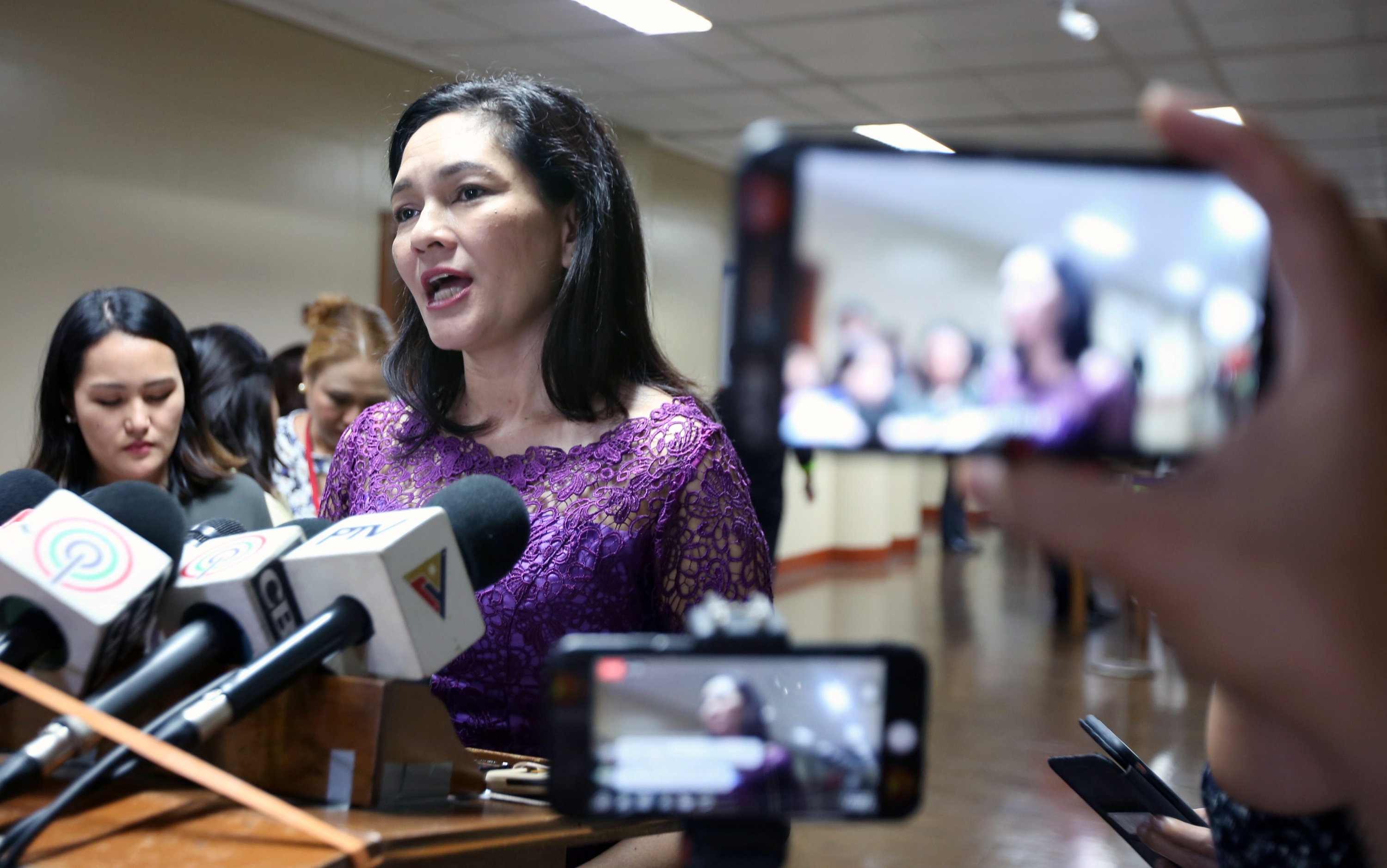
Several bills supporting divorce have been languishing in the halls of Congress. After it failed to pass in the previous Congress, Senators Risa Hontiveros and Pia Cayetano have separately re-filed their own versions of the bill.
Their fellow senators have either been lukewarm or totally opposed to the bill.
“Over my dead body,” said Sen. Joel Villanueva when asked about the bill’s prospects. He said he would block the passage of the bill. Instead, he plans to make the cost of filing an annulment in the country cheaper so that both the rich and poor can resort to it.
Last year, Sen. Manny Pacquiao also said there is no need for a divorce bill, saying, “May annulment naman.”
Responding to her fellow senators, Hontiveros tweeted, “Don’t want a divorce? Then don’t get one. But let others have a second chance in life.”
She also scored the high cost of getting an annulment in the country. “ ‘Pwede naman magpa-annul.’ Una po, ang mahal magpa-annul. Kadalasan inaabot ng kalahating milyon, kaya mga mayayaman lang ang kaya ito. Madalas toxic at madugo rin ang proseso. Kailangan patunayan ang psychological incapacity ng asawa, kaya pilit naglalabasan ng baho. Imagine: you’re forced to build a case against your partner, the father or mother of your kids. It’s inhumane to subject people to such,” she said in a series of tweets.
Pursuing an annulment in the Philippines is costly. According to the website of De Borja, Lamorena, Duano and Navarro Law Offices, the median cost of an annulment in the Philippines is between P200,000 to P250,000. The cost goes to payment of filing fees, attorney’s fees, pleading fees, and fees for the psychological evaluation that will be conducted by a licensed psychiatrist.
The steep cost, plus the effort and time to be consumed, discourages most couples from pursuing an annulment or even marriage. According to the Philippine Statistics Authority, the number of marriages from 2008 to 2017 decreased by 10.6 percent, from 486,514 in 2008 to 434,932 in 2017.
Further reading:


