



RJ Ledesma On Building A Dream: Scary But We Have To Move Forward
For those who are having side hustles while keeping full-time jobs to fulfill their dream of becoming successful entrepreneurs, RJ Ledesma revealed that the different businesses he now owns were a result of the many side gigs he had.
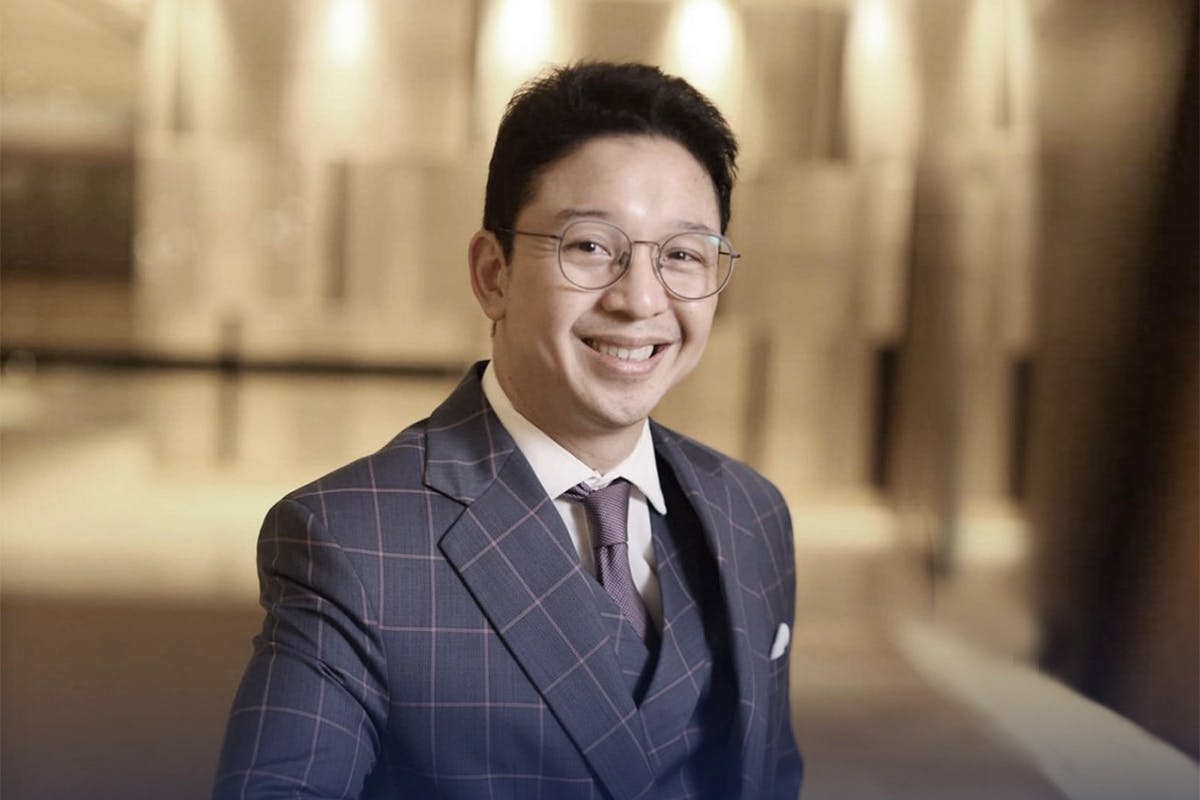
Approximately 6.4 million Filipinos are looking for additional sources of income, according to a recent Philippine Statistics Authority (PSA) report, which is not necessarily a bad thing if you ask a successful entrepreneur and self-confessed “jack of all trades, master of all” guy like RJ Ledesma.
Ledesma is the co-founder and vice president for business development of Mercato Centrale Philippines, the largest and most popular weekend food market and food business incubator in the country, who once navigated a corporate world before going the entrepreneurship route.
For those who are having side hustles while keeping full-time jobs to fulfill their dream of becoming successful entrepreneurs, Ledesma revealed that the different businesses he owns today were actually a result of the many side gigs he worked on in the past.
In the fourth episode of “Breakthrough with Boris Joaquin,” a motivational podcast streamed live over The Philippine STAR / Career Guide Facebook pages on April 13, the former Procter & Gamble senior assistant brand manager and lifestyle columnist advised every budding entrepreneur not to leave their day job right away, especially if this is their main source of livelihood, but have a vision that would help them turn their side gigs into full-time careers.
“Always have a side hustle. Like for me as an entrepreneur, my mind is always searching for new ideas. Even if I have a current business, I’m always searching for new ideas,” said Ledesma, who is a familiar face in the broadcast media industry as an event and program host and actor.
Ledesma talked about how to develop the so-called “entrepreneurial mindset,” which separates ordinary businessmen from problem-solving traders, as well as the different ways they can approach when building their own enterprise that will eventually lead them towards the ultimate goal: success.
“I often describe being an entrepreneur like wearing a pair of lenses. You look at the world with a pair of lenses. And to be an entrepreneur is to see the world through a lens of opportunity, value creation, ‘cause that’s what an entrepreneur brings,” he said.
The principle of ‘wei ji:’ turning crisis into opportunity
According to Ledesma, if one spends enough time reading about the stories of most successful businesses locally or internationally, one will most likely find something in common. They were trying to solve problems in the middle of an ongoing crisis.
Because “the job of an entrepreneur or somebody with an entrepreneurial mindset is not to determine whether a situation is good or bad. The job of an entrepreneur is to discover opportunities in good times and especially during bad times,” he explained.
Ledesma cited as examples the cases of American start-up companies like Uber, Airbnb or Groupon, which were all founded at a time when the United States was going through a “Great Recession” or a period of severe financial crisis that made people look for cheaper alternatives to basic services.
“Cheaper alternative to taxi; cheaper alternative to hotels; cheaper alternative to eating in restaurants through coupons, right? But 11, 12 years later, these are billion-dollar businesses, which means that in every crisis there’s an opportunity,” he said.
For the Chinese people, this is widely referred to as the principle of “wei ji” – two words in Mandarin that mean “crisis or critical moment” and “opportunity” – or the idea that positive results may always come from a wisely handled risk.
Ledesma said that was how he and his team at Mercato Centrale kept themselves afloat when the country and the world suddenly stopped in 2020 as massive shutdowns were imposed because of the COVID-19 pandemic that disrupted supply chains.
Being adaptable to ever-changing local or global situations and avoiding the complacency trap also helped him as a man who wears many hats. The ongoing public health crisis presented a number of unforeseen challenges for a lot of industries, including food services.
“I realized that, even after you solve a problem, your business will be disrupted. Whatever business you’re in, you’ll be disrupted. You cannot be complacent... It’s not a question of ‘if,’ it’s a question of ‘when,’” he said.
Ledesma noted that technology and once-in-a-lifetime events such as the pandemic are two major disruptors, which could either finish or flourish a business. Luckily for them at Mercato Centrale, they found ways to turn people’s irritations into new sources of inspiration.
Insert: Breakthrough photo
The benefits of helping people and befriending technology
Viewing the world through an “entrepreneurial lens” enabled Ledesma to push back against economic insecurities that pervaded several industries at the time. He tried to turn whatever pain points they or other businesses were having into opportunities for growth.
Like other companies, he shared they also had to make a lot of pivots because things were just not like what they used to be. “It's hard to see (sometimes). Siyempre, nakakatakot eh, ‘di ba? (Of course, it’s scary, right?) But we have no choice. We have to move forward, we are entrepreneurs,” he said.
Ledesma remembered the reason he founded Mercato Centrale in the first place, which was to address an irritation he had as a lifestyle columnist for The Philippine STAR. He used to go on “media familiarization tours” abroad featuring the night food markets of countries like Taiwan or Singapore.
“I enjoy these night food markets. So, that’s where the irritation came from. I was thinking ‘how come there are so many successful night food markets in these other countries where foreigners and locals can go, pero sa atin (but in our country) there was no equivalent?’” he recalled.
At the time, Ledesma noticed that the business process outsourcing (BPO) industry was thriving in the Philippines, and he figured that some people who were probably working there were already tired of having microwave meals for breakfast, lunch and dinner.
“Where would they (BPO workers) rather eat dinner? In the convenience store (and get) fried chicken or would they rather eat freshly cooked homemade food? So, that was the basic irritation, which emerged from me when I first came up with Mercato Centrale,” the award-winning entrepreneur said.
When the pandemic disrupted the night and weekend food market culture, as most BPO employees shifted to work-from-home setups, Ledesma had to figure out a way to still serve their customers by introducing the alfresco dining experience and embracing technology itself.
Ledesma mentioned they worked with the Inter-Agency Task Force for the Management of Emerging Infectious Diseases (IATF) and local government officials, beginning at the Bonifacio Global City, to slowly open some restaurants or public spaces for outdoor dining.
“We created an alfresco market. And since that’s our specialty, we set up the first alfresco market, it worked and we opened several (others). So, this is an interesting thing,” he said of the so-called “micro” Mercato Centrales they pilot tested during partial lockdowns.
“Pre-pandemic we only had three (markets), all across Metro Manila, with maybe about 90 vendors. Now, we’re up to eight markets with about 30 vendors each, and we’re opening up at least two to three new alfresco markets during this time because we’re solving a problem,” Ledesma added.
The next set of challenges they embraced is securing delivery services for the products of their merchant partners and payment gateway to satisfy their customers, who used to get charged three times the distribution costs for a single transaction.
This paved the way for the creation of the Mercato United Kitchen, a hybrid cloud kitchen concept that improved dine-in and take out options for consumers, and the Mercato mobile application to ease delivery and payment transfers.
"When people were ordering from us online, they were saying ‘I want to order from your old vendors – from your shawarma vendor, from your street food vendor, from your other vendors.' But when they would order from us, they were paying three times the delivery charge. Bakit? (Why?) Because all our vendors were located in different areas," Ledesma said.
“So, what if we are able to put all these vendors into one location where people could enjoy all the different vendors but for one delivery price? And that gave birth to our Mercato United cloud kitchen where it’s optimized for delivery and for dine-in at the same time,” he added.
For the app development, Ledesma has been working alongside David Almirol, the founder and chief executive officer (CEO) of software engineering solutions company Multisys Technologies Corp. to connect more online food sellers with the Mercato Centrale markets.
“It’s there to extend the benefit of helping small food vendors survive and thrive. So, we created together a Mercato app where we were aggregating all these small food vendors in an online platform, so they could operate out of their own homes,” Ledesma said.
Making money muscles out of many side hustles
The Mercato Centrale co-founder emphasized there is no one-size-fits-all approach enroute to making it big in any industry. Thus, it always helps if an aspiring entrepreneur gradually develops the skill sets needed for him to be successful at anything.
Ledesma said the experiences he gained from working at P&G, on top of hosting shows and different events, accepting public speaking engagement gigs, among many other jobs he either did or continues to do today served as his own ‘secret sauce’ in navigating a competitive industry.
But he understood that the path he took towards building the kind of life he always wanted for himself may not necessarily work for the current generation of entrepreneurs whose opportunities are limitless with the help of technology.
“I think during our time, the idea was that you wanted to build a skill set because you needed that eventually. You wanted the training… You wanted the discipline of working corporate, right, so that you could eventually put up your own business,” Ledesma said.
“Because before you had to, not necessarily climb the corporate ladder, but gain some experience outside to join the family business or to put up your own business. And I think there’s nothing wrong with that one,” he added.
With the success of millennial college dropouts like Mark Zuckerberg, however, Ledesma said he is no longer surprised why there were entrepreneurs who go straight to putting up their own businesses, considering the different kinds of opportunities presented to them.
“I mean, these guys went straight to doing business because they got more access to information and resources to sort of short circuit the process. So, for me, either way. There’s no one correct way nowadays to get there,” according to the Go Negosyo mentor and 2018 Agora awardee.
“It’s really how you want to define success. If you want to define success as a career, as a linear career process, it’s up to you. But if it’s a quantum process or learning organically or street-smart learning to get there, it’s not a problem as well,” he noted.
Ledesma, meanwhile, pointed out that “hustling” or “side hustling” would always be part of having an ‘entrepreneurial mindset’ like him because it keeps you on your toes and lets you stay active in finding different ways to grow and innovate your business.
“Because you’re only gonna be successful up to the point that somebody else will just copy your idea but he can do it in a much better way, right? Or he can sell it cheaper than you. So, it’s not enough just to be unique and innovative,” he advised.
“What is important for you to have is what we call ‘secret sauce.’ What makes you different that is competitive, that nobody else can easily copy? Do you have access to a specific skill set, to a specific competency, to a specific supplier that nobody else can easily get?” Ledesma said.
For someone like the Mercato Centrale co-founder, it helped that apart from keeping himself busy developing so many businesses, he did not lose his passion for hosting shows and events or doing public speaking engagements at the same time. These activities enabled him to have more than one source of income.
“Running a food market does not have anything to do with hosting, right? So, if one business doesn’t look good, the other one is earning money for you. So, try to keep different side hustles where the money doesn’t, you know…all belong to the same industry,” Ledesma advised.
“For example, if I was just purely doing work for the wedding industry as a host, and all the weddings were shut down during the pandemic, I would be in trouble, right? But right now, you know, I was doing hosting for different industries and I was also doing speaking engagements online,” he explained.
“And my Mercato was able to make it online as well. So, you know, it’s nice to have these different hustles and continue to keep on hustling… It’s always good to find a hustle where you’re solving an irritation… And it’s got something that only your skill set can provide,” Ledesma said.


