Rice Prices May Go Up By Yearend – DA Exec
The Department of Agriculture said the government must provide fertilizer and petrol subsidies to farmers now to prevent productivity decline, which is one of the factors that will lead to the increase in rice prices.
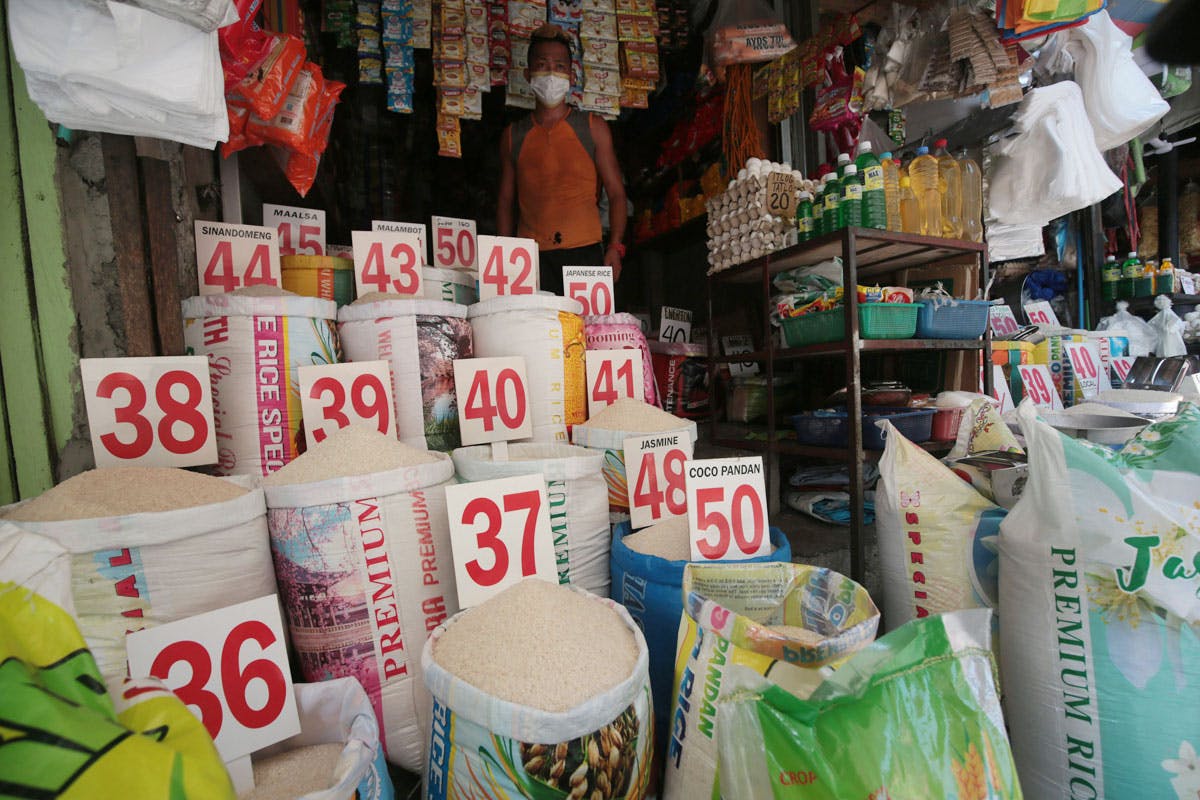
Consumers may see higher prices of rice by the end of the year if the production of palay or unhusked rice declines due to higher fertilizer and fuel costs, an official of the Department of Agriculture (DA) said on Tuesday, June 7.
“If production declines this main wet season due to high fertilizer and petrol prices and global rice price rise, we will see significant increases in rice prices by the end of this year,” Agriculture Undersecretary for policy and planning Fermin Adriano said in a statement.
Adriano explained that if prices of rice go up in the global market, local rice prices would follow. He explained that the country has enough supply of rice to last until September, as palay production reached a record 19.96 million metric tons (MT) last year, coupled with the three million MT of rice imported last year.
As fertilizer as well as fuel prices continue to rise globally, worsened by the Russia-Ukraine war, Adriano stressed the need for the government to give fertilizer and petrol subsidies to farmers now, to prevent productivity decline.
With the price of urea currently retailing at an average of P2,823.50 per 50-kilo bag, ranging from P2,500 to P3,147 per bag, the DA said total fertilizer cost would be around P11,294 at the average of four bags per hectare of rice.
Agriculture Secretary William Dar earlier said the country could see a 1.1-MT drop in palay production if fertilizer subsidies are not provided.
Last week, Federation of Free Farmers (FFF) national manager Raul Montemayor said the government would need to provide around P27 billion worth of fertilizer subsidies for palay farmers to support their production this cropping season.
He added that a P10,000 per hectare subsidy is needed to cover the increases in the prices of fertilizers.
Montemayor also pointed out that if local production goes down and international prices go up, domestic rice prices are seen to increase.
“So, while the subsidy requirements is large, the potential losses can be much larger, not counting additional social and political costs,” Montemayor said.
“With the impending food crisis, we can’t afford to be dependent on imports for our food. We are putting our nation at the mercy of importers. We don’t want to discourage our farmers from producing, because if the global market is unstable, we won’t have many options left to us,” Montemayor added.
Dar said earlier that an additional P6-billion fertilizer subsidy budget for the wet planting season was earlier approved by President Duterte as part of the Plant Plant Plant 2.
“Finance Secretary Carlos Dominguez is now looking at the funding source as he supports this additional budget for fertilizer subsidy. He promised to have it very soon,” Dar earlier this month.
Apart from the provision of fertilizer subsidies, the government has also been in talks with fertilizer-producing countries for the procurement of fertilizer. Among these are Russia, Malaysia, Indonesia, Thailand and China, according to the Fertilizer and Pesticide Authority (FPA).
Dar also stressed that the government is promoting the balanced fertilization strategy, which refers to the combined application of organic and inorganic fertilizers based on crop and soil nutrient content.