



Rice Allowance Eyed In Lieu Of P20/Kilo Rice
The administration is eyeing to provide rice allowance for government workers while it works to lower the price of the basic commodity, President Marcos said.
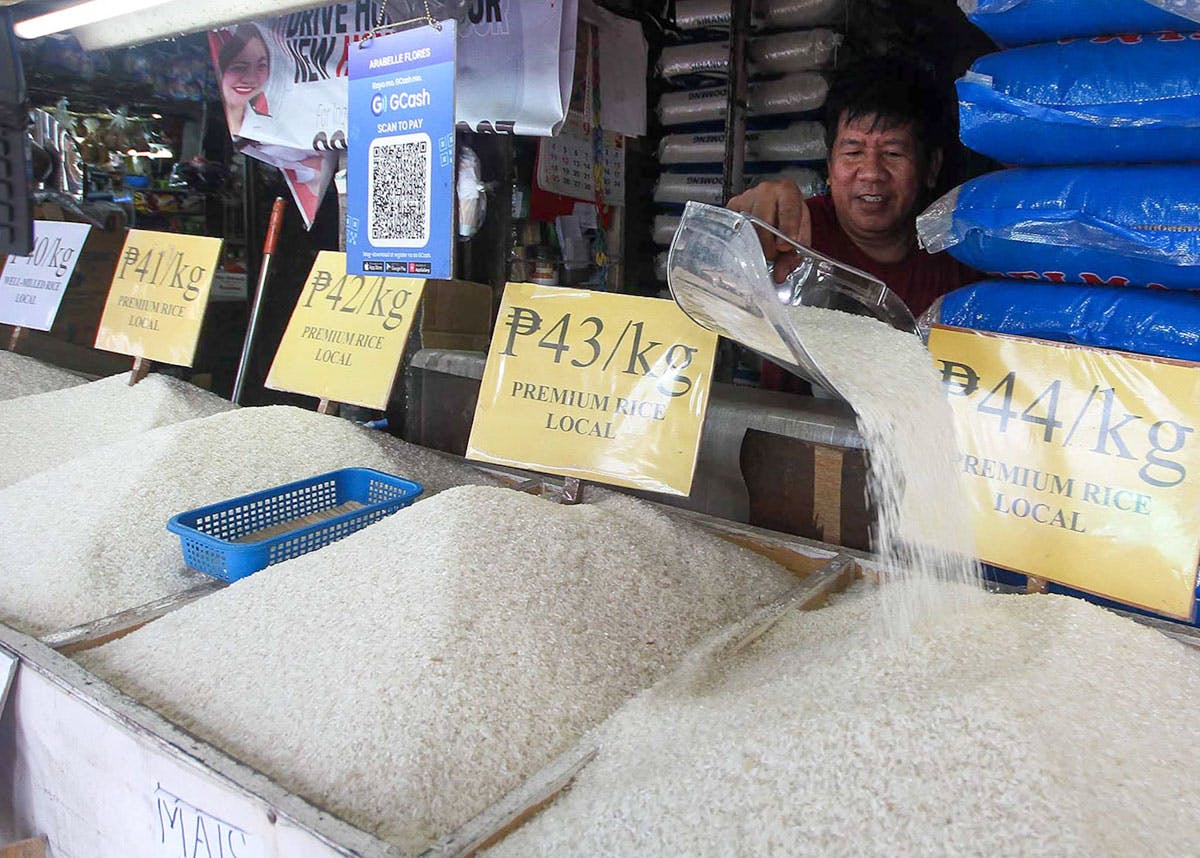
Lowering the price of rice to P20 per kilo is possible, but achieving this won’t be easy, President Marcos has admitted.
In the meantime, the administration is eyeing to provide rice allowance for government workers.
In an interview aired over ALLTV last Tuesday, Sept. 13, Marcos reiterated that ensuring access to affordable food is one of the priorities of his administration.
“This will be bought by the government from the government so we can save on costs and the people do not have to buy at the market price,” the President said.
“Now, we don’t want to put the rice producers out of business. On the contrary, what’s going to happen is there will be a demand because the government will buy in bulk. And then we will talk to other corporations,” he added.
Marcos noted that many huge corporations have been providing rice allowances to their employees.
“So
we will institutionalize it. So at the very least, we should have that.
This is life and death and the people are living very close to the
subsistence level. And we have to pull ourselves out of that. They
should not be at the subsistence level,” the President said.
“They should not be spending 60, 70, 80 percent of their income on food. That’s far too much. They have nothing left for anything else. They cannot send their children to school. They cannot pay for the electricity, the water. All of these things that they need to pay for. So that’s really the scope of the problem,” he pointed out.
Marcos said some measures have to be undertaken to bring down the price of rice to P20 a kilo, one of his promises during the 2022 presidential race.
“There’s a way to do it but it will take a while. We have to return NFA (National Food Authority) to its old function, not so much importation but really the buying,” Marcos, also the agriculture secretary, said.
“And then even – even actually now we can already do it but it’s a little short-term. We sell the buffer stock that they have in NFA. We can sell it at P20. But that’s not really realistic. We have to bring the actual price down,” he added.
The President cited the need to construct the value chain and to post savings to attain the objective.
“And then the world market will slowly be better, we might just make it to P20. But it’s a long road there. It’s not (going to) be easy,” Marcos said.
“And that’s why I am hoping that at the end of all that we are doing – and when I said the end, I’m not talking about tomorrow, I’m talking about, maybe hopefully, if we do it right, then in a couple or three years that we’ll get there,” he added.
Some sectors have said it would be difficult to bring down the price of rice to P20 per kilo because of high fuel and fertilizer prices.
Last June, then agrarian reform secretary Bernie Cruz said the goal could be realized through the implementation of “mega farms” – referring to a cluster of contiguous farms forming a sizable plantation that can produce a large volume to meet consumer demands.
“Everything is possible. You
just have to work very hard at it and be clever about it and come up
with new ideas and be creative about what are the things that you are
able to do,” Marcos said.


