



Revamped SHS Curriculum Piloted In Over 800 Schools
Education Secretary Sonny Angara explained that the reform addresses concerns about students being overwhelmed by an excessive number of subjects, which hampers focus and job readiness.
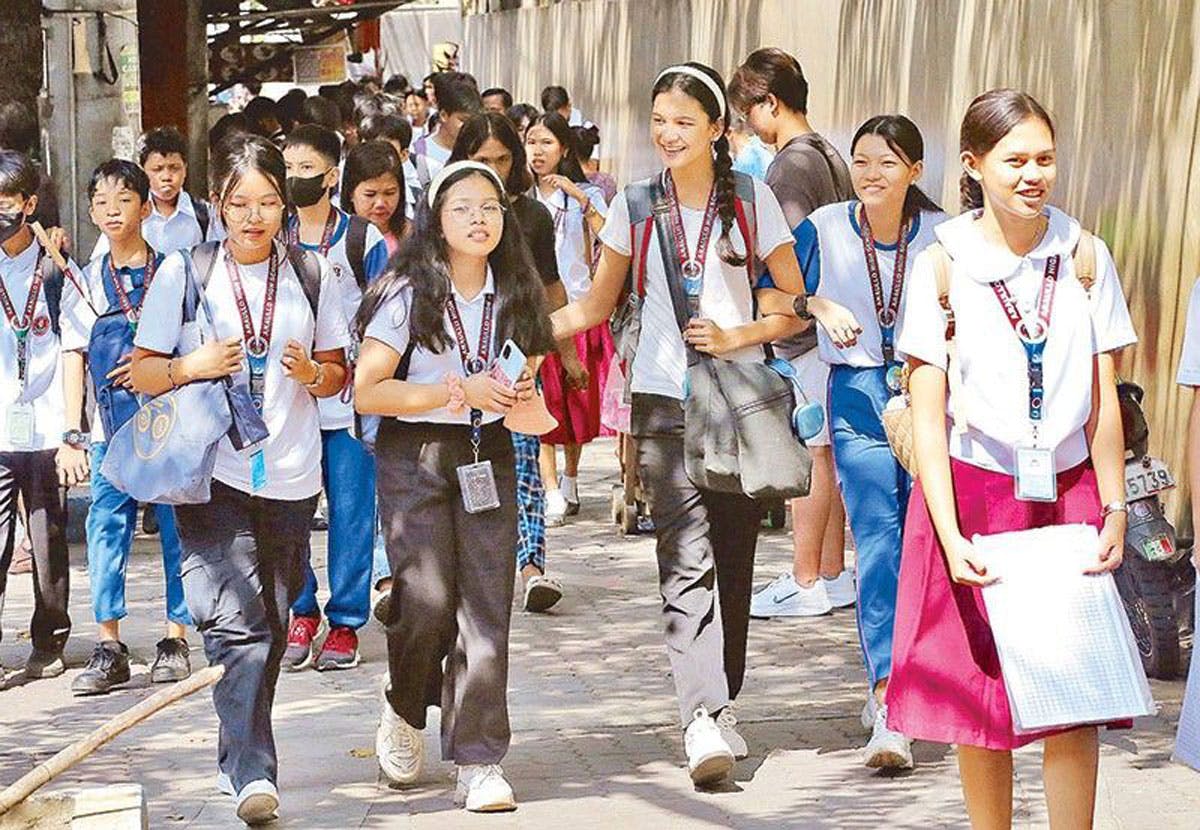
The Department of Education (DepEd) officially launched the strengthened Senior High School (SHS) curriculum in 841 schools nationwide as the new school year began on Monday, June 16.
This pilot phase marks the initial step toward a broader reform of the K-12 program, with full nationwide rollout planned for next year.
Education Secretary Sonny Angara explained that the reform addresses concerns about students being overwhelmed by an excessive number of subjects, which hampers focus and job readiness.
“They lack exposure to actual work and the instruction is not enough because of too many subjects. There are 33 subjects for two years so the students cannot focus, and after graduation they cannot find jobs,” Angara said.
Among the major changes are a streamlined curriculum, increased work immersion hours and an emphasis on practical competencies.
Core subjects will be reduced from 15 to five: Effective Communication, Life Skills, General Mathematics, General Science and Pag-aaral ng Kasaysayan at Lipunang Pilipino (Study of History and Filipino Society).
Grade 11 students may take two elective subjects, while Grade 12 students will have five to seven electives.
Work immersion hours will nearly double from 340 to 640 hours to better prepare students for employment or further studies.
Complementing the curriculum reforms, the revised K-12 or MATATAG curriculum will also be implemented this school year in Grades 2, 3, 5 and 8.
Peaceful
The Philippine National Police (PNP) reported a generally peaceful opening of classes nationwide, with continued visibility and security presence pledged throughout School Year 2025-2026.
PNP chief Gen. Nicolas Torre III said the deployment of officers is not limited to the opening day but will continue daily for the rest of School Year 2025-2026.
“Now that classes are back on a regular weekday schedule, our deployment will also continue on a daily basis,” Torre said in Filipino during his inspection of Ramon Magsaysay High School in Quezon City.
He noted that police assistance desks, which were set up before the school opening, will remain operational to assist students and the public in emergencies.
“Schools are now part of our fixed visibility points,” he added.
Over 37,000 officers were deployed to schools, transport hubs and other key areas, while police assistance desks established before the opening remain operational for emergencies.
Torre personally security operations at Batasan High School and President Corazon Aquino Elementary School.
In Quezon City alone, 628 police officers were assigned to 234 schools under the “Ligtas Balik-Eskwela” initiative.
“I saw the discipline, preparedness and commitment of our personnel on the ground. We remain fully committed to keeping our communities safe, especially for our children,” Torre said.
“We will continue to ensure a safe and productive school year for our youth,” Col. Randy Glenn Silvio, acting director of the Quezon City Police District, added.
Band-aid solutions
Despite the promising reforms, progressive lawmakers criticized the Marcos administration for what they described as “band-aid” responses to the education crisis.
House Deputy Minority Leader France Castro pointed to glaring shortages of 165,000 classrooms and 56,050 teachers, which she said continue to hinder functional literacy in the country.
“Functional literacy in the country is low because of the basic and glaring shortages in our education system,” Castro said.
She also condemned DepEd’s coping mechanisms such as larger class sizes, extra teaching loads, hybrid learning modes and multiple shifts in overcrowded schools, calling them ineffective and detrimental to student learning. – With Jose Rodel Clapano, Emmanuel Tupas, Neil Jayson Servallos