



Quest For Justice Continues 16 Years After Maguindanao Massacre
With appeals still pending and dozens of suspects still at large, full justice remains “painfully elusive” for victims of the 2009 Maguindanao massacre.
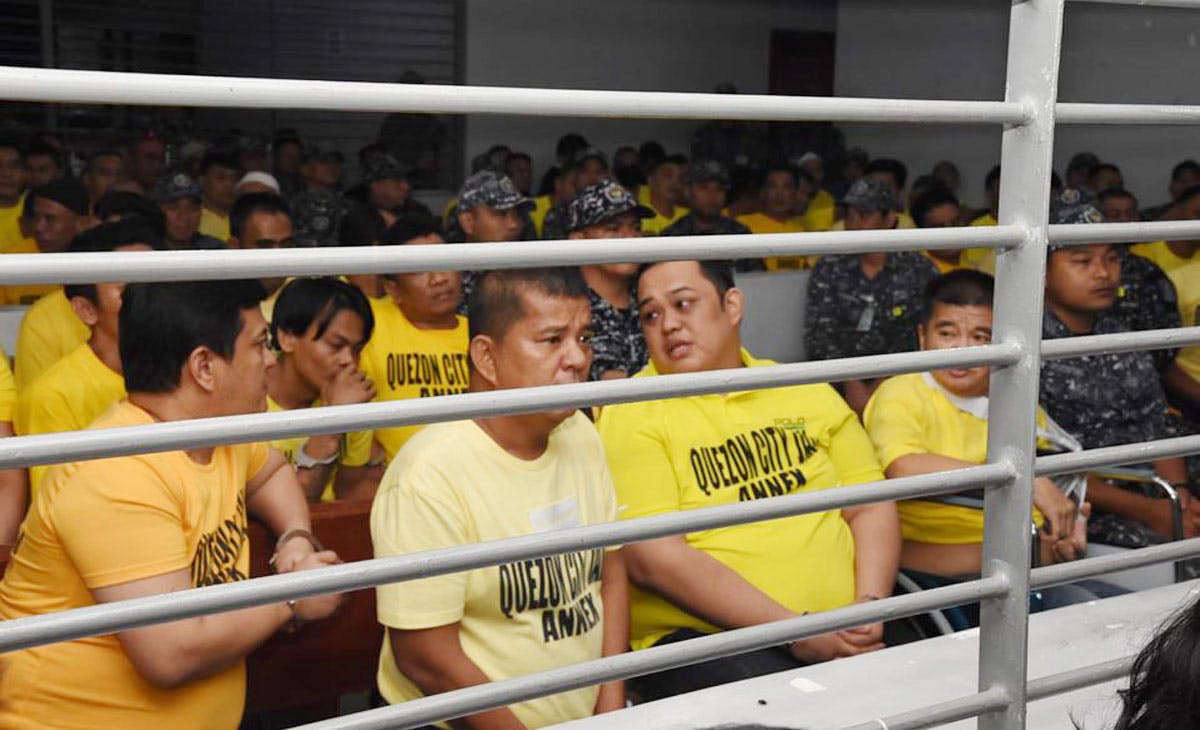
Sixteen years after the Maguindanao massacre, families of the 58 victims, including 32 journalists, say full justice remains out of reach despite partial convictions handed down in 2019.
Citing unresolved appeals and dozens of suspects who continue to evade arrest, the Center for International Law (CenterLaw), which represents several of the victims’ families, stressed that “full justice remains painfully elusive.”
“Why is it that with so many people killed, and with evidence more than sufficient, it has been 16 years and we still have no justice?” Ramonita Salaysay, widow of media worker Napoleon Salaysay, was quoted as saying in Filipino in the CenterLaw statement.
“Maybe once we finally attain justice, our hearts will feel lighter. We won’t have to take sleeping pills every night like we have for so long,” added Myrna Reblando, widow of journalist Alejandro “Bong” Reblando.
In December 2019, the Quezon City Regional Trial Court Branch 221 convicted 28 suspects – including key members of the Ampatuan clan – of 57 counts of murder and sentenced them to up to 40 years in prison.
Fifteen others were convicted as accessories to murder, while at least 57 accused, mostly police officers, were acquitted.
Those convicted were ordered to pay each victim’s family P100,000 in civil indemnity, P100,000 in moral damages and P100,000 in exemplary damages.
But six years after the ruling, the appeals before the Court of Appeals remain pending.
CenterLaw said it will file an urgent motion, on behalf of 19 victims’ families, to ask the appellate court to finally resolve the pending appeals in the Maguindanao massacre cases.
It also urged the Philippine government to provide the financial compensation to the families of the victims, which it said is consistent with the country’s obligation under international law.
Invisible grief
CenterLaw also vowed to push for the judicial recognition of photojournalist Reynaldo “Bebot” Momay as the 58th murder victim, noting that his absence from the list remains “a profound failure that demands urgent correction.”
Momay’s daughter, Ma. Reynafe, earlier wrote that every anniversary reminds them of the pain of never having found her father’s body.
“While other families received the painful dignity of laying their loved ones to rest, we never even had that chance,” she said. “For 16 years, our family has carried an invisible grief – made heavier because my father’s name still waits to be fully acknowledged as a victim.”
Fifty-eight people were killed on Nov. 23, 2009 when more than a hundred armed men linked to the Ampatuan clan stopped a convoy led by Genalyn Mangudadatu, wife of then-Buluan vice mayor Esmael Mangudadatu, who was on her way to file his certificate of candidacy for governor.
Among those killed were journalists covering the event, Mangudadatu’s sisters, two lawyers, aides and several civilians.
A total of 197 individuals were charged, but the court’s 2019 decision only covered 101 accused. Dozens of suspects remain at large.
“Sixteen years is far too long,” CenterLaw said. “Full justice must not only be promised – it must finally be delivered.”
‘We will never forget’
As the families and their lawyers push for judicial closure, human rights groups in Mindanao stressed that the massacre’s legacy remains deeply tied to the broader culture of impunity in the country.
The Union of People’s Lawyers in Mindanao (UPLM) said it remains steadfast in the fight against “warlordism and state-sanctioned impunity,” as the nation marks the tragedy’s 16th year.
The group expressed solidarity with the families of all 58 victims, saying: “We remember their courage, mourn their loss, and condemn the entrenched system of impunity that enabled this atrocity and continues to plague our nation.”
UPLM described the massacre as “a stark, brutal demonstration of how fascist mechanisms are weaponized by political dynasties to silence dissent and protect their power,” adding that the same systemic abuses persist today.
“Sixteen years later, impunity remains the dominant currency of a corrupt political system,” it said, linking the massacre to “the massive corruption scandals rocking the nation.”
The group said the killings and today’s corruption scandals are “fruits from the same poisonous tree – a system where power is treated as personal inheritance and the law is used as a weapon rather than a shield.”
It warned that the continued normalization of impunity enables both violence and large-scale plunder.
The organization assailed what it called the continuing “refinement” of the same tactics seen in 2009 – red-tagging, fabricated charges against activists and lawyers, and the use of state power to shield the corrupt.
Due to this, UPLM has called for the dismantling of private armies, the abolition of political dynasties, and the swift resolution of all remaining Maguindanao massacre cases.
“We will never forget,” UPLM declared. “The conviction of a few principals is not the end of justice. All perpetrators – whether they wield guns or pens – must be held to account. The memory of the 58 victims, and of our colleagues, is a burning flame that guides our path.” – With an additional report from Jose Rodel Clapano


