



Phl Military Now More Lethal Against Internal Threats
In a recent video, the military demonstrated how the Philippine Navy's AgustaWestland AW 109E helicopter obliterated a speedboat carrying Abu Sayyaf militants who were on a mission to conduct kidnapping.
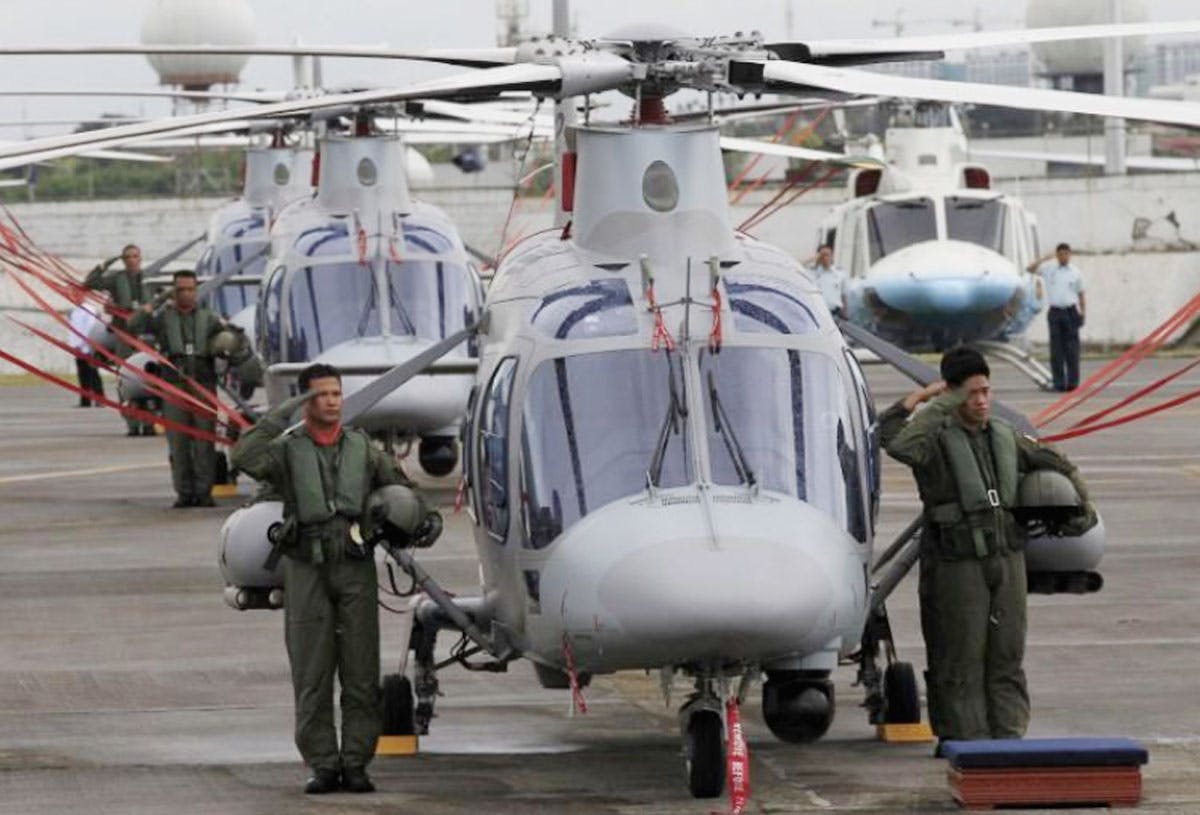
The military has become more lethal against internal security threats, like Maoist-led guerrillas and pro-Islamic State militants in the south.
In a recent video, it demonstrated how the Philippine Navy’s AgustaWestland AW 109E helicopter obliterated a speedboat carrying Abu Sayyaf militants who were on a mission to conduct kidnapping.
The Philippines has been slowly catching up with its Southeast Asian neighbors with the acquisition of new platforms to boost the country’s territorial defense as tensions in the West Philippine Sea heat up.
“Gradually, we are equipping and establishing a credible defense force that is at par with our neighboring countries,” Gen. Gilbert Gapay, the military chief, told journalists recently.
“Right now, we are already at 60 percent at par with our neighboring countries but once the equipment for modernization are delivered, we will be at par with them. We are gaining the respect of our neighbors as far as defense capability is concerned,” Gapay added.
The Navy and Philippine Air Force have benefited from the capability upgrade as they have to protect the Philippines’ maritime claims in the strategic waterway claimed by China and five other states as it is believed to have rich energy resources.
In 2020 alone, the military has upgraded its capabilities by acquiring tactical missiles for the first time. In June, South Korea delivered its first semi-stealth missile-guided frigate, BRP Jose Rizal.
The Air Force also took deliveries of air defense missiles to protect its five new radar sites capable of detecting incoming aircraft 400 miles away while its South Korea FA-50 light fighters have been equipped with air-to-air and air-to-ground tactical missiles.
In the 1950s and 1960s, the Philippines had the most modern military flying Sabre jets and later F-5 fighters. It also has a large fleet of minesweepers and destroyer escorts, remnants of the US Navy from the Second World War.
But the military’s external defense capabilities declined under the late dictator Ferdinand Marcos as he focused on counter-insurgency, fighting the twin threats from the Muslim separatists and Maoist-led New People’s Army guerrillas.
Marcos relied heavily on the United States’ security umbrella for its external defense during the 1970s and 1980s when the Cold War ended.
The Philippines was stripped naked after it kicked out the two large US bases in Subic, Zambales and Clark, Pampanga 1992 as its own military modernization program in 1995 did not take off after the country was hit by the Asian financial crisis in late 1990s.
The build up began under former president Gloria Macapagal Arroyo, whose administration allocated P5 billion in the annual budget for acquisition of weapon systems.
Former president Benigno Aquino III increased the military modernization budget to P25 billion a year and under President Duterte, the military started reaping the fruits of the past administrations’ efforts to acquire new and advanced equipment.
Gapay has credited Duterte for accelerating the modernization program.
“We could see the thrust of the President to strengthen the Armed Forces because he wanted to see a more capable and reliable military before he steps down in 2022,” he said.
Duterte wanted to transform the Navy into a “blue-water navy by acquiring frigates and corvettes to patrol our territorial and exclusive economic zones.” A blue-water navy means a country’s maritime force is capable of operating globally and across the deep waters of open oceans.
Duterte also wanted to acquire multi-role fighter jets, like F-16s, which are being flown by other Southeast Asian countries.
For the Philippine Army and the Philippine Marines, Gapay said the President also wanted to see mobility and amphibious capabilities improved.
Next year, the military will get P33 billion in its modernization funds, the highest as Duterte added P8 billion, which was lost in the 2020 budget when the government realigned funds for the coronavirus disease 2019 (COVID-19) pandemic.
The health crisis has actually pushed back the military’s acquisition binge as contracts for eight missile-capable fast attack interdiction craft from Israel got delayed.
The acquisition of 16 T129 attack helicopters from Turkey remains uncertain as Ankara could not deliver a US-made engine after the US slapped arms sanctions on its North Atlantic Treaty Organization or NATO ally after it got S-400 missiles from Russia.
The Army has also started negotiations for its first medium-range missile from India but these were also affected. The BrahMos missiles will boost the country’s anti-access and area denial (A2AD) strategy in the West Philippine Sea as it can hit ships from the shore as well as shoot down aircraft.
The Army awarded contracts to Israel to supply 40 light tanks and armored vehicles while the US has transferred more than P33 billion worth of planes, ships and maritime surveillance equipment since 2015 to enhance its maritime domain awareness.
The Navy received $14 million worth of ScanEagle drones which would widen its coverage of the vast West Philippine Sea to more than 60 to 70 percent with more time to patrol than with its ships and anti-submarine helicopters.
Last month, US President Donald Trump’s national security adviser handed over $18 million worth of precision-guided missiles and bombs which would make the military deadlier against its domestic threats, like Abu Sayyaf.
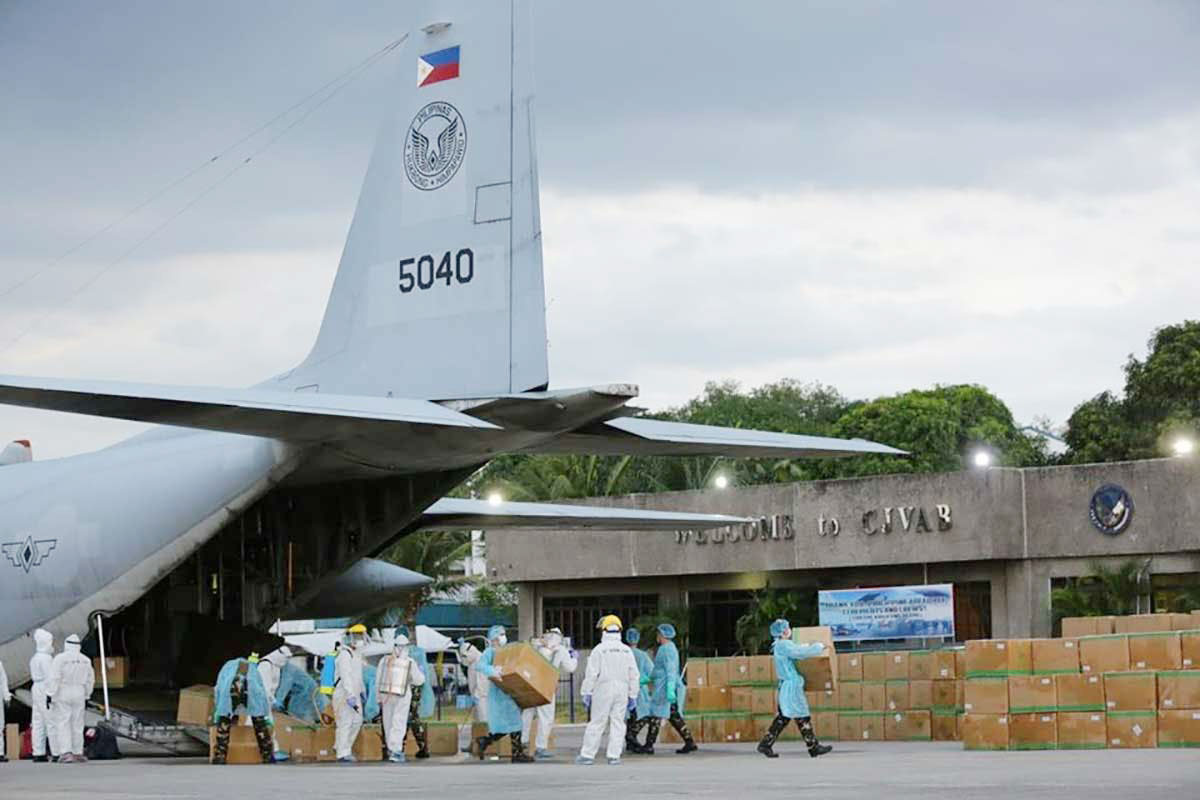
Finally, acting US Defense Secretary Christopher Miller transferred about $29 million worth of equipment, including sniper rifles and a second-hand C-130 Hercules transport plane.
The Philippines has only two operating C-130s and three others are under repair and maintenance.
US equipment gave more than $60 million in just two months before Trump handed over power to president-elect Joe Biden, the highest among its allies and partners in Asia. Since 2015, the US has transferred P34 billion in equipment and training.
Before the President steps down in 2022, the military hopes to begin the process of acquiring more lethal equipment, like electric-diesel submarines, multi-role fighters, corvettes and offshore patrol vessels and multi-rocket launcher systems.
In another six-year time, the Philippines is expected to be at par with other Southeast Asia countries in terms of modern Armed forces with a modest defense capability.
Security analysts say the Philippines remained 20 years behind its neighbors, and perhaps 50 years behind Singapore, which has the most modern military in the region.
Singapore spends the most on defense in the region with more 13 percent of its gross domestic product (GDP), followed by Indonesia and Thailand with more than seven percent. Malaysia spent $3 billion last year and the Philippines allocated barely one percent of its GDP. The police got more than the military in the 2021 budget.
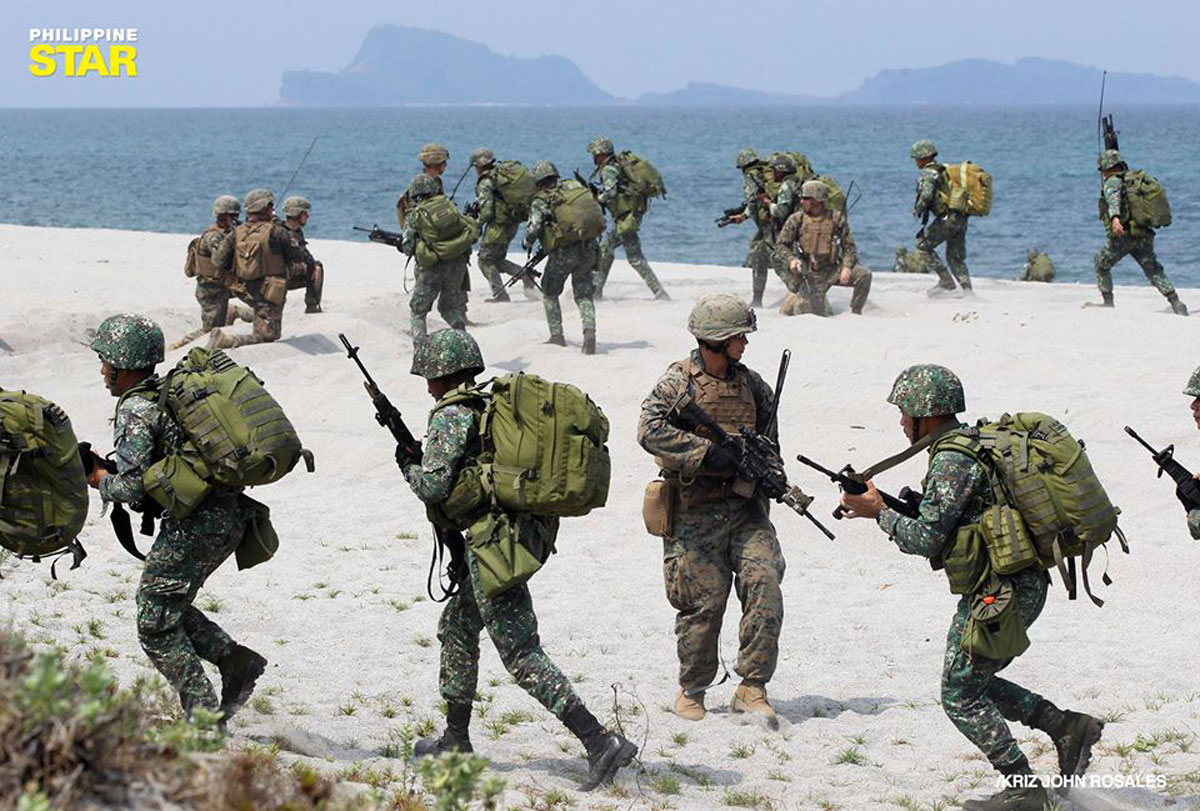
But slowly the Philippines is catching up and the real efforts to upgrade the defense capability has started.
Since 2015, the Philippines has received more than P34 billion worth of equipment and training from the US, the highest in this part of the world, next to Israel, Egypt, and Jordan.
Defense Secretary Delfin Lorenzana expressed confidence that the US policy towards the region, in general, and in the Philippines, would not change due to America’s permanent security interests in the region.
He pointed out the growing rivalry with China in the South China Sea, the tension in Taiwan’s Straits, the unpredictability of North Korea and Islamist militants in Southeast Asia’s backwater.
National Security Adviser Hermogenes Esperon shared Lorenzana’s views but doubted if the relations would remain the same. “US national interests hardly change,” he said. “How and what they do to pursue it can vary. Nothing is clear yet on this.”
Manila’s apprehension is shared by other countries in the region.
Biden had indicated he would appoint a czar to look after Asia. However, this was not reassuring as his statements were too broad and general. He has only spoken about Sino-American relations but it was also vague even if he said he will keep Trump’s tariffs on China.
“So far, what we heard are standard statements, like pursuing coherent, consistent and predictable policies towards China,” a Southeast Asian diplomat based in Washington told The Philippine STAR. “There are no specifics. But we expect the usual tapping of allies and partners, multilateralism and democratic values and norms.”
Another diplomat, based in Manila, said they are closely watching Biden’s policies if he will deviate a bit from the Obama-era policies. “There is pressure on Biden not to use the same old playbook,” he added.
Obama was first to recognize the importance of the region, announcing his “pivot to Asia” policy as threats from China emerged after Beijing began negotiations with Asian neighbors for the creation of the world’s largest trading bloc and its military began asserting boldly in the disputed waters. China has built seven artificial islands in the Spratlys, converting them into fortresses with naval and air bases defended by surface-to-air and shore-to-ship missiles.
But Trump pushed the envelope further. The US military increased by more than five times the navy’s freedom of navigation patrol operations as well as overflights in the South China Sea. It also held joint patrols with Japan, India, Australia and European allies in the region.
Last year, it gathered Southeast Asian navies for its first naval drills and had increased engagements with its former foe, Vietnam, gifting Hanoi a second-hand coast guard cutter similar to what it gave to the Philippines to enhance maritime domain awareness capabilities.
Vietnam and the Philippines are two of four Southeast Asian nations locked in territorial disputes with China. Brunei and Malaysia had been cozying up with Beijing although after prime minister Najib Razak was replaced, Kuala Lumpur has been distancing itself from China.
In the last few months, Malaysia has been dueling with China’s ships, which have been harassing and patrolling offshore oil wells and fields in the disputed waters.
Analysts say there are some people in the team of Antony Blinken, whom Biden nominated as secretary of state, who “understand the importance of the South China Sea and the need for the US to engage” with the Association of Southeast Asian Nations.
Hopefully, Blinken will listen to them.


