



Phl, Japan Reciprocal Access Agreement May Be Signed By Yearend – Envoy
President Marcos has described the proposed access deal as “extremely significant,” saying it would give Manila and Tokyo greater capability to maintain the peace in the South China Sea and respond to disasters.
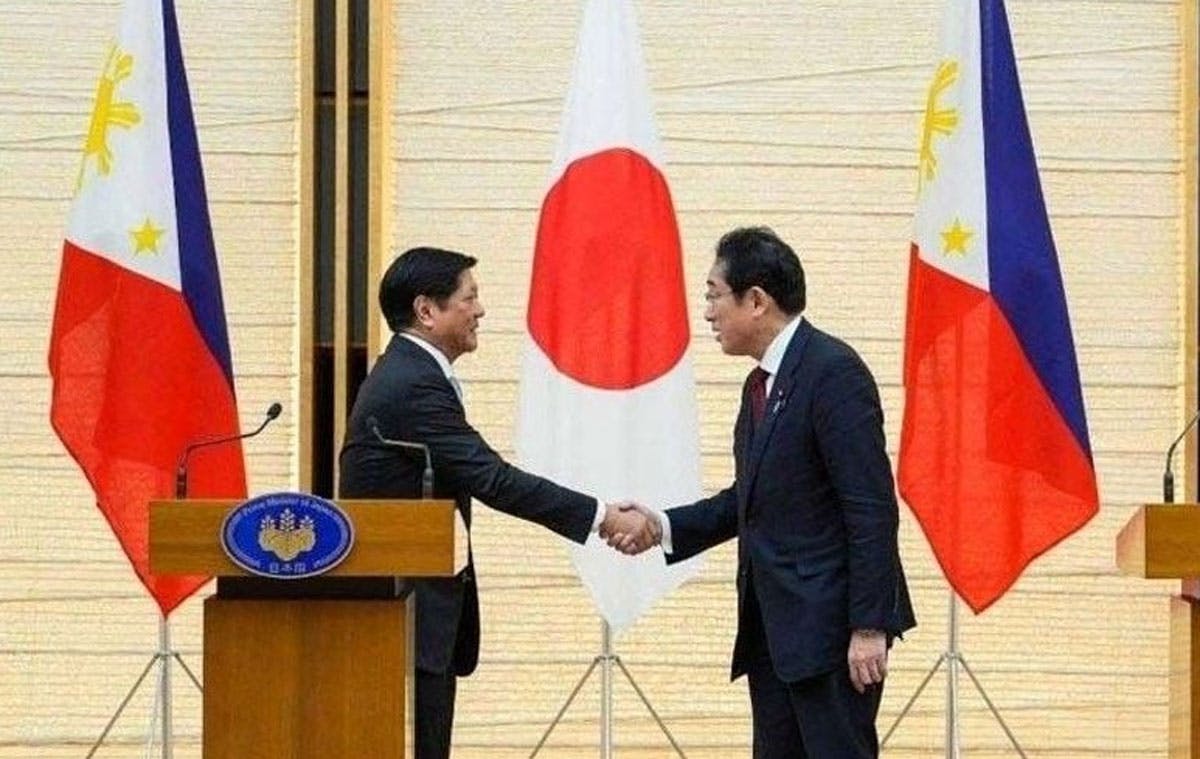
The signing of the reciprocal access agreement that will allow the Philippines and Japan to send military forces to each other's territory for joint drills may take place this year but will not coincide with the historic trilateral summit of Manila, Tokyo and Washington this week, an envoy said.
President Marcos, Japanese Prime Minister Fumio Kishida and US President Joe Biden will meet in Washington on April 12 as tensions continue to mount in the South China Sea due to China's aggressive means of asserting its wide-reaching but voided maritime claim.
According to some reports, the Philippines and Japan may agree on the access deal shortly after the summit, the first time the three leaders will meet to tackle common security concerns.
Philippine ambassador to the US Jose Manuel Romualdez said the agreement may be signed this year.
"Most likely (Defense) Secretary (Gilbert) Teodoro before the end of the year, not in Washington," Romualdez told The Philippine STAR.
The RAA was discussed during the bilateral meeting of Marcos and Kishida on the sidelines of the Association of Southeast Asian Nations – Japan Commemorative Summit in Tokyo last December. The two leaders agreed to continue working together to reach an early conclusion of the talks on the agreement and to enhance cooperation between their coast guards.
Marcos has described the proposed access deal as “extremely significant,” saying it would give Manila and Tokyo greater capability to maintain the peace in the South China Sea and respond to disasters.
The agreement was also mentioned when Japanese Ambassador to the Philippines Endo Kazuya presented his credentials to Marcos last week. According to the envoy, the two countries are “working hard” for the conclusion of the RAA.
The Philippines has visiting forces agreements with its treaty ally the US and Australia.
In a recent statement, the White House said Marcos, Kishida and Biden would “advance a trilateral partnership built on deep historical ties of friendship, robust and growing economic relations, a proud and resolute commitment to shared democratic values, and a shared vision for a free and open Indo-Pacific” during the summit.
While the meeting is widely perceived as an effort to counter China's muscle- flexing in the South China Sea, the Philippines’ Department of Foreign Affairs said the event is not directed at any country.
China, whose historic claims in the strategic sea lane was invalidated by a Hague-based tribunal in 2016, has been harassing Filipino fishing boats and resupply missions in areas within the Philippines' exclusive economic zone.
Late last month, Marcos said the Philippines would implement a “response and counter measure package that is proportionate, deliberate, and reasonable in the face of the open, unabating and illegal, coercive, aggressive and dangerous attacks by agents of the China Coast Guard and the Chinese maritime militia.”
“We seek no conflict with any nation, more so nations that purport and claim to be our friends, but we will not be cowed into silence, submission or subservience. Filipinos do not yield,” Marcos said in a statement.


