



Phl Eyes Alternative Oil Suppliers
The Philippines relies heavily on Middle East crude, which accounts for roughly 98 percent of its imports, according to Department of Energy.
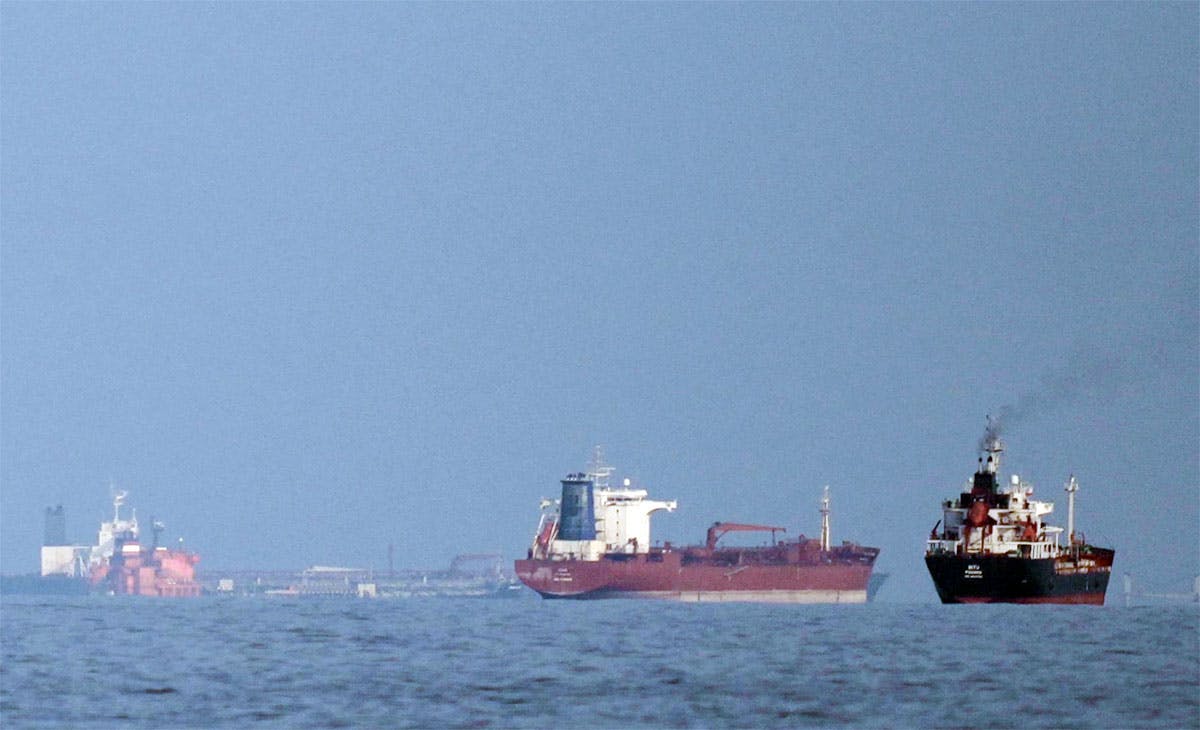
NEW YORK – The government will look for other countries that could supply fuel to the country, President Marcos said on Tuesday, March 10, as oil prices surged amid the conflict in the Middle East.
“Naghahanap tayo ng iba’t ibang lugar na makapagbigay ng supply sa atin. (We are looking for other places that can supply us). We are talking to many other countries who we normally do not buy oil from but hopefully we will be able to come to an agreement with them and that we will get further supply from them,” Marcos told Filipino journalists covering his working visit here.
“But the real problem here that everybody is having to deal with is hindi natin alam kung gaano katagal ito(But the real problem here that everybody is having to deal with is we don't know how long this will last),” he said.
The Philippines relies heavily on Middle East crude, which accounts for roughly 98 percent of its imports, according to Department of Energy (DOE).
The Senate and the House of Representatives are closely coordinating with Malacañang over ways to expedite the passage of a measure suspending the excise tax on fuel amid the escalating Middle East crisis.
Asked what provisions he prefers in the bill providing him the emergency powers, Marcos said, “It's very, very simple.”
“What we asked of the legislature is really very simple: when the price of oil, at least this is the original version, when the price of oil has breached $80 per barrel on average for a month, then the emergency powers can be exercised,” the Chief Executive said.
Biofuel importation pushed
Meanwhile, the Department of Energy (DOE) is seeking legislative approval to allow the importation of cheaper biofuels – a move officials say is necessary to temper “painful” fuel price hikes but which – local producers warn – could destroy the domestic industry.
At a Senate committee on energy hearing on Wednesday, March 11, Energy Secretary Sharon Garin revealed that while the country has enough gas and diesel supply to last until April, geopolitical risks are driving pump prices to unsustainable levels.
“(On Tuesday) P10 then another P10 (on Wednesday),” she said, referring to the per liter price increase in pump prices. “Masakit siya (It’s painful). One possibility to temper that sharp increase is having more biofuel... specifically on gas,” she said.
The DOE’s proposal centers on amending the Biofuels Act of 2006, which currently mandates the “exhaustion” of all local supply before any importation is permitted.
Under Senate Bill No. 1485 or Murang Langis Act, the government would allow limited importation for up to one year if domestic biofuel prices exceed pure fuel prices by at least five percent.
However, Garin pointed out that the cost of locally produced biofuel is P75 per liter, while imported biofuel is P37 per liter. Pure gasoline is priced at P43.05 liter, she said.
Garin argued that sticking purely to domestic blends would add an extra P1.10 per liter to gasoline and P2.47 per liter to diesel.
“We’re not here to kill the industry. We’re here to balance,” she maintained, adding that the measure is a temporary emergency option.
Local ethanol producers attending the hearing, however, expressed grave concern over the proposal.
Renato Cabati, president of the Ethanol Producers Association of the Philippines, warned that an expanded importation of biofuel would leave 100,000 farmers with nowhere to sell their molasses, which is used to make ethanol.
He explained that local costs are higher because countries like the US and Brazil heavily subsidize their corn-based ethanol, whereas Philippine producers receive no such support.
Sen. Sherwin Gatchalian reminded the DOE that the Biofuels Act was originally designed to build an indigenous industry and protect the environment.
He urged the government to look at “the other side of the coin” before turning to imports for solutions.
“We want to help our consumers but we should be fair to those who invested in our processing plants,” Gatchalian said in Filipino.
He suggested that if the government moves forward with imports, it must simultaneously provide subsidies to the farmers and factory workers who would be displaced.
Oil companies like Shell and Chevron also suggested during the hearing that adjusting excise taxes or VAT might provide more “direct and immediate” price relief than altering the biofuel blend, which could have long-term repercussions for energy self-sufficiency. – With Neil Jayson Servallos