



Philippines, Other Countries To Miss UN Sustainable Development Goals
Set up in 2015 by the UN General Assembly, the SDGs succeeded the Millennium Development Goals and are intended to be achieved by 2030.
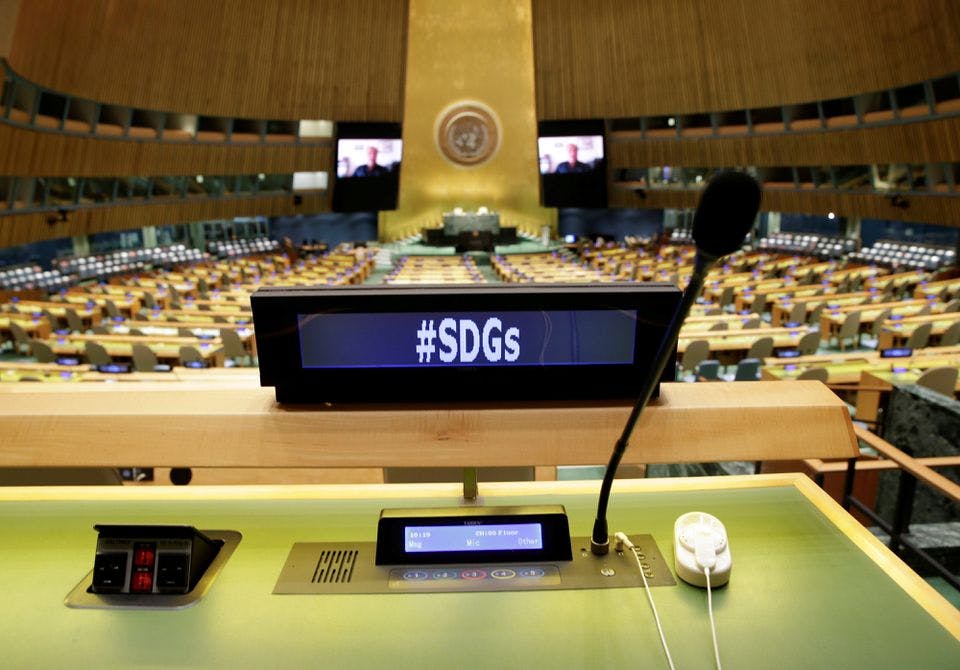
SINGAPORE - Citing COVID-19’s impact on health systems, a scientist said that it will be impossible for countries including the Philippines to hit the targets set under the United Nations (UN) Sustainable Development Goals (SDGs).
“When you look at pandemic preparedness and specifically, as it impacts on sustainable development goals, we can speak in general terms that all countries will not be able to hit the SDG targets, all 17 of them, precisely because of the impact of COVID-19 and how it affected health systems across all countries,” said Dr. Jaime Montoya, executive director of the Philippine Council for Health Research and Development, in an interview.
Montoya, who was appointed by the UN Secretary General to be one of 15 leading scientists from around the world to draft the UN Global Sustainable Development Report for 2023, was guest speaker in a session under the World One Health Congress-Temasek Foundation Pinnacle Series held at the Sands and Expo Convention Center here.
“As a member of the independent group of scientists, we are supposed to have a midterm assessment which falls in 2023 – the middle, because the SDGs were developed in 2015 so we are midway. We are supposed to have a global assessment of how the countries are faring as far as the SDG goals and targets are concerned as a build-up to 2030 which is the end of the SDG goals by which countries will really be assessed,” he explained.
According to Montoya, as defined by the UN, the SDGs are a collection of 17 interlinked global goals designed to be a “shared blueprint for peace and prosperity for people and the planet, now and into the future.”
In particular, SDG 3 refers to good health and well-being. “This is to ensure a healthy life and well-being for all ages,” said Montoya.
Set up in 2015 by the UN General Assembly, the SDGs succeeded the Millennium Development Goals and are intended to be achieved by 2030.
Montoya said that in the case of the Philippines, a lot of work has to be done.
“I don’t want to sound pessimistic but not only for the Philippines but for most countries, we should address this with a sense of urgency and implement all of the strategies such as ‘One Health’ in order to be prepared for the next pandemic so as to at least hit some of the targets set by the SDGs,” he said.
But, Montoya added, the reality is “we are far from it and unless we really do something drastic, we do not hope to achieve those goals even by 2030.”
At the same time, “We have to learn from our past experiences and it seems that we did not learn from it despite the fact that we were affected by many pandemics in the past. There is the coronavirus in 2003, then we have the pandemic influenza in 2009 and then the ebola in 2014 but then we did not learn.”
He added, “It’s like the problems are recurrent and the problems that were identified in the current pandemic were pre-existing, they are not new. They were already existing even prior to the pandemic, it just got worse because of the pandemic. In that respect, we are not yet resilient.”
Montoya also said, “The most important thing when we talk of the national, we have to strengthen the health system not only to react to a pandemic that is already there but to be prepared for the next pandemic. That means you have to strengthen all the components of the health care delivery system.”
Citing recommendations made by the World Health Organization, Montoya said there is a need to strengthen pandemic preparedness and health systems, invest in public health functions and build a strong primary health care foundation.
Montoya added that “contributions and cooperation between the public and the private sectors are essential in robust health systems, creating and promoting environmental re-search and increasing domestic and global investments in health systems foundation.”
“Addressing pre-existing health inequities and mitigating the impact of COVID-19 on our marginalized and vulnerable populations which existed even before the start of the pan-demic is going to be worse if we do not learn from our past experiences and still adopt ‘business as usual,’” Montoya said.
He added that “what was made obvious by this pandemic is the important role of solidarity not only within the country but, more importantly, regionally and globally.”


