


OVP Budget Proposal Includes P500-Million Confidential Fund
The Office of the Vice President has yet to issue a statement regarding the proposed confidential fund and the increases in other expense allocations of the office.
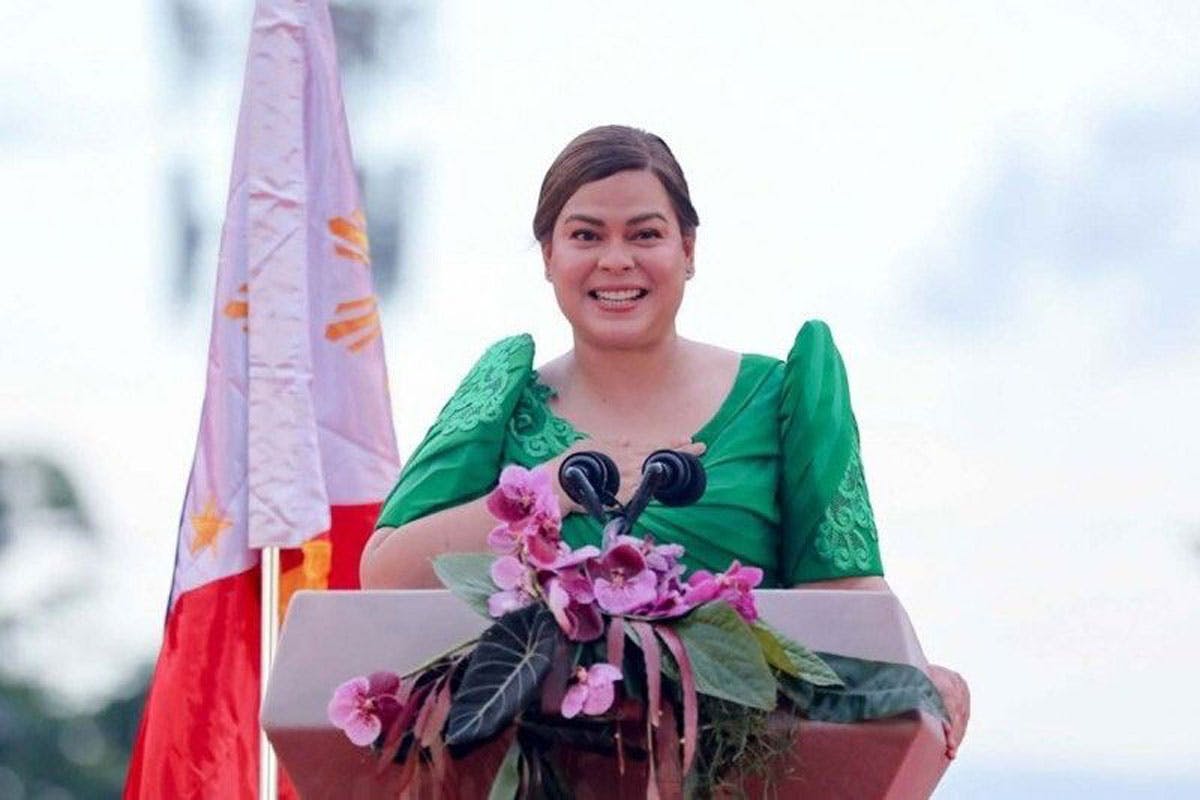
The government has proposed a significant increase in the budget of the Office of Vice President (OVP) for next year, including a confidential fund amounting to P500 million.
Based on the 2023 National Expenditure Program submitted to Congress, the Department of Budget and Management has proposed a new appropriation of P2.292 billion for the OVP, up by more than 200 percent from this year’s P702 million.
The bulk of the increase is for maintenance and other operating expenses, particularly financial assistance and subsidy that almost tripled from P357.6 million to P920.8 million.
Another P500 million was allocated for “confidential expenses,” which the previous OVP under Leni Robredo did not have throughout her six-year term.
Other items with significant increases include traveling expenses from P25.3 million to P59.5 million, supplies and materials expenses from P45.8 million to P262.99 million, professional services from P41.78 million to P193.95 million, representation expenses from P29.57 million to P79.31 million and rent or lease expenses from P18 million to P32.48 million.
The OVP has yet to issue a statement regarding the proposed confidential fund and the increases in other expense allocations of the office.
Vice President and Education Secretary Sara Duterte’s spokesman Reynold Munsayac earlier said Duterte intends to expand the reach of their social services programs to more marginalized communities.
The OVP has opened several satellite offices to accommodate more requests for medical and burial assistance.
It also plans to initiate other programs, including a livelihood assistance program for women and members of the LGBTQ+ community.
The OVP has also moved its office from the Quezon City Reception House to the Robinsons’ Cybergate Plaza in Mandaluyong City.
Learning spaces
The United States government partnered with the Department of Education to train DepEd officials in developing solutions for learning spaces that are contextualized and adaptable to address future challenges in education.
Through the US Agency for International Development (USAID), over 50 officials from DepEd central, regional and division offices were trained in designing and developing prototype learning spaces to address future challenges in the education sector during a workshop held from Aug. 15 to 19.
“As our teachers and learners continue to face barriers to equitable and inclusive education, we must continuously explore ways to ensure that all have access to quality teaching and learning resources by sustaining gains in education technology and by supporting and enhancing teachers’ leadership roles,” USAID Philippines Education director Thomas LeBlanc said.
Participants during the five-day workshop learned to carefully define issues to be addressed, empathize with teachers and learners and conceptualize, design and test a prototype learning space that addresses education-related needs.
To illustrate the outcomes of the workshop, the Schools Division Office of Tanauan, Batangas sought to address the issue of crowded classrooms by designing an interactive gazebo that enables students to explore nature while developing important technological and social skills.
Through its All Children Reading Philippines project, the USAID aims to support the DepEd in improving early-grade reading skills for 100 million children. – With Pia Lee-Brago