



Nuclear Signatures Detected In West Philippine Sea
While iodine-129 is radioactive, the researchers said its current levels in the WPS pose no threat to human health or the environment.
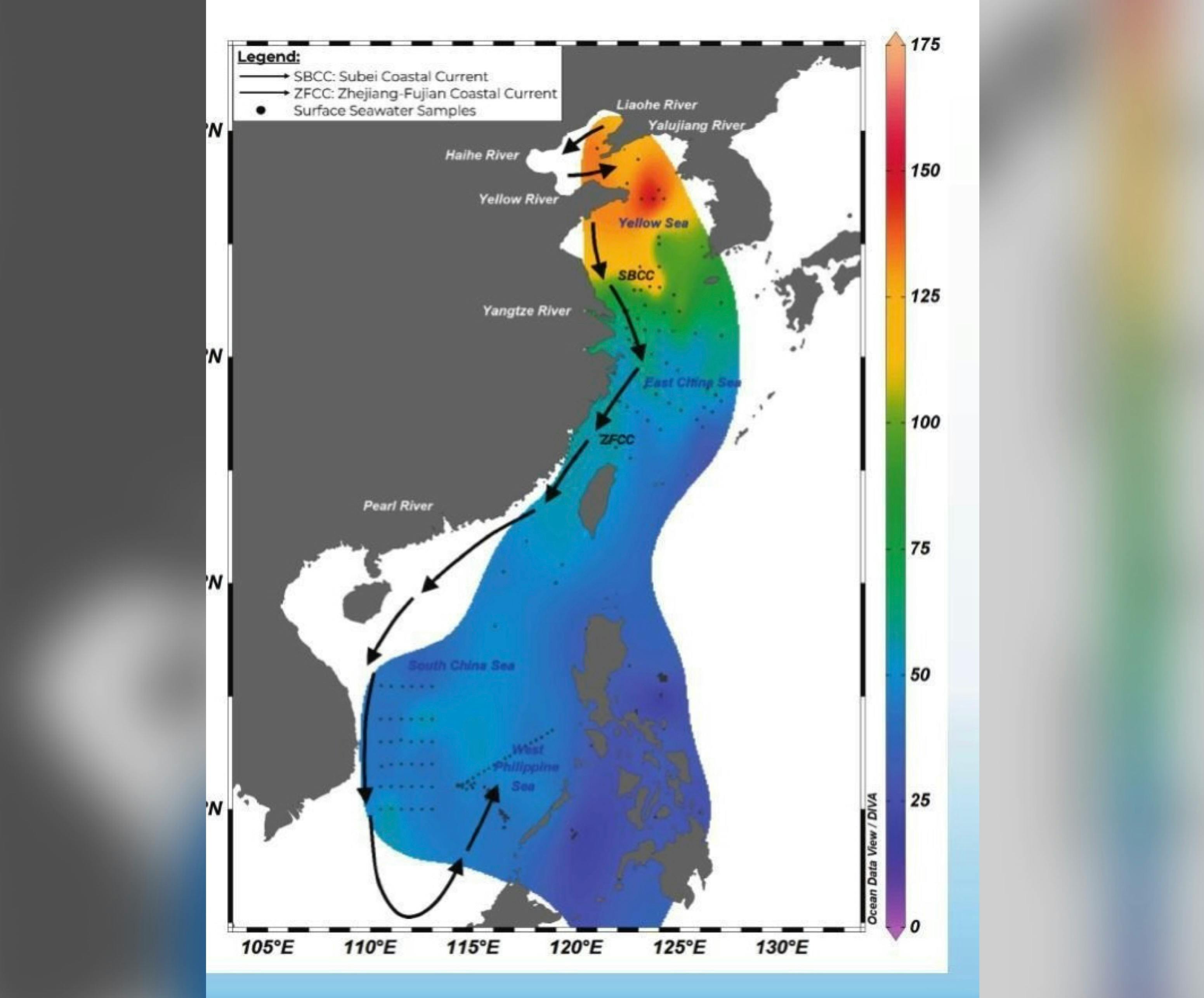
Scientists have detected elevated levels of iodine-129 – an isotope commonly used as an indicator of nuclear activity – in seawater samples from the West Philippine Sea (WPS).
In a research published this month, the researchers said the concentrations found in the WPS were higher than in any other part of the country, despite the Philippines having no active nuclear power plant or nuclear weapons program.
The findings are based on an analysis of 119 seawater samples collected from the WPS, the Philippine Rise, the Sulu Sea and other areas across the archipelago.
Researchers found iodine-129 levels in the WPS to be about 1.5 to 1.7 times higher than those recorded in other sampling sites.
The study was conducted by experts from the Department of Science and Technology-Philippine Nuclear Research Institute, UP MSI’s Geological Oceanography Laboratory and the University of Tokyo.
The team traced the likely source of the isotope to the Yellow Sea.
The researchers said the results were consistent with recent Chinese studies linking iodine-129 in the Yellow Sea to decades-old nuclear weapons tests and nuclear fuel reprocessing facilities in Europe, which released the isotope into soils and rivers in northeastern China.
The study added that iodine-129 may have reached Philippine waters through ocean circulation systems, particularly the Yellow Sea Coastal Current and the Chinese Coastal Current, though further oceanographic modeling is needed to confirm the transport pathways.
While iodine-129 is radioactive, the researchers said its current levels in the WPS pose no threat to human health or the environment.
They also underscored the need to strengthen monitoring and regulation of radioactive materials, especially those that cross national boundaries.
The research was funded by the DOST-National Research Council of the Philippines and the DOST-Philippine Council for Agriculture and Resources Research and Development.