NEWS IN CONTEXT | CPP Admits Mistakes, To Go Back To Basics
For the Communist Party of the Philippines, “rectification” is the jargon for correcting mistakes. Where then does this “rectification” policy leave officials of the National Democratic Front who are negotiating for peace?
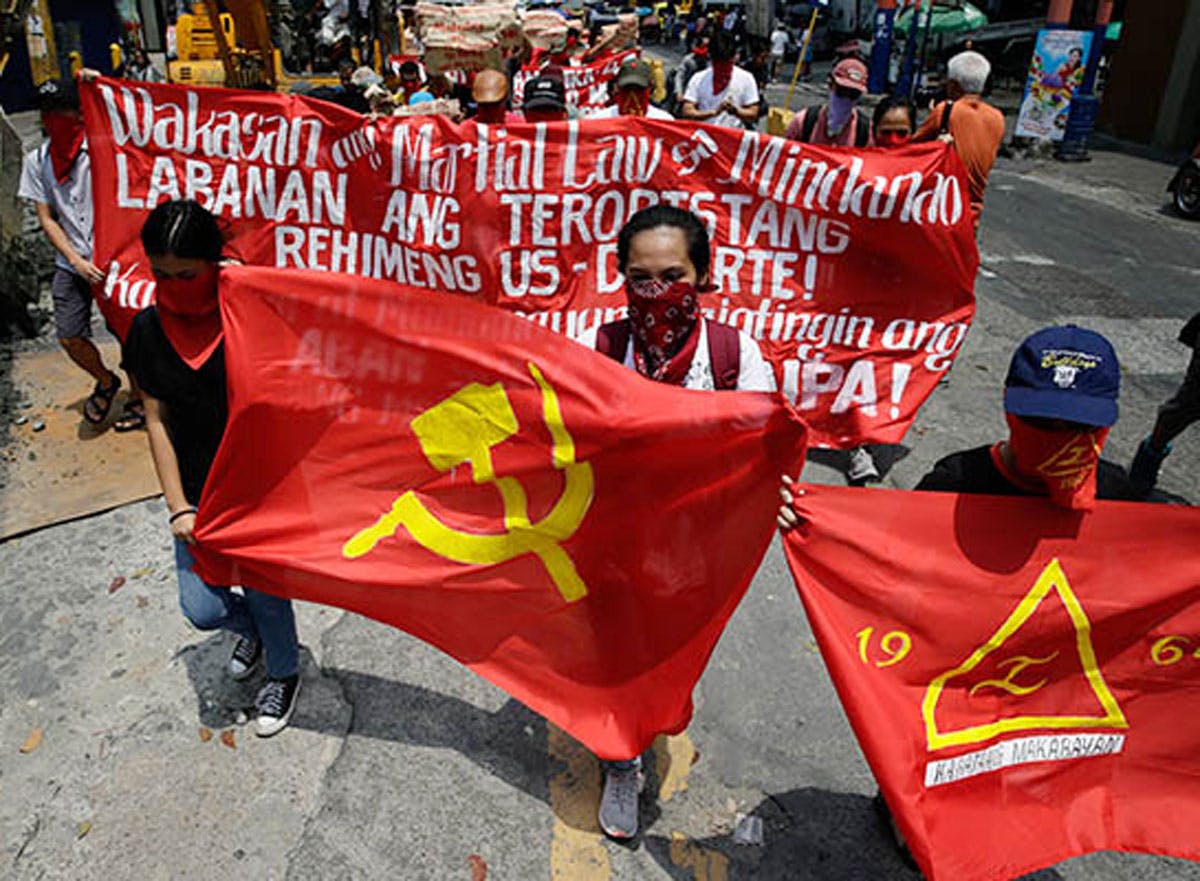
On its founding anniversary on Jan. 26, the Communist Party of the Philippines announced a “third rectification”. What does it mean?
More importantly, what does it spell for talks between the communists and government?
Underneath all the heavy ideological jargon, the CPP statement, simply put, admits its mistakes and announced it will go back to basics.
On the other hand, those “basics” include sticking to the original strategy of its founding chairman, the late Jose Maria Sison. Through the 55 years the CPP has tried and failed to seize power, the CPP used a combination of peaceful and armed tactics. But it was always the latter that was the primary method for capturing power.
The CPP will organize students, farmers, and trade unions and stage strikes, even participate in elections, but only if they contribute to an eventual victory of the New People’s Army. This is the so-called Maoist strategy that Sison himself first preached as a young university professor.
“The party will forever treasure the legacy of Ka Joma (Sison). For more than five decades, Ka Joma was an indefatigable worker of the Philippine revolution and served as its inexhaustible beacon,” the Jan. 26 CPP statement read.
The statement is a not-so-subtle admission that Sison, even from exile in the Netherlands, exercised influence, if not control, over the communist movement up to his death in 2022.
The CPP’s strategy remains unchanged because its view of the world remains largely as it was in 1968, when Sison founded the CPP.
This is evident in its Jan. 26 statement:
“As the global capitalist system continues to wallow in crisis, the moribund state of the semi-colonial and semi-feudal system in the Philippines continues to worsen.”
It went on about the “untold suffering of the Filipino people” and “intensified imperialist oppression and plunder.” The vocabulary is a veritable throwback to the radical 60s.
The CPP’s answer to the major setbacks it has suffered over the years is more Marx, Lenin, and Mao, not less.
“The leadership of the entire membership of the party will carry out this rectification movement firmly under the united banner of Marxism-Leninism-Maoism, as well as along the Party’s line and analysis of Philippine society, and program for waging people’s democratic revolution through protracted people’s war along the strategic line of encircling the cities from the countryside,” the CPP statement went on.
The latter part about a “protracted people’s war” shows CPP is not abandoning its guerilla war. It still dreams of a Mao-style victory.
Where then does this “rectification” policy leave officials of the National Democratic Front who are negotiating for peace? Last Nov. 28, the government and the NDF panels met in Oslo. They issued a joint statement, saying both sides have agreed on a “principled and peaceful resolution of the armed conflict.”
Will “rectification” reverse what happened in Oslo?
A government negotiator says “rectification” is taken to mean, a hardening of position. This is in fact the “third rectification” in the communist movement. The first was in 1968, when young radicals led by Sison broke away from the old Partido Komunista ng Pilipinas.
The “Second Rectification” happened in 1992. Sison reaffirmed the CPP dogma and blamed their setbacks on party leaders who veered from his countryside war strategy. His faction was called the “reaffirmists”. The other faction was called “rejectionists” because they found Sison’s teachings did not keep up with the times.
Previous “rectifications” saw splits within the CPP that sometimes ended in violence. Romulo Kintanar, the former NPA chief, and Popoy Lagman, the head of the powerful Manila-Rizal committee of the CPP, belonged to a faction opposed to Sison. They were gunned down in public by the NPA.
Periods of crisis have seen the CPP digging in, not loosening up on its ideology.
Its ranks decimated and its leadership succumbing to old age, the CPP once again finds solace and strength in rigidity. Ideology is still the glue that keeps it together.
Even at its weakest, CPP remains a highly disciplined organization. Its members are capable of hardship and suffering, probably unmatched by any other institution or organization in this country.
The military frets at peace talks. They understand the danger of easing up on the remainders of the NPA, now estimated at 2000 fighters. The military did not match the holiday ceasefire announced by the NPA. Instead, a Christmas day offensive in Bukidnon left nine guerillas killed.
The CPP anniversary statement suggests the hardliners are in charge. Will this result in another split by those who prefer negotiations to war?
Or are exploratory talks simply a tactic for the CPP to lick its wounds, buy time, and rebuild the communist movement?