


Manny Pacquiao Is New Anti-Poverty Chief
The appointment of Filipino boxing champion Manny Pacquiao as anti-poverty czar marked his return to public service after four years.
After facing a number of tough opponents in the past three decades, Filipino boxing icon and former senator Manny Pacquiao is embarking on a new bout with a formidable foe that very few have managed to knock out: Poverty.
This time, he will be slugging it out not before affluent patrons in Las Vegas, but before poor Filipinos who dream of rising from their struggles like he did and who cheered for him during his boxing heyday.
And the venue of the match is no longer massive arenas and casinos, but a government office mandated to craft policies to address the very problem that prompted him to wear his boxing gloves.
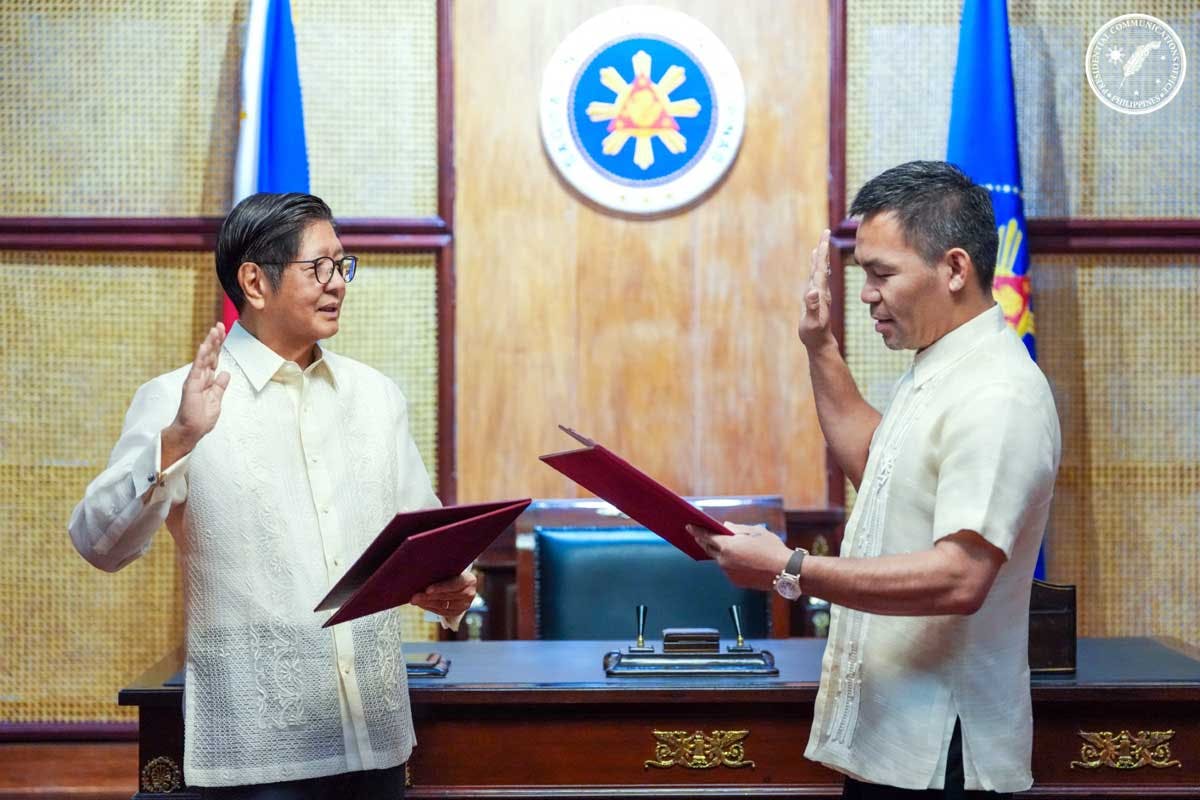
Pacquiao has been appointed secretary and lead convenor of the National Anti-Poverty Commission (NAPC), succeeding Lope Santos III, who occupied the post for more than three and a half years. He took his oath before President Marcos, his erstwhile political rival, at Malacañang on Tuesday, Sept. 8, according to the Presidential Communications Office.
Pacquiao ran for president in 2022 but lost, placing third behind Marcos and former vice president and now Naga City Mayor Leni Robredo with 3.6 million votes. The boxing champion tried to stage a political comeback in 2025 by running for senator, but was again unsuccessful, ranking 18th or six posts shy from the winning circle.
Pacquiao's appointment as anti-poverty czar marked his return to public service after four years.
"Thank you to President Marcos for his trust that allowed me to serve once again. I also experienced poverty. I experienced sleeping on cardboard on the streets, consuming only water, having nothing to eat and earning coins just to help my family. Our poor countrymen are really in my heart," Pacquiao said in a statement written in Filipino.
"In the past few years, whether in government or not, I did not stop providing help and building houses for our countrymen. Now that I have been entrusted here in NAPC, with the help of God, we can do more. This is not politics. This is true public service that ensures that each program of the government will be felt by the 14 basic sectors and our poorest countrymen and families," he added.
The 14 basic priority sectors of the NAPC, which is mandated institutionalize social reforms aimed at uplifting marginalized communities, are farmers and landless rural workers, artisanal fisherfolk, formal labor and migrant workers, informal sector workers, indigenous peoples and cultural communities, women, persons with disabilities, senior citizens, victims of calamities and disasters, youth and students, children, urban poor, cooperatives and non-government organizations.
Santos wished Pacquiao luck and expressed confidence that the boxing icon's experience in public service and strong advocacy to uplift the lives of Filipinos would serve him well as he takes on his new role.
The multi-titled boxer served as representative of Sarangani province from 2010 to 2016 and senator from 2016 to 2022. He is also involved in humanitarian work through the Manny Pacquiao Foundation, which provides assistance to impoverished communities.
Pacquiao made boxing history after becoming the only fighter to bag world titles in eight weight divisions.
In previous media interviews, Pacquiao said he opted to become a boxer to feed his poverty-stricken family in General Santos. Before becoming a professional boxer in 1995, he took on several jobs and hustles to survive, including performing janitorial and construction tasks and selling donuts on the streets.