



‘KWF Book Purge Violates Academic Freedom’
Fr. Ranhilio Aquino said the Komisyon sa Wikang Filipino should have exercised due process in screening the five books instead of calling on public libraries and schools to pull them out of fear of violating the Anti-Terrorism Law.
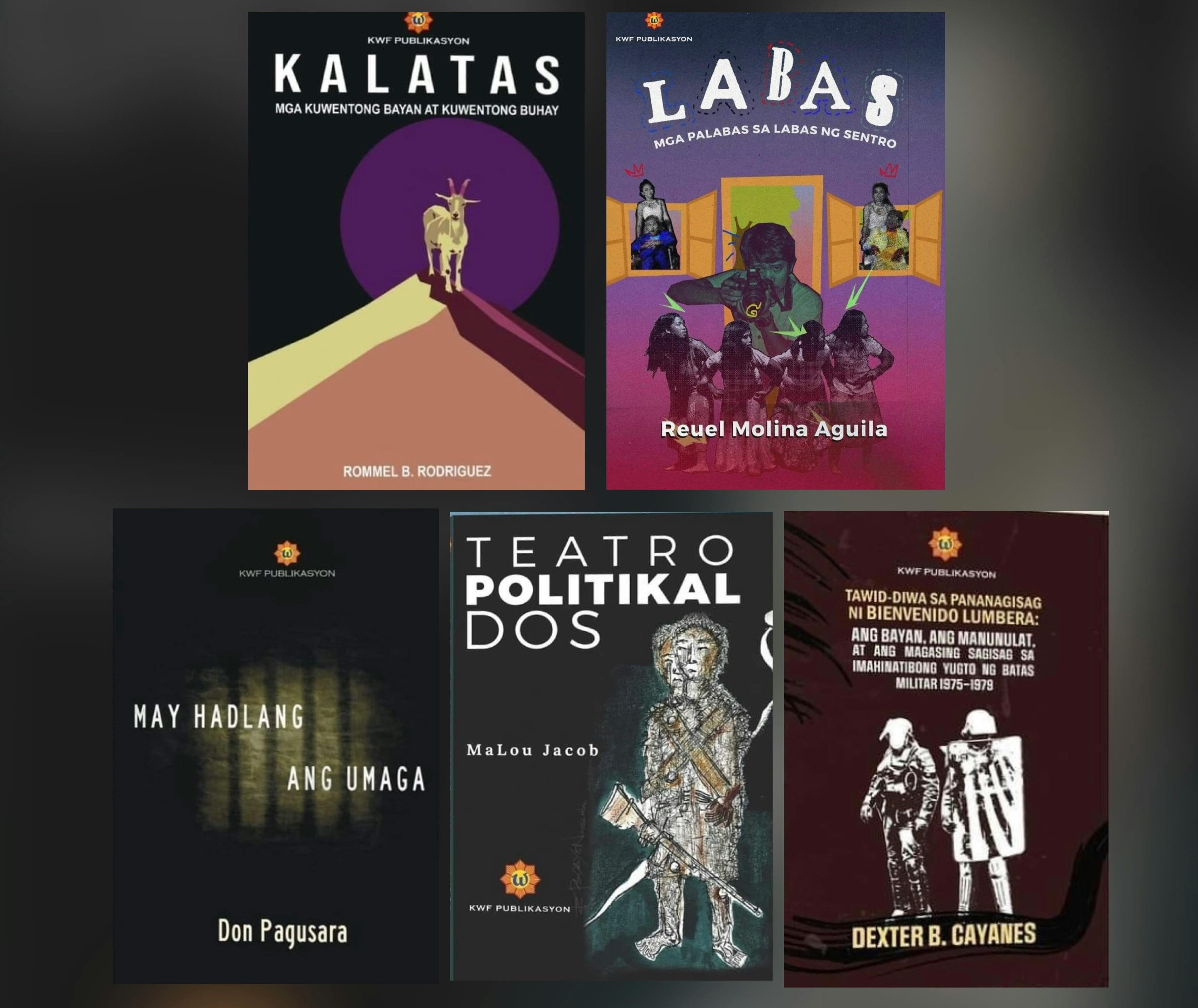
The dean of the San Beda University Graduate School of Law said on Sunday, Aug. 14, the Komisyon sa Wikang Filipino (KWF) order to pull out five books tagged as subversive is “prejudicial” to academic freedom in the country.
“That is part of the guarantee of a scholar, to do research. But if the government interferes with the freedom of a writer or researcher to write, read or research it will be prejudicial to the interest of academic scholarship of the country,” Fr. Ranhilio Aquino said in a dzBB interview.
The KWF, as the country’s language commission, is under the Office of the President. It commemorated its establishment as a commission Sunday following the passage of Republic Act No. 7104 in 1991, establishing the Commission on Filipino language to replace the Institute of Philippine Languages.
Aquino said the KWF should have exercised due process in screening the five books instead of issuing a memorandum to call on public libraries and schools to pull the books out of fear of violating the Anti-Terrorism Law.
“In fact, if I were a judge or I were the court, when it comes to materials found in libraries of universities or public libraries, I would be very hesitant to order the removal because there is doubt, which should be resolved in favor of freedom of expression, freedom of the press, and academic freedom,” Aquino stressed.
Libraries in universities should be “exempt from all forms of censorship” because these are venues where the reading public should have the freedom to read and research, he said.
“And so any attempt to curtail the academic freedom of a scholar to do research by using materials and excluding certain materials, because allegedly they promote terror, would run counter to this,” Aquino added.
He clarified, though, that authorities could step in to stop the publication of works, which explicitly call for the ouster of the sitting government.
“So, if you have a social media post or a journal or a book that really encourages all to rise against the government, then that is a crime and you can be prosecuted for it,” Aquino said in Filipino.
“If the contents of the books provide a critical analysis of society, saying the system is rotten and that the economy is leaving out the weak and the poor, and that the system should be re-placed, there is nothing wrong with that. It is part of academic freedom,” the dean noted.
In a dzMM interview on Friday, Aug. 12, professor Reuel Aguila, whose work “Labas: Mga Palabas sa Labas ng Sentro” was among those banned, said he suspected the book purge was part of an internal struggle in the commission.
“My analysis here is that there was an internal power struggle and they dragged us into it by saying the books were subversive,” Aguila said as he appealed to leave the writers out of this.
Literature and the arts, he stressed, should serve as venues to critically view society.
Another book that was banned included the published research of Dexter Cayanes titled “Tawid Diwa sa pananagisag ni Bienvenido Lumbera: Ang bayan, ang manunulat at ang magasing sagisag sa imahinatibong yugto ng batas militar 1975-1979.”
Cayane’s research was about the literary works of the late National Artist Bienvenido Lumbera during martial law. Lumbera was imprisoned during the term of the late former president Ferdinand Marcos Sr.
Other books included in the list were “Teatro Political Dos” by Malou Jacob, “Kalatas: Mga Kuwentong Bayan at Kuwentong Kuhay” by Rommel Rodriguez and “May Hadlang ang Umaga” by Don Pagusara.
The works of Jacob, Rodriguez, and Pagusara were all published by the KWF.
KWF commissioners Benjamin Mendillo Jr., Carmelita Abdurahman, Hope Sabanpan Yu, Alain Dimzon and Angela Lorenzana made that claim in a strongly worded statement dated Aug. 10 against chairman Arthur Casanova, accusing him of “wasting taxpayers’ money and inciting rebellion” by allowing the publication of these “dangerous publications.”
Casanova, in a statement on his Facebook account on Sunday, denied the allegations and reiterated that the publication of the books underwent a review process.
“It is unfortunate that these allegations, which are untrue and unfounded, are being used by people who are pushing their own agendas. This is but the latest in a series of actions being aimed against me to destroy my character and to disrupt efforts to strengthen and cleanse the KWF,” Casanova said.
Because of the memorandum, which imputed bad light on their works, the authors, according to Aguila, are considering suing the KWF commissioners for issuing the “libelous” memorandum.
Aguila also questioned the board commissioners’ statement accusing Casanova of allowing the publication of the books with “subversive themes and explicit anti-Marcos and anti-Duterte contents,” when one of his plays in the book only tackled the period from the martial law regime of the late dictator Ferdinand Marcos Sr. up to the administration of Gloria Macapagal-Arroyo.
He suspects that the commissioners did not read their entire works and lifted select portions out of context to prove their point of subversion.
Aguila said his plays, which were written more than 10 years ago, won the prestigious Palanca literary award and were even shown at the Cultural Center of the Philippines.
Meanwhile, the militant group Bagong Alyansang Makabayan (Bayan) slammed the KWF move as well as the recent arrest of vice presidential bet Walden Bello for libel.
In a statement on Sunday, the group said the removal of the books under the pretext that it violates the Anti-Terrorism Act shows how this measure is used as a “draconian tool against free speech.”
“The arrest of Bello and the purging of ‘subversive’ books reflect the shrinking civic space in the country today. Independent media websites are blocked, a Nobel Laureate faces legal per-secution, Lumad advocates are arrested on trumped-up cases, and human rights defenders continue to be demonized and attacked by security forces,” Bayan said.
The current government, the group added, is also intensifying the “curtailment” of liberties. – With Ralph Edwin Villanueva


