


Jaclyn Jose: Simply The Best
Jaclyn Jose left behind a brilliant filmography, a legacy that is simply one of the best in the Philippines, and in the whole of Asia.
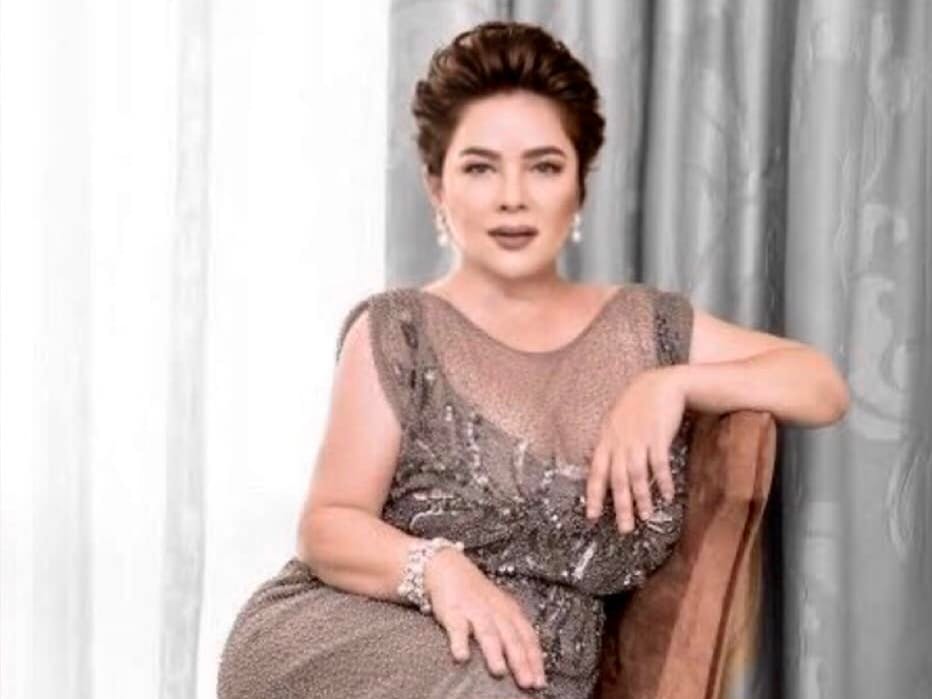
The late actress Jaclyn Jose
Jaclyn Jose electrified the global film community when she was named best actress at the 2016 Cannes Film Festival for “Ma’ Rosa.” Directed by Cannes stalwart Brillante Mendoza, the film is about Mama Rosa (Jose) who runs a variety store with her husband (Julio Diaz). To make ends meet, they also sell small quantities of shabu in packets.
But the police sniff out their operations and locks Mama Rosa in prison. Her family has to produce P200,000 for her liberty – on top of Mama Rosa snitching on the source of her illegal drugs. Shot with a handheld camera in a similar fashion to the earlier Brillante films in Cannes, the film has the grit and grainy quality of a documentary. The fact that the film was shot in August, when rains fell down in torrents and left the streets slippery and the days dark, only added to the depressed lives of its characters.
Jose shines like a steady light in the film, disappearing in its midsection while she is in jail, and reappearing towards the end. She walks on the slippery street with its portent of rain, sees a vendor of fish balls, and buys a stick or two. That last shot of her eating the fish balls quickly, her eyes slowly filling with tears, is one of the most iconic in Philippine, if not Southeast Asian cinema.
And indeed, Jose was the first Southeast Asian to bring home the gold-leafed Palme D’Or Award for Best Actress from arguably the finest film festival in the world.
Born as Mary Jane Santa Ana Guck on Oct. 21, 1963, her mother was a singer in a lounge and her father was an American of German descent, who was stationed at the American military base in Angeles City. In a TV interview, she said she never saw her father, but it was not a cause of emotional distress for her.
“I grew up as a silent child, the one who just kept to herself but watched the world around her. I studied the characters around me, guessing how they would react to certain situations.”
Her sister, Veronica Jones, was the original movie star. “I was only the personal assistant. All I wanted was to go to Japan, sing, and make money for my family.” But in 1984, she made her film debut in “Chikas,” and later, in “White Slavery,” directed by Lino Brocka. She learned a lot from the Brocka, who would later be named a National Artist for Film. Brocka was an actor’s actor, shaping the performances of his other talents like Hilda Koronel and Philip Salvador. Jose was nominated for best actress at the Manunuri ng Pelikulang Pilipino, the film critics’ group, for “White Slavery.” And then a year later came “Private Show,” directed by Chito Rono.
I saw “Private Show,” which was a movie ahead of its time. It deals with the lives of live-sex show performers, done with taste and style. More important, the film plumbs the interior depths of its characters. Jose and Diaz rose to the occasion, delivering such splendid performances. She followed it up with an excellent performance in “Takaw Tukso,” directed by William Pascual.
Mario Feria Tumbocon, one of the leading lights of the film group FACINE, posted a summing up of Jose’s brilliant career.
“Takaw Tukso unexpectedly became my baptism of fire, my first test of wills, being a new member of the original Philippine critics group, the Manunuri ng Pelikulang Pilipino. In 1986, I advocated for the film's inclusion as nominee for its annual Gawad Urian, and for best film (for Ultravision) and Jaclyn Jose as best actress (along with Pascual as Director and Dante Mendoza as Production Designer). Eventually, all four won in their respective categories, their first career honors,” Tumbocon said.
“I now forgot how it went, how I was able to convince the eight other members of the group. But I did it, considering that just a year earlier, Jaclyn Jose got her first Urian nomination for Lino Brocka's ‘White Slavery.’ I thought it would be easy sailing, but her other film for the year, Sixto Kayko's ‘Private Show’ (now more known by his real name, Chito Rono), his debut film, met some grumbles among moralists in the group,” Tumbocon added. “From the tempestuous, fierce women characters of her early years, to cite, Rono's ‘Itanong Mo Sa Buwan (1988),’ to Lino Brocka's Macho Dancere (1989), to her amazing serio-comic, comedic turns in Emmanuel de la Cruz's ‘Sarung Banggi’ (2005); Victor Villanueva's ‘Patay na si Hesus, 2016; and Joel Lamangan's ‘Anak ng Macho Dancer’ (2021), even her cameo appearance in still to be released, Adolfo Alix's ‘Kontrabida,’ Jaclyn Jose has been brilliant.”
Among her other acting awards were the EECA Movie Icon Award 2023; Best Actress for “Sarung Banggi,” 2006; Film Academy of the Philippines (FAP) Best Supporting Actress for “Naglalayag,” 2005; and another FAP Best Supporting Actress for “The Flor Contemplacion Story, “1996.
She also won the Star Award Supporting Actress of the Year 1996 for “The Flor Contemplacion Story,” the Gawad Urian Best Actress for “Itanong Mo Sa Buwan,” 1988; the Metro Manila Film Festival Best Supporting Actress for “Bubble’s Ativan Gang,” 1988; and the Gawad Urian Best Actress for “Takaw Tukso,” 1986.
What I liked about her was she did not only perform in art-house films but also in commercial ones, imbuing every role with the same passion for excellence. And then, she would work on television, which gave her a bigger audience.
Jose’s first-ever appearance on television was on ABS-CBN when she was cast as one of the main characters, Ester Lagrimas, in the classic soap opera “Familia Zaragoza” in 1995. But it was her portrayal of Magdalena “Magda” Trinidad-Pereira in the original “Mula Sa Puso” in 1997 that made her a household name.
In her last year in ABS-CBN prior to transferring to another network in 2013, she starred in the “Bahay” episode of Maalaala Mo Kaya and then in the series “Kahit Puso’y Masugatan,” which was top-billed by her daughter Andi Eigenmann, where she played the role of Esther Gerona-Espiritu.
And after around a decade, she returned to ABS-CBN when she was tapped to play the tough Jail Chief Supt./Brigadier General Dolores Espinas in FPJ’s “Batang Quiapo.” In a previous interview with ABS-CBN News, the late screen icon said being part of the series personally makes her feel like that her being an artist was already complete.
In early September 2022, Jose opened up about her inner life. She was a single parent to her kids Andi (with Mark Gil) and Gwen (with Kenneth Ilagan of “The Dawn”). Andi is now in Siargao, raising three kids with her partner, Philmar Alipayo. Gwen studied in the United States, to follow in the footsteps of his girlfriend.
With the children having flown the coop and now living their own lives, loneliness had settled like a dark bird on her shoulder.
"You did not anticipate it that someday, they would leave. So, I did not know if I did the right things at the end of the road. I was always working, but I had to do that to make their lives comfortable. We were not rich, but we lived in a house of our own.”
She lived alone in a house in Quezon City, with a housemaid for a companion. She also had a house in Laguna, where she intended to retire and farm.
She used to work for 27 hours straight, shooting for her TV drama shows. She would go home at 9 or 10 the next morning, and would just sleep. She could only have dinner with them later.
But she was proud of the fact that she raised her children well, with minds of their own, carving independent lives. And she was happy that she made all those films, where her understated acting was like a vat of water simmering.
She left behind a brilliant filmography, a legacy that is simply one of the best in the Philippines, and in the whole of Asia.