



Everyday Heroes: From A Seamstress To A 74-Year-Old Mother Of 14, These People Help In Their Own Way
With or without the coronavirus disease 2019, heroes emerge among us every day to make life better for others even if they, too, are fighting their own battles.
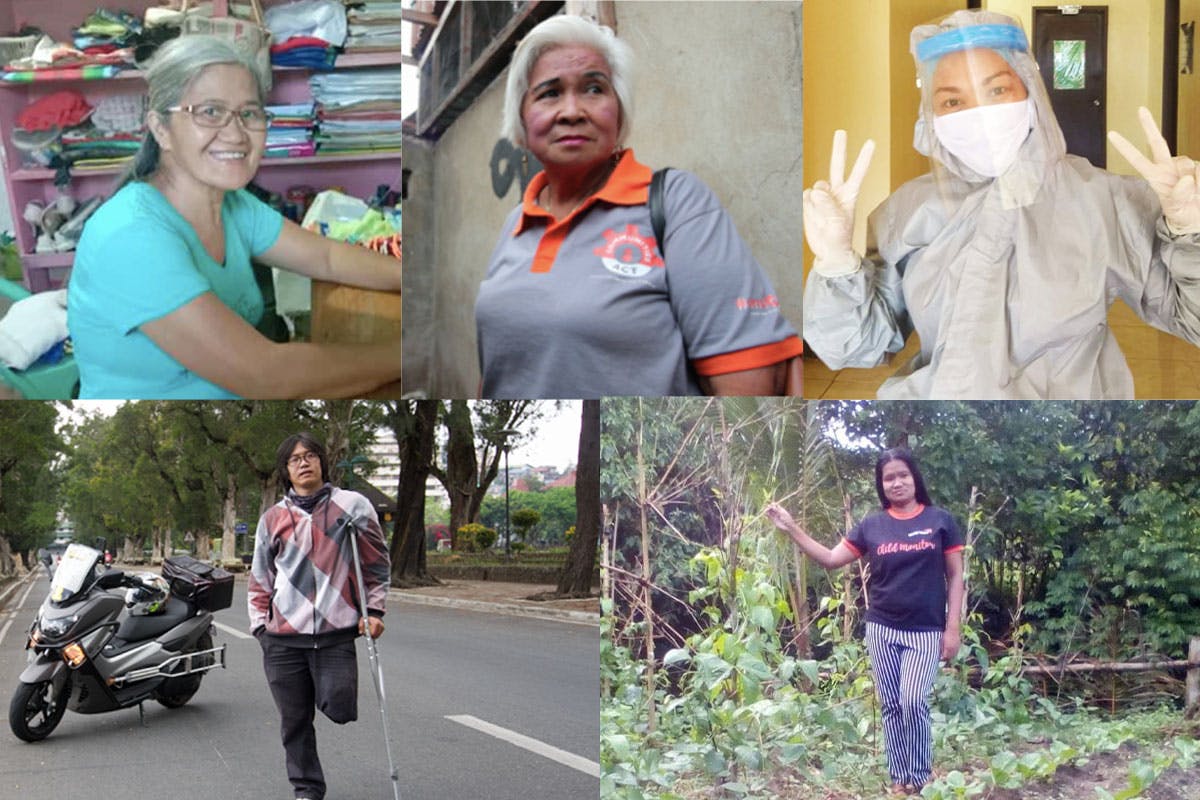
A seamstress in Albay saw the community quarantine as an opportunity to help her neighbors after local stores in her village ran out of surgical and cloth masks needed to prevent the spread of coronavirus disease 2019 (COVID-19).
According to Josie Paclibar, 57, she has made more than a 100 cloth masks and given them all for free to her neighbors.
“Dahil sa COVID-19 nagkaroon ako ng idea, kasi kailangan ng mga frontliners at ibang tao. Almost 100 plus na and ongoing pa po ang tahi ko. Kada punta dito sa bahay ng mga tao binibigyan ko o kaya ’yung nakasabit ko pinapipili ko na lang, libre walang bayad (COVID-19 gave me an idea, because the frontliners and other people need them. I've made more than 100 and I continue to sew more. Every time people drop by, I give them or let them choose from the finished ones, for free),” she said.
Paclibar, a village treasurer, has been a World Vision volunteer, helping monitor children’s welfare in her rural village. Two years ago, a group of mothers in her town was provided with sewing machines and tailoring training from World Vision and government agencies to augment the family income.
She learned more about dressmaking from the Technical Education and Skills Development Authority (TESDA).
“World Vision partners with TESDA and the local government unit to provide additional livelihood to families in the community. Tailoring was one of the needs that the families identified after our consultation with them,” Junna Daniel, World Vision program officer in Albay, explained.
Many residents in Paclibar’s town are fishermen and farmers who rely on seasonal harvest. Like many struggling families, Paclibar felt the impact of home quarantine in her hometown. “Walang trabaho. Ngayong nasa quarantine period, nakakatulong din ’yung honorarium ko at mga relief ng province, municipal at barangay (There’s no work. Now that we are under quarantine period, my honorarium and relief assistance from the province, municipal and village help us),” she said.
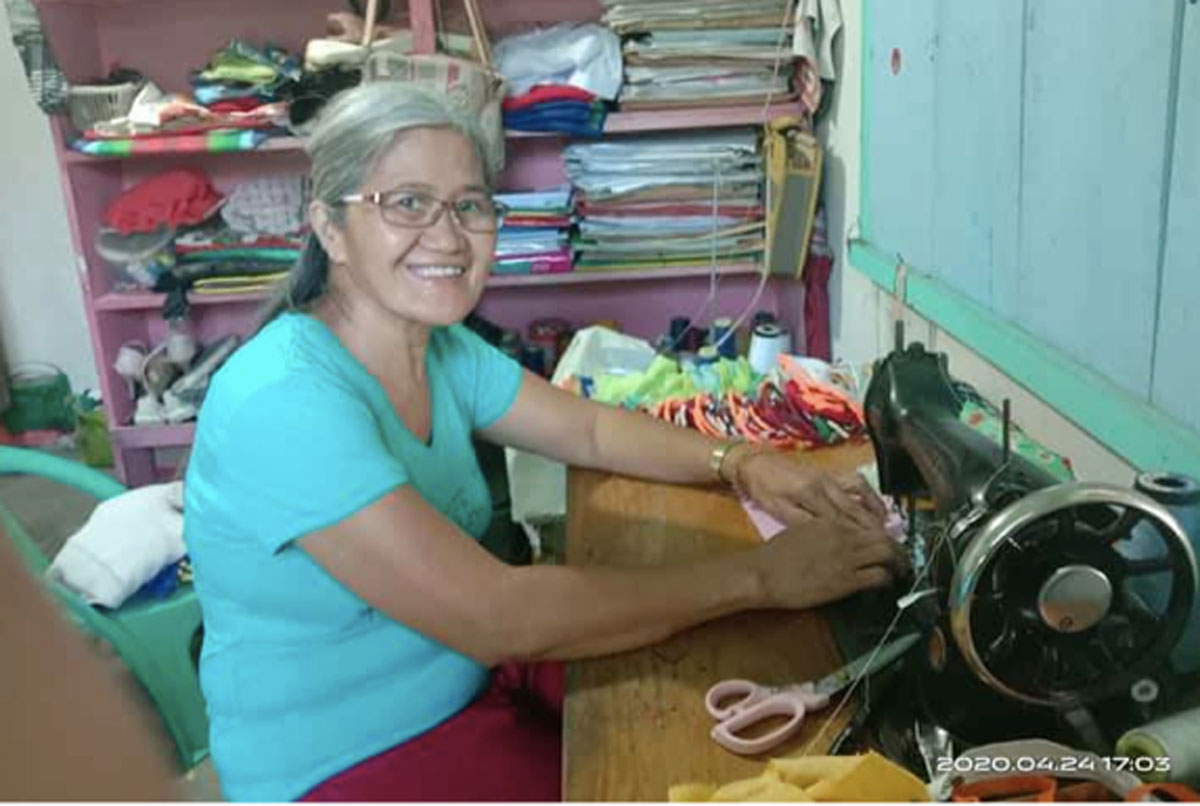
Paclibar previously made uniforms, curtains and dresses, from which she earned around P500 a piece.
The home quarantine has also affected her children’s education. “Nakakaapekto sa mga bata dahil hindi sila masyadong nakakalabas at ’yung college, hindi nila natapos ang second semester (Children are affected because they can hardly go out, and [my children who are in college] were not able to finish their second semester),” she lamented.
World Vision considers Paclibar as one of today’s hidden heroes along with Pinky Lumbay who is engaged in backyard gardening, a health worker serving in South Cotabato, and a 74-year-old mother of 14 who is one of the volunteers fighting child exploitation in Cebu.
Coca-Cola Philippines, for its part, has launched the “For the Human Race” movement, a tribute to positivity, togetherness and the human spirit in these challenging times.
“A celebration of everyone that brings light into these dark times, this message and movement is a tribute to the men and women that truly go beyond. This includes non-government organization volunteers involved in providing aid and relief to the marginalized; essential service staff such as drivers, food delivery riders, and store workers who continue to serve their communities despite the risks; and countless individuals who, in their own meaningful ways, are touching lives and inspiring others day-by-day,” Coca-Cola said.
Here are the other stories of these heroes in our midst:
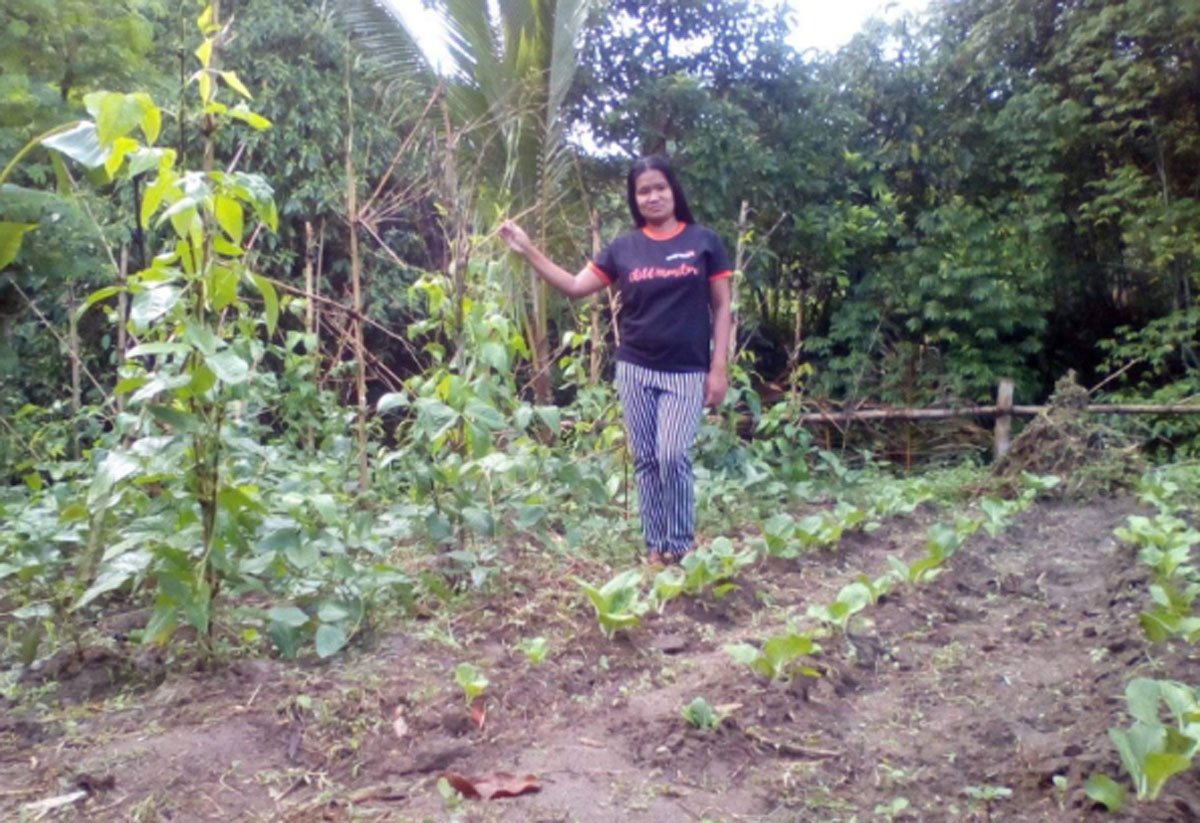
Pinky Lumbay, who was trained by World Vision on natural farming, is reaping the fruits of her labors and is also giving back to her community.
“I started with backyard gardening and eventually saw that it is good for business,” Lumbay said.
In 2018, she and her family started a small vegetable farm in South Cotabato.
“Our land can accommodate at least 5,000 tomato plants so we maximized the space. Half of it was used for tomatoes and the rest was for other vegetables like squash, eggplants, bitter gourd and others,” she noted.
Since then, she’s had loyal customers who buy her produce in bulk. She harvests her tomatoes every three months and each time, she earned at least P20,000. This does not include her income from other vegetables.
Until the COVID-19 pandemic happened.
“It affected our business because of the limited movement. We were in the midst of harvesting from our 2,500 tomato plants when the crisis happened,” she recalled.
While the pandemic reduced her income, Lumbay also considered it as an opportunity to reach out to her neighbors. She packed her harvested vegetables, bought a sack of rice and canned goods and distributed these to her neighbors.
“I am still grateful because we have enough to sustain us while on community quarantine. Other families in our community are struggling so I had to do my share, even if I lost income,” Lumbay said.
Lumbay has been a child monitor since 2014. She has also been active in child protection initiatives after she was trained on reporting and managing child protection incidents. After seeing saw how natural farming changed her family’s life for the better, she began advocating it to other families.
“I used to be very shy. You wouldn’t hear me say a thing if I was not familiar with you. By being exposed as a World Vision volunteer, I came to know my neighbors, including their struggles, so I know how COVID-19 is impacting them now. I am glad to be of help even in a small way,” Lumbay said.
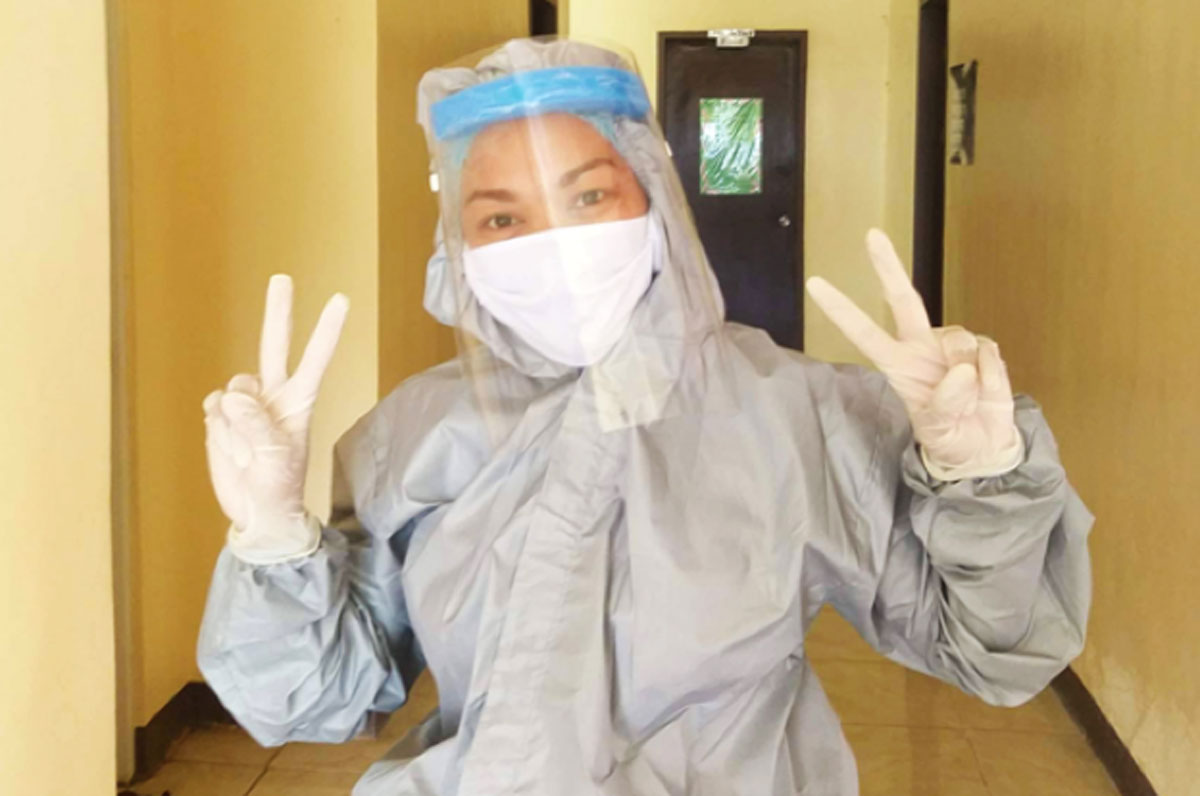
Lenny Lyn Dolor-Castillon, 27, is one of the many frontliners who suited up to serve and protect the country from the virus.
As a government health worker, she helps in monitoring the COVID-19 cases in her community. She is part of the checkpoint crew tasked to scan the temperature of people along a main road in South Cotabato. She was also assigned to a triage area in her village where she interviews persons with cough and cold. She has also conducted face-to-face interviews with persons under monitoring or PUM for COVID-19.
“Being a frontliner is a challenging task especially because the enemy is invisible,” Castillon admitted. “I am worried especially because I have an infant waiting for me at home. But I need take on this task because it where I am most needed.”
This frontliner’s sense of service for others is rooted from childhood. She is the youngest among three siblings. Both of her parents are farmers who didn’t earn a regular income. Putting her and her siblings to school, especially when they reached college, was a challenge.
It was a blessing for the family when World Vision supported Castillon’s education. As a sponsored child, she grew up in an environment of generosity and volunteerism. It was the reason why she studied midwifery and nursing in college, wanting to pay back by pursuing a profession that helps others. She also aims to become a doctor someday.
“Thank you to my sponsor, Barbara from Canada, for supporting my education. It was the push that I needed to have a big dream and work hard for it,” the former sponsored child said.
Before the pandemic, Castillon worked as a village health worker who was assigned in far-flung areas where access to medical services is a challenge. She provided prenatal care, infant care such as immunization, and check-ups for adults.
Every week, Castillon traversed rough roads for hours to reach her assigned area and bring health services to the residents who were mostly indigenous people, until she was called to be part of the government’s COVID-19 health response, which she willingly accepted.
“I hope that the country will recover from this pandemic and everything will get back to normal,” she said. “For now, I will do my part to achieve the goal of a country that is free from COVID-19.”
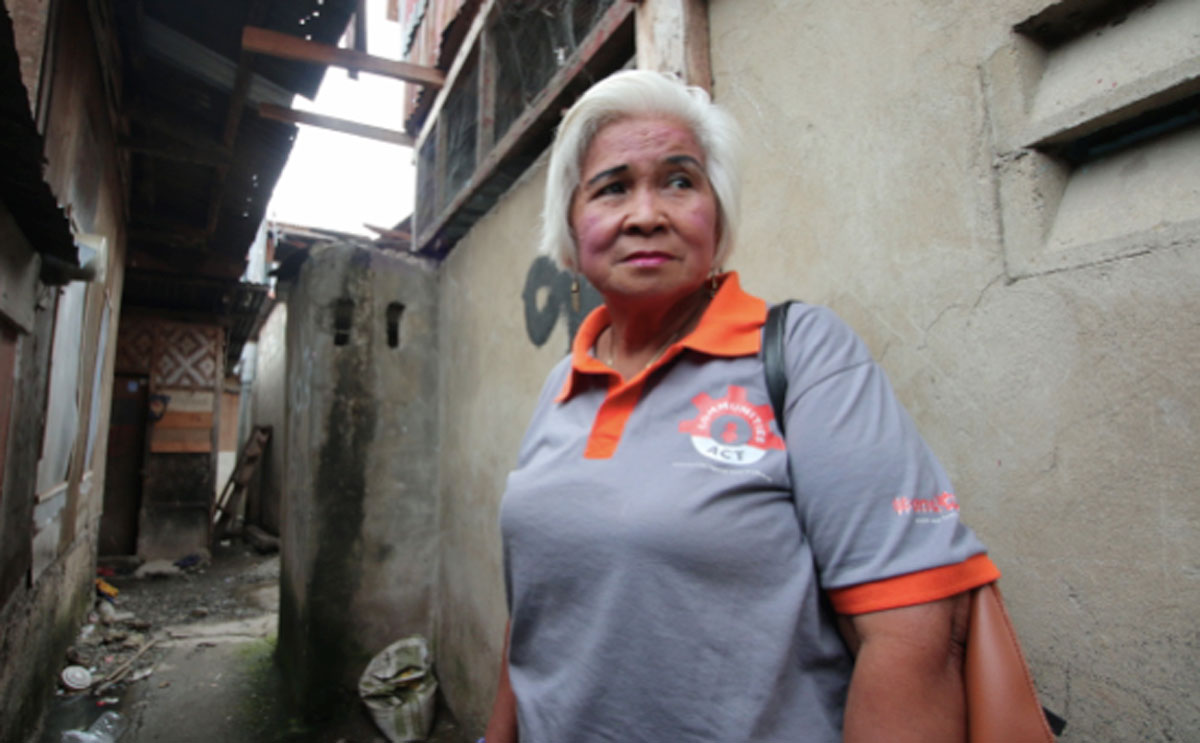
Filotea Jubay as well as a group of community workers have been making the rounds in their neighborhood to make families aware of the danger of online sexual exploitation of children (OSEC) and how to protect their children from it.
The mother of 14 children continues to serve her community despite her advanced age because she developed a strong Christian foundation during her youth. Jubay worked as a preschool teacher and catechist in a school managed by nuns for 34 years. In her free time, she talked with single mothers who needed counseling.
“The nature of my work allowed me to deepen my faith and act on it through service for others,” Jubay said. “The most important lesson I live by until today goes like this: a person is of more value than the whole world.”
In 2013, she decided that she was ready to explore outside her comfort zone. She quit her job to return to her roots and serve the community.
“This village is where most of my relatives live. When I returned, child exploitation was rampant,” she said.
In Jubay’s village, OSEC was a prevalent concern. It was even dubbed as a “cybersex den” by an international media organization in a 2014. Seeing it as an alarming concern, Jubay offered her services. She would join a group of volunteers and monitor the neighborhood for suspicious activities related to OSEC.
However, there was no formal monitoring system in place. This made the community vulnerable to both foreign and local OSEC offenders. In 2019, under the Child Protection Compact (CPC) project, World Vision invited community workers to empower them as OSEC advocates. After the workshop, Jubay and her colleagues formed the Community Child Protection Advocates (CCPA), consisting of village peacemakers, health workers and community volunteers. Jubay became the chairperson.
“The CCPA does the groundwork of monitoring the neighborhood by frequently visiting identified hotspots. We also talk to some parents who are vulnerable to these kind of cyber crime,” Jubay said.
Since the formation of the CCPA, the group has rescued three minors who are currently sheltered in the local social welfare office. The rate of OSEC cases has also decreased compared to the prevalence in 2013 to 2014. Jubay and her team are dedicated to keeping the community free of OSEC.
“I have no regrets leaving my former job and offering my service to a higher purpose, and that is to rescue women and children,” Jubay declared. “I feel fulfilled.”
In this pandemic, Jubay’s community is under quarantine. As a senior citizen, she is restricted from going out of her house. The CCPA chairperson contacts group members, who are also community COVID-19 frontliners, to continue monitoring the neighborhood for any suspected OSEC case.
World Vision said Jubay and her team deserve a salute for keeping their community safe from exploitation.
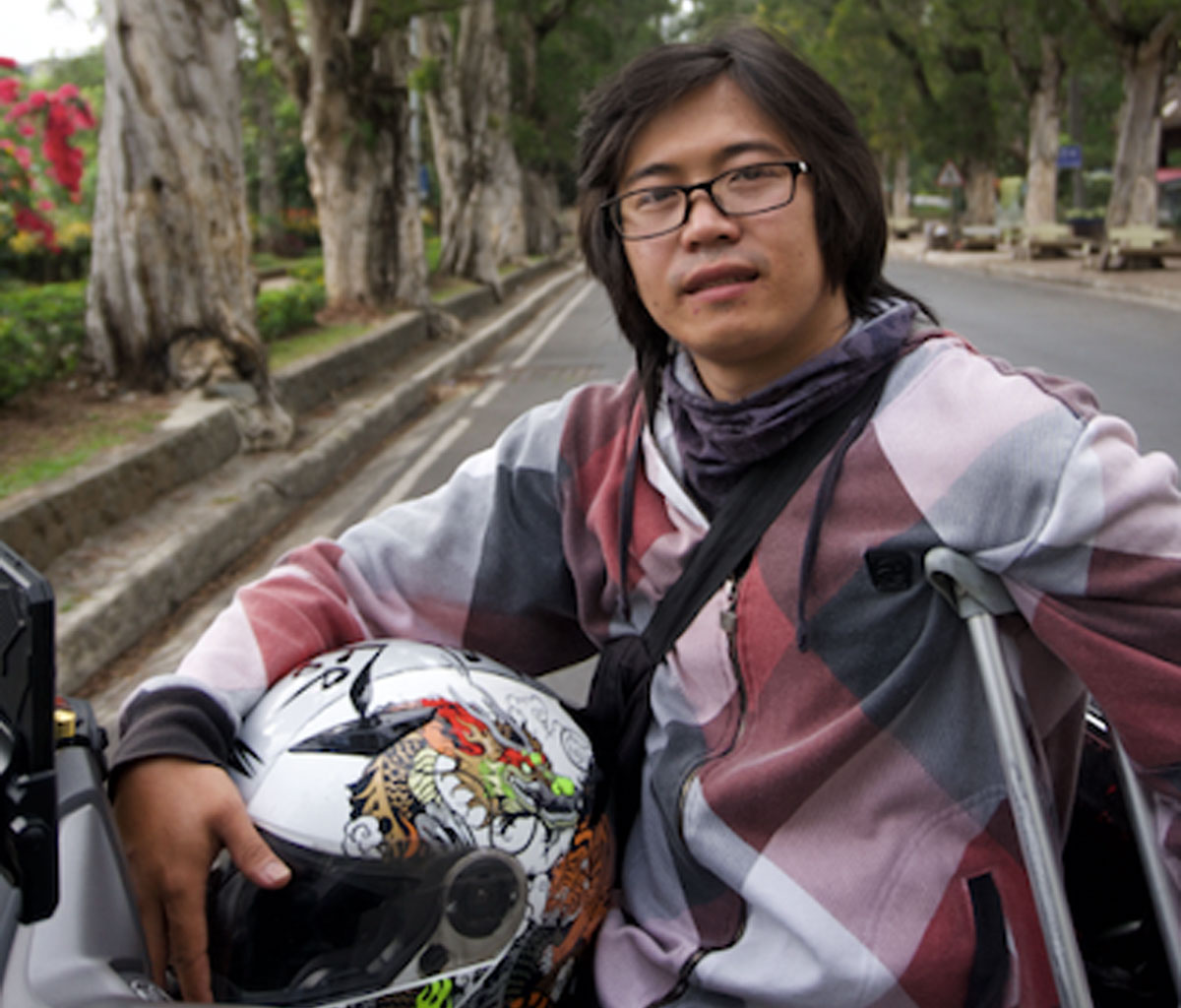
For its part, Coca-Cola paid tribute to Neil Garcia from Baguio City. Despite being a person with disability, he hops onto his motorcycle to make vital deliveries, including volunteering to deliver food to frontliners. “Wala namang makakatulong sa atin kung hindi tayo tayo din,” Garcia stressed.
The sight of people in a restaurant preparing church-donated food for frontliners inspired Garcia to volunteer as a delivery rider, Coca-Cola said in a statement.
As a further act of kindness, Garcia sets aside the tips he collects to buy coffee for soldiers and police stationed at COVID checkpoints.
Never letting his physical disability get in the way, Coca-Cola described Garcia and his work as “an inspiring story of hope and an indomitable spirit against the odds.”
Garcia said he felt good bringing not just help but joy: “Parang hindi tulong ’yung binibigay mo – saya. Sobrang ganda sa pakiramdam ’yun.”
Coca-Cola said its long-held belief in universal togetherness, positivity and hope is the foundation of the “For the Human Race” movement as the world faces extraordinary and difficult times.
Winn Everhart, Coca-Cola Philippines general manager, said the company “acknowledges that this is a moment in which we need to come together and support each other anyway we can.”
“This is a time for us to help uplift the spirit, bring needed encouragement, and inspire,” he underscored.
“We would like to express our heartfelt gratitude and appreciation to those who continue to keep us all safe through the crisis, particularly those people on the frontlines,” Everhart said. “Every day, we are inspired and uplifted by countless acts of selflessness, kindness and courage from people across the Philippines and around the world. Please know that the good work you do serves to inspire us and that we are with you all the way in this fight.”
Coca-cola said it would share more stories of hope for the human race on its YouTube page.


