DOH Chief Supports MECQ Extension As COVID Cases Top 1 Million
Health Secretary Francisco Duque III expressed belief that the modified enhanced community quarantine must be extended for a week or two as the average number of daily cases remains high.
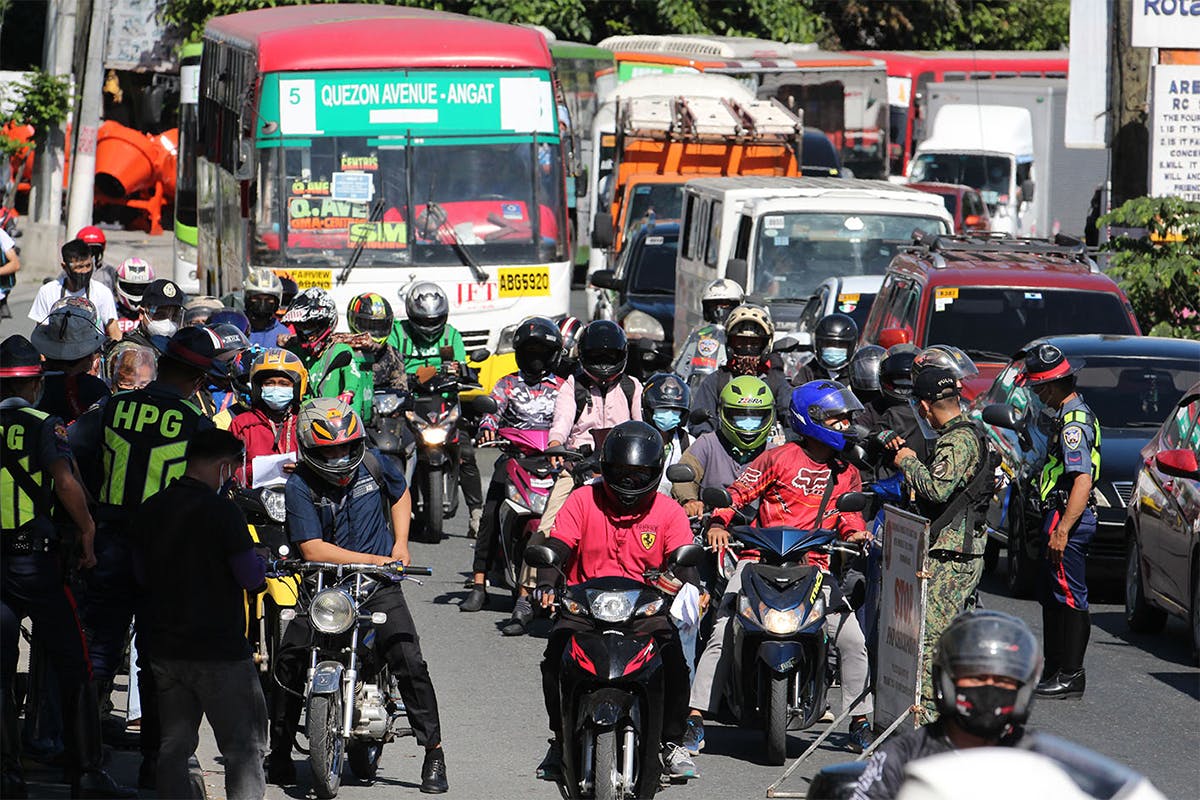
Health Secretary Francisco Duque III favors an extension of the modified enhanced community quarantine (MECQ) in the National Capital Region and the provinces of Bulacan, Laguna, Cavite and Rizal or NCR Plus for another week or two.
Duque noted during an interview on Monday with dzMM Teleradyo that there was not much improvement in the health system capacity in NCR Plus in the past month, thus the MECQ may have to be extended.
Although there are signs that the transmission had slowed down in NCR, the daily average number of COVID-19 cases remains high for the past two weeks, he noted.
Aside from this, the health chief also revealed that there are still areas where the intensive care unit (ICU) beds remain at “critical risk classification.”
Last March 29, NCR Plus was placed under ECQ – the strictest among the quarantine categories. Two weeks later, the restriction was eased to MECQ.
Mayors in Metro Manila have yet to decide on which quarantine status they would recommend for next month, with Metropolitan Manila Development Authority chairman Benhur Abalos telling CNN Philippines that the mayors are just waiting for data on the impact of the April 12 to 30 MECQ on the economy and balance this with data on COVID-19 hospitalizations.
“On one hand, ICUs (in hospitals) remain full but we must congratulate our local government officials because the numbers are dropping. On the other hand, a lot have lost their jobs and are now suffering hunger,” Abalos said.
Abalos proposed a one-week extension of the MECQ instead of two-week extension.
The metro mayors were supposed to meet on Monday to vote on which community quarantine level should be enforced next month, although Malabon City Mayor Antolin Oreta III hinted that the MECQ could be extended.
Malacañang said President Duterte might announce the quarantine classifications for the month of May during his public address on Wednesday, April 28, as it maintained that the government is handling the new COVID-19 variants “rather well.”
Presidential spokesman Harry Roque said members of the Inter-Agency Task Force (IATF) for the Management of Emerging Infectious Diseases are scheduled to meet today, April 27, to decide on the recommendation they would present to the Chief Executive.
“While there will be appeals, I think the recommendation will be submitted to the President because May 1 is approaching and the (President’s) talk to the people will be on Wednesday, so it is possible that the President will announce it,” he said in a press briefing on Monday.
Experts have urged the government to extend the implementation of MECQ in NCR Plus to sustain the decrease in the COVID-19 reproduction rate or the number of people that a person who caught COVID-19 can infect.
Fr. Nicanor Austriaco, a fellow of the OCTA research group, called on the IATF not to downgrade the classification of NCR Plus unless the reproduction number remains below 0.9 in a sustained manner.
But Roque said the public should not just look at the total number of people who contracted the virus but also on the number of recoveries and the country’s low fatality rate.
Citing data from Johns Hopkins University and the World Health Organization COVID-19 dashboard, Roque added the Philippines ranks 26th in the world in terms of total cases and 27th in terms of active cases.
The country ranked 90th in terms of case fatality with 1.7 percent, he added.
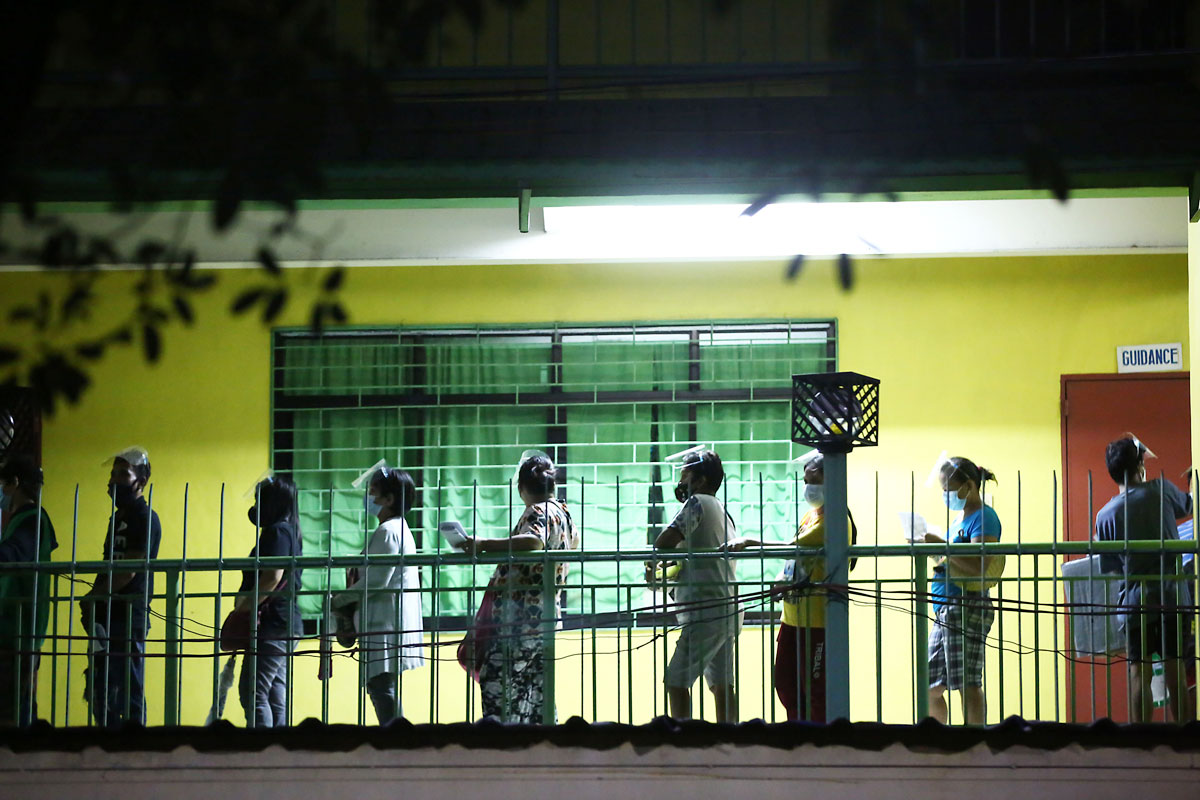
Roque noted that the COVID-19 reproduction number has dropped to 0.9151, a development he attributed to tighter quarantine measures enforced in NCR Plus.
“Because of the huge decrease in our R naught (reproduction number), we can say that the two-week ECQ and two-week MECQ seemed to have worked. We have lowered the R naught to less than one but we have to ensure that the gains of ECQ and MECQ will not be wasted. We can achieve this if the local governments provide the right answers to the PDITR (prevention, detection, isolation and treatment),” he pointed out.
Total health
John Wong of EpiMetrics, a research and consulting firm, said several indicators have to be examined if the NCR Plus is ready for a downgrade to a more lenient general community quarantine (GCQ).
Under GCQ, about half of industries can operate.
One of these indicators is the reproduction number, which he described as “backward-looking” because it reflects the cases logged over the past two weeks.
“So it doesn’t tell us how well we will do in the future under GCQ... So R naught (reproduction rate) is not enough,” Wong said.
He explained that forward-looking indicators include how well people are complying with masking and social distancing, how fast people with symptoms are identified and how fast they are being tested, isolated and quarantined.
Local governments, he said, should determine what percent of cases and close contacts were able to complete their isolation and quarantine periods.
Wong also cited the need to determine how well indoor businesses are observing ventilation, masking and physical distancing and how fast can the country increase the pace of vaccination to 350,000 shots per day.
“Right now, without seeing any indicators, I would not recommend it. So it’s like driving, I mean, you have to check first whether your car is in good working condition before you undertake a long trip or move forward,” he said.
Roque stressed a shift to GCQ is possible if the 350,000-shots-per-day is attained and if local governments can comply with the indicators identified by Wong.
“Our objective is total health. We will look at the number of people who are sick, how many have died, how many died of other causes or perhaps because of the additional burden caused by the lockdown,” Roque added.
Cases breach one million
The total number of COVID-19 cases in the country breached the one-million mark on Monday, according to the Department of Health.
The DOH reported that overall cases hit 1,006,428 after it documented 8,929 new cases.
There are now 74,623 active cases, representing 7.4 percent of total cases, it said.
Data showed that 70 patients died, raising the death toll to 16,853, while 11,333 patients overcame the virus, bringing the number of recoveries to 914,952.
The department, however, noted that there had been a decline in the daily tally of COVID-19 cases.
“The decline is no longer artificial,” Health Undersecretary Maria Rosario Vergeire said, citing the “seven-day moving average” of COVID-19 cases being recorded by the agency.
Vergeire said the average daily tally of new COVID-19 cases in the past two weeks was around 10,800 and 9,500, respectively.
“If we compute the seven-day moving average, we eliminated the factor that there is a decline in cases every Monday and Tuesday because some laboratories are not operating,” she explained in Filipino.
However, she has warned that the downward trend should not make the public complacent about following health protocols.
She said that while the seven-day moving average of cases decreased, the daily attack rate in the National Capital Region remains high at 19 to 55 cases per 100,000 population. – With Ghio Ong, Alexis Romero