DepEd Releasing P3.7 Billion To Support Face-To-Face Classes
The funds lodged under DepEd Central Office’s budget for 2022 shall be used as additional financing for the implementation of face-to-face learning modality in public schools nationwide.
The Department of Education (DepEd) will release over P3.7 billion to its field offices to support the upcoming implementation of full face-to-face classes in public elementary and high schools nationwide.
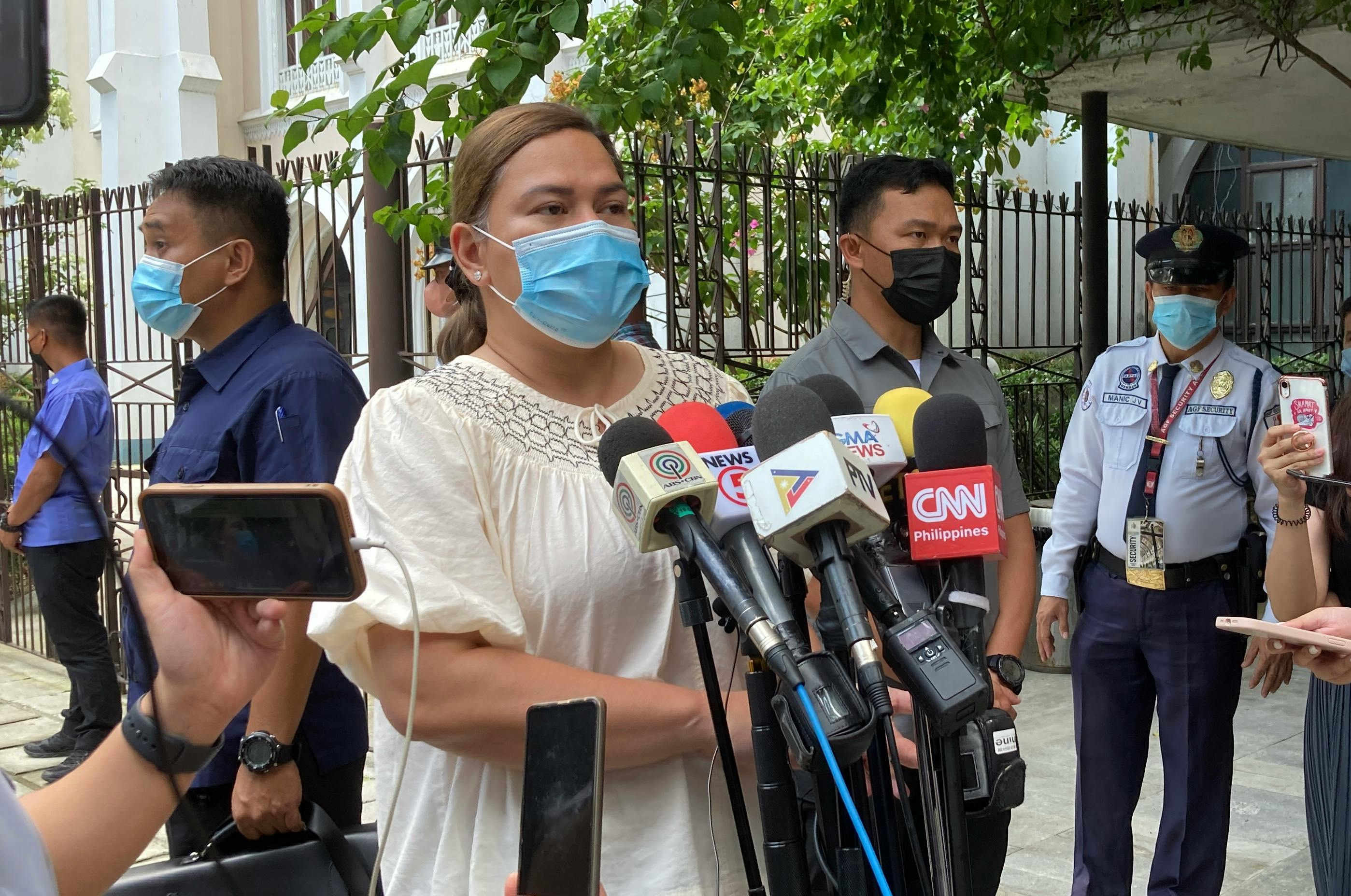
Vice President and Education Secretary Sara Duterte has approved the request of Education Undersecretary for finance Annalyn Sevilla to download additional funds for maintenance and other operating expenses (MOOE) lodged under DepEd Central Office’s budget for 2022.
The funding includes P3.612 billion from the General Management and Supervision MOOE and P97.242 million from the School Operations MOOE. The funds shall be used as additional financing for the implementation of face-to-face learning modality in public schools located in 16 DepEd regions.
DepEd Undersecretary Epimaco Densing III earlier cited the additional budget as among the steps that the agency are taking to ensure that schools operate properly during the pandemic.
“We will leave it to the regional directors to decide how will they utilize this budget for our schools, including the suggestions of ACT (Alliance of Concerned Teachers),” Densing said in Filipino during a press briefing on Tuesday, July 12.
“This will depend on our regional directors based on the needs of our schools to ensure smooth operations during the pandemic,” he added.
Duterte has directed all public and private elementary and high schools to implement full face-to-face classes starting Nov. 2.
Safe reopening
Earlier, ACT urged the government to double the operating budget of schools to ensure that safety protocols are in place before the resumption of full in-person classes.
"As of now the total school MOOE is just around P30 billion divided among all 48,000 public schools and it was computed following a pre-pandemic formula, based on the type of school and number of classrooms, students and teachers,” said ACT chairperson Vladimer Quetua.
“This only suffices for pre-pandemic regular operational expenses like utilities, supplies, small repairs, equipment, salaries of job order workers and budget for activities, but needs for a safe school reopening were not factored in," he added.
Quetua noted that the P30 billion allocated for school operations is only 30 percent of the P98 billion MOOE budget of DepEd, and only five percent of the P592 billion total budget of the agency this year.
According to ACT, increasing the budget for operations will enable schools to have proper and adequate ventilation of classrooms; sufficient hand-washing facilities and water supply; operational clinic with sufficient supplies and equipment; and ample health and sanitation supplies.
The group is also urging DepEd to hire additional teachers to reduce class sizes, employ more nurses and utility personnel, ensure health protection of teachers and other school employees, aid families affected by the pandemic and conduct a learning assessment of all students.
ACT scored DepEd for its supposed failure to include “substantive health measures” in the latest guidelines for the upcoming school year.
"They removed any requisite for inspection or even a mere checklist of requirements for safe school reopening. There is no standard for classroom ventilation aside from opening the doors and windows. There is no requisite for hand washing facilities or steady water supply. The need for a clinic or a nurse is not even mentioned," said Quetua.
"Physical distancing is just optional if possible and when eating, students should not sit across each other… The final nail on the coffin of a safe back to school is that the memo states that the school is in no way liable if any student, teacher or staff contracts COVID," he added.
Allow hybrid classes
Private schools, meanwhile, reiterated their call to DepEd to allow flexible learning even after the Oct. 31 deadline.
Joseph Noel Estrada, managing director of the Coordinating Council of Private Educational Associations of the Philippines (COCOPEA), noted possible safety issues if full in-person classes are implemented.
“We cannot totally disregard social distancing, limitation in classroom capacity and again, that affects the private education sector because we cannot just build classrooms and buildings like what DepEd plans to do in order to accommodate everyone,” he said in an interview with CNN Philippines.
Duterte on Thursday, July 14, doubled down on the agency’s directive, saying it was what President Marcos has already approved.
Under the latest guidelines, physical distancing in classrooms will only be implemented “whenever possible” and that there will be no segregation of vaccinated and unvaccinated students.
In defending their new policy during the Cabinet meeting, the Vice President said they cited studies showing that children who contracted COVID-19 have high recovery rate.
She also assured parents that safety protocols will be implemented.
“The difference then and now is that people are more open to wearing masks and that we already have the vaccine and medicines,” she said.
“Our call for families with high risk individuals in their homes is to get vaccinated and boosted, especially those with co-morbidities because they will have interaction with children who will go to schools,” added the Vice President.
Duterte underscored the importance of resuming in-person classes, citing the learning losses due to the implementation of distance learning.
Price ceiling
With students going back to schools for their face-to-face classes, Quezon City 2nd District Rep. Ralph Tulfo has asked the Department of Trade and Industry (DTI) to impose price ceilings on school supplies.
According to Tulfo, DTI can invoke the Price Act now and exercise its regulatory powers to make sure prices of school supplies, students’ uniforms and shoes are controlled with the expected surge in demand.
“I am wary of probable high prices of school supplies, school uniforms and shoes now that campuses will soon reopen for face-to-face classes. If the demand for a product is in-creasing, we can expect its price to also increase ... I see the need to avert school supplies price hikes,” Tulfo added, noting that school supplies are “prime commodities” and should be covered by the Price Act.
Healthy diets
The National Nutrition Council (NNC) on Friday, July 15, asked the support of local government units in promoting healthy diet among basic education students as classes in public schools open next month.
“In the last three decades, it’s (obesity) increasing, overweight children are really increasing. The NNC is alarmed, so one of the things we are pushing for is the approval of the National Policy on Addressing Overweight and Obesity,” NNC Nutrition Information and Education Division chief Jovita Raval said, noting that around 37 million Filipinos, including adults, are overweight.
“We are pushing for local governments to have ordinances that also ban the sale, marketing and advertising of unhealthy food and drinks because that has a big influence on the youth,” she added.
Apart from giving the children a balanced diet, Raval said there is also a need to promote physical activities and exercise. “And then for teens, it’s important for them to have proper sleep… they also need to get enough sleep and rest,” she said.
Duterte has set the opening of classes in public elementary and high schools on Aug. 22. The full implementation of in-person classes, meanwhile, will push through on Nov. 2, Duterte said. – With Sheila Crisostomo, Helen Flores