



DA: 6 Million Bags Of NFA Rice May Rot
Agriculture Assistant Secretary and spokesman Arnel de Mesa said if only the National Food Authority can sell rice in the market at P30 per kilo but “it cannot do it as it will violate the law and will even be charged.”
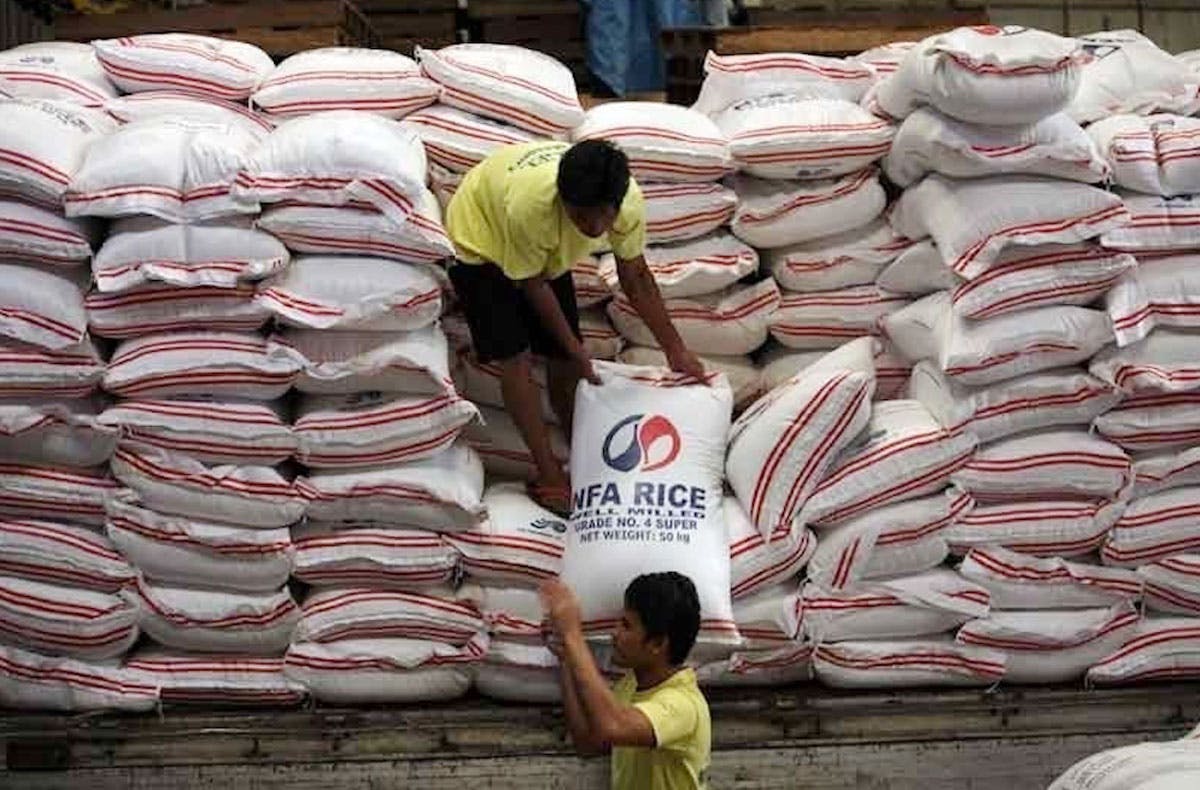
At least six million bags of National Food Authority rice have been stocked too long and may rot if not disposed of soon, according to the Department of Agriculture (DA), as Secretary Francisco Tiu Laurel Jr. urged Congress to pass a law allowing the NFA to sell its stocks in the market.
Agriculture Assistant Secretary and spokesman Arnel de Mesa told The Philippine STAR on Sunday, Dec. 15, that the Rice Tariffication Law (RTL) removed all the regulatory powers of the NFA.
“The NFA has at least six million bags (of rice). If only the NFA has the opportunity to sell rice, it can sell in the market at P30 (per kilo). It cannot do it as it will violate the law and will even be charged,” De Mesa said.
He added that under the RTL, the NFA is only allowed to sell its stocks to the Department of Social Welfare and Development, Office of Civil Defense and local government units.
“To prevent the rice stocks from aging, we have the P29 program to release some of the stocks but the volume is not that big. We will have the next harvest season and if the stocks will not be released, it will be difficult for the NFA to procure (palay again from the farmers) because of so many stocks and this is where we will have possible problems,” De Mesa noted.
De Mesa said that even under the RTL, the NFA can only sell rice in the Kadiwa stores if the National Price Coordinating Council recommends to the DA the release of the stocks because of too much increase in the retail prices or shortage in the supply of the grains.
“Under the new law, the Bureau of Plant Industry (BPI) was empowered to register all the warehouses but the NFA cannot still intervene in the market. It can only happen if there is a food emergency, if there is a spike in the retail price of rice or shortage,” he noted.
He said that during the hearing of the House quinta committee, Tiu Laurel urged lawmakers to pass a law to bring back the mandates of the NFA prior to the RTL.
“The decision (to remove the regulatory powers of the NFA) was too harsh to the point it became powerless in intervening in the market,” De Mesa said.
De Mesa noted that the DA can only intervene through the availability of P40 per kilo of rice in the Kadiwa stores and limited number of markets.
“We are trying to our best (to intervene), through Kadiwa, we are intervening in the markets to show that the retail price (of rice) should be P40 (per kilo) as based on our monitoring, the retail price of regular and well-milled rice is as P45 per kilo but this is only limited as (rice) is sold as high as P60 (per kilo),” he said.
He said that the retail price of the grains should be P40 per kilo amid the implementation of Executive Order 62 and the lower farmgate price of palay.
“All the ingredients (to lower the retail price of rice are available), the buying price of rice in the international market is low, the farmgate price of palay is low and there are many stocks but the retail price does not go down because there is market distortion,” he said.
De Mesa said that there is no proper labeling of rice in the market because of the RTL.
“We have no role in retail. As you can see before, the labeling is correct. Now, there is no proper labeling. You cannot determine which is well-milled, regular, premium, special as before we have the blue, white, yellow. Just what the secretary said, (traders) practically agree on the pricing. The regulation in the wholesaling and retailing of rice was removed from the NFA,” he said.
Price control task force
Speaker Martin Romualdez sought on Sunday the formation of what he described as a mega government task force to run after rice price manipulators and greedy traders.
Romualdez made the proposal after the House quinta committee uncovered alarming evidence of collusion and price manipulation in the rice industry, despite reports of oversupply and reduced import tariffs.
He said his proposed task force may be composed of the DA, Department of Justice, including the National Bureau of Investigation, Bureau of Customs, Bureau of Internal Revenue and Department of Trade and Industry.
The Speaker said the task force should have the power to conduct inventories, check on compliance with tax laws and rules, inspect warehouses, and to immediately padlock any erring business establishment.
Romualdez proposed that the task force submit a monthly report to Congress as part of its oversight functions.
Data presented by the Philippine Statistics Authority (PSA) indicated an oversupply of rice, with the demand-supply ratio dropping from 82.5 to 69.4 this year.
Despite ample supply, PSA reported that the price of regular-milled rice decreased only slightly from P50.16-50.40 in October to P49.44 in the early part of last month.
Ways and means chairperson Rep. Joey Salceda emphasized that rice prices should already stabilize at P35 per kilo, following the significant drop in the landed cost of imported rice, now averaging P33.95 per kilo.
Lawmakers accused certain importers and traders of conspiring to hoard rice stocks, artificially inflating prices while reaping billions in profits.
Agap Rep. Nicanor Briones identified two major companies – RBS Universal Grains Traders Corp. and Sodatrade Corp. – as key players, importing a combined 273,000 metric tons of rice under alleged suspicious arrangements.
Romualdez directed the quinta comm to expedite legislation, including amendments to strengthen the Anti-Agricultural Smuggling Act of 2016.
He also urged the DOJ and the Philippine Competition Commission to hold perpetrators accountable. – With Jose Rodel Clapano


