


COVID-19 Pandemic Disrupting BARMM Transition, Says Mindanao Sociologist
The newly established region will have to divert its limited resources to the pandemic response and be distracted from implementing promised reforms, according to a retired Mindanao State University–General Santos City professor.
The coronavirus disease 2019 pandemic has distracted the newly established Bangsamoro Autonomous Region in Muslim Mindanao (BARMM) from its goal of implementing socioeconomic and political reforms aimed at addressing the roots of armed conflict in the Muslim-majority area, according to a Mindanao sociologist.
Rufa Cagoco-Guiam, retired professor of sociology and anthropology at the Mindanao State University–General Santos City, noted that the transition period was only supposed to take three years from 2019 to 2022.
The pandemic, however, has disrupted 2020 and required the utilization of what limited resources were available in the impoverished region, Cagoco-Guiam said as she discussed “COVID-19 and Armed Conflict: Exacerbating Precarity and Marginalization in the BARMM” in a webinar held by the University of the Philippines Center for Integrative and Development Studies on Thursday, Aug. 27.
“That period has become narrower because of COVID, because the limited resources that the region has have to be redirected to funding badly needed health services associated with COVID-19 response,” she said. “Your very narrow window for wide-ranging socioeconomic and basic social services and political reforms became even narrower and the period has become shorter.”
“Even if they had planned on a series of activities that would redound to political reform in the BARMM, the period they have now has been taken over by the efforts to address COVID-19,” she added.
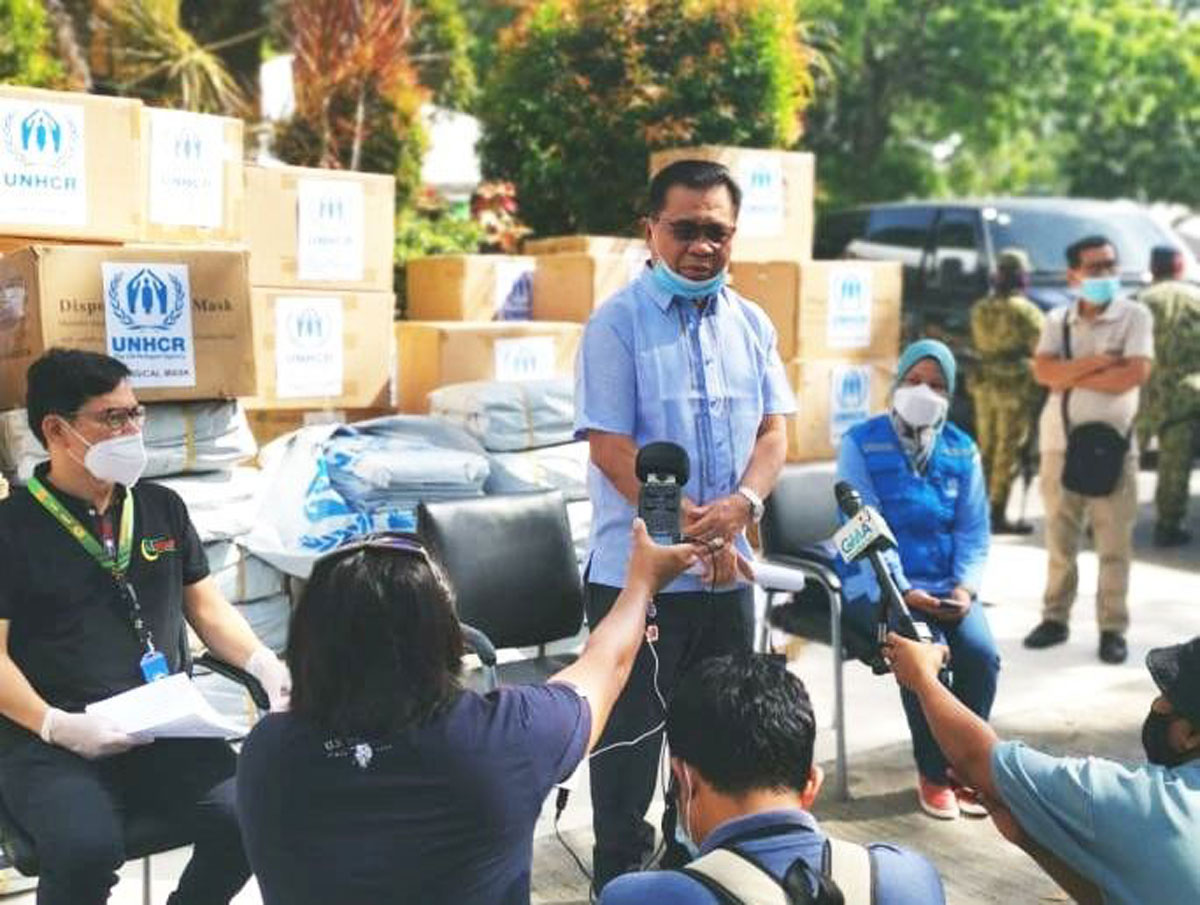
According to the Department of Health COVID-19 Tracker, there were a total of 669 confirmed cases in the BARMM as of Aug. 29, four of whom were added to the tally that day. Of these cases, 198 were active while 459 have recovered. Twelve persons have died.
Meanwhile, 41 out of 164 beds, or 25 percent, have been occupied, based on data submitted by 34 facilities in the region as of Aug. 28. Ten facilities have occupancy rates below 30 percent, while one reported a rate in the “warning” level of 30 to 70 percent.
Cagoco-Guiam noted that even in the BARMM’s predecessor, the Autonomous Region in Muslim Mindanao, “there had been cracks in the health and governance system.”
She noted that BARMM provinces consistently rank among the 20 most impoverished provinces in the country, and cited grim statistics on the poverty situation. For instance, the regional poverty incidence rate was 63 percent in the first semester of 2018, or 1.4 points higher than the 61.6 percent recorded in 2015.
She found the situation in Basilan “worrisome.” In the island province, the poverty incidence rate nearly doubled to 72.1 percent in the first half of 2018, compared to 38.7 percent three years before. She said this was because of the cocolisap (coconut scale insect) infestation that devastated the livelihood of farmers there.
Cagoco-Guiam noted that “the results of how poor our region is would be reflected in the kind of health our children in our region has.”
According to the 2017 Situational Analysis of Children in the ARMM conducted by Coram International and the United Nations Children’s Fund, 45.2 percent, or nearly half, of children aged five and below were stunted or shorter than normal, compared to the national average of 33.4 percent. The report also showed 24.9 percent of children in the region were underweight, compared to 21.5 percent nationwide.
Meanwhile, four out of 10 children were found not to have been inoculated with any type of vaccine. The region’s open defecation rate of 21.8 percent was also the highest in the country.
“There are evidences or manifestations of the lack of or the inadequacy of the delivery of health services in the region,” Cagoco-Guiam said.
Another problem made worse by the pandemic was that of access to education, now that face-to-face classes have been disallowed by the government. Cagoco-Guiam noted that access to the internet in the region “is roughly only five to 10 percent… even (in) the urban centers.”
“In the rural areas, there is hardly any connection except for data from mobile phones. But not all people have access to mobile phones in the rural areas, and so there is a challenge to think of flexible learning options,” she said.
Cagoco-Guiam added that besides the problems caused by the pandemic, “with poverty still ongoing, we have ongoing intermittent armed conflict both at the vertical and horizontal levels.”
“Vertical” refers to the conflict between the government and non-state actors, while “horizontal” pertains to communal violence arising from conflict over political power and government largesse, land conflict, and even issues as small as disputes over basketball games.
She noted that there is even infighting among the Armed Forces of the Philippines and the Philippine National Police, as shown by the June 29 police killing of four soldiers outside the Jolo Municipal Police Station.
Such armed conflict “leads to protracted displacement,” Cagoco-Guaim said.
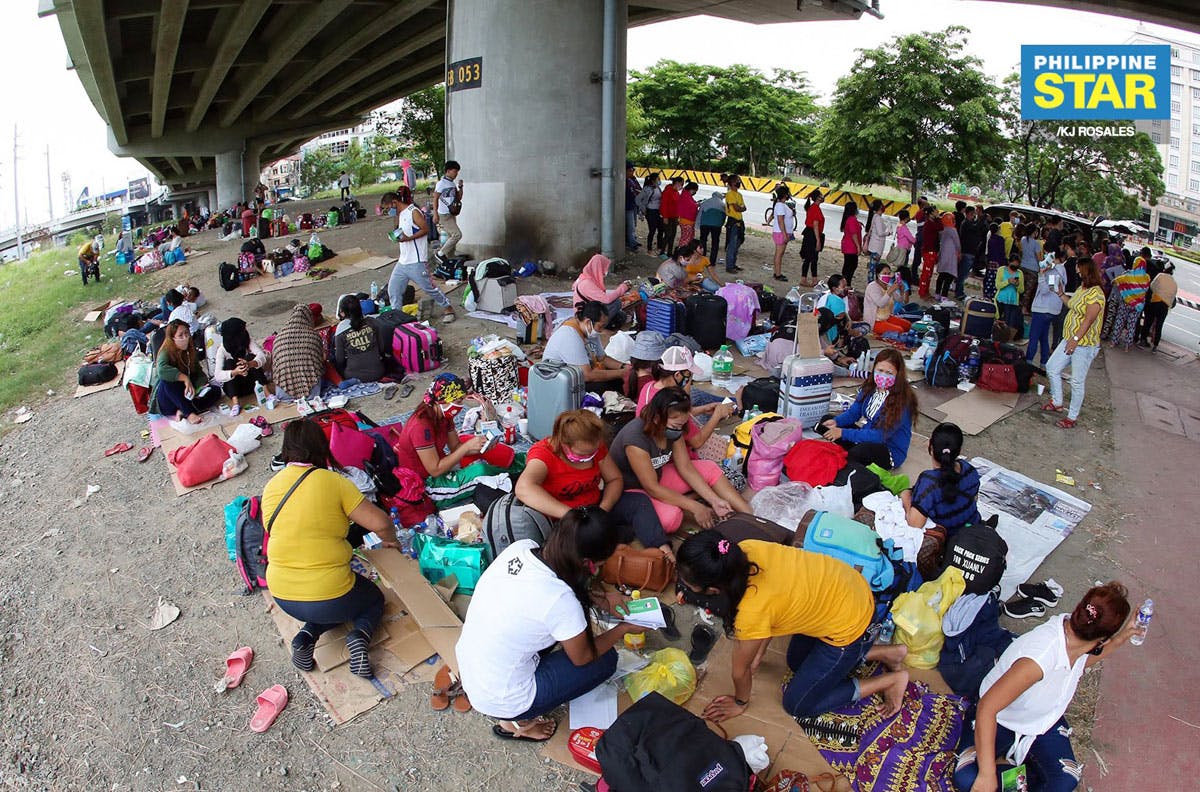
She cited not just the crowding in the “transitory shelters” housing the residents of Marawi City, but also the situation in Liguasan Marsh in Maguindanao and Cotabato provinces. These issues, she said, have caused an increase in the number of informal settlers not just in the BARMM, but also in neighboring regions like Soccsksargen.
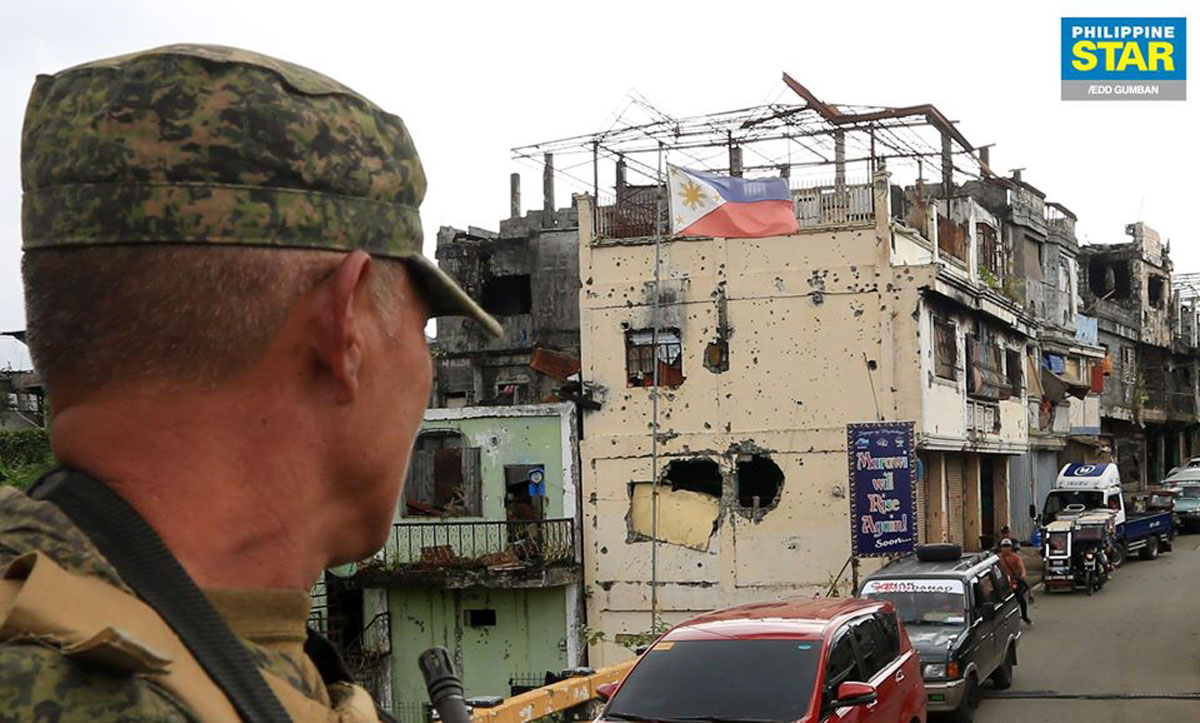
Marawi City’s displaced residents, during the third anniversary of the Maute group’s siege last May, expressed their urgent desire to go home to avoid the pandemic’s worst effects.
Although Housing Secretary Eduardo del Rosario complained that it was “very unfair” to call out government inaction, non-government organizations said the temporary shelters were “still not home” and flagged the lack of water supply, space for physical distancing and cash assistance to make up for disrupted livelihood.
Cagoco-Guiam said that “the resulting inaction or ineptitude of the government in addressing the needs of those who have been victimized by the siege has triggered a lot of disappointment or even desperation among some people.”
“As a result, some of them have become easy pawns to be recruited to some groups that might not have the same ideas as the existing Islamic leaders have. We are thinking that they might become easily recruited by violent extremist groups, and this is already showing in many regions,” she said.
To address the “precarious” situation in the BARMM, Cagoco-Guiam suggested that “we should start activating the barangay LGU (local government unit) as a locus of change and innovation.”
She pointed to the barangay assembly mechanism, which “has not been utilized to its full extent.” She noted that the people should hold local government officials accountable for addressing only the prevention of more COVID-19 infections at the expense of people’s livelihoods.
“When they announce lockdowns, they always forget that. Not all people have stored enough food or have enough money to be able to survive on a day-to-day basis,” she said. “The barangay constituents should have been animated or trained to demand for accountability or to demand basic social services in the absence of their daily income.”
Cagoco-Guiam stressed that another way of empowering people amid the pandemic would be to “activate purok and sitio-level forums.”
“I think if you include more people and widen people’s participation in barangay or local governance, this could spell a lot in helping addressing precarity and marginalization to create a more socially cohesive society even in times of the pandemic like this one,” she said.
Cagoco-Guiam concluded that the region had been mired in abject poverty because of the failure to provide for the inclusion of constituents in policymaking.
“The region has failed in inclusion so that it has been governed the way the national government has been governed where generally speaking, the poor is considered a burden to governance,” she said.
“Before COVID, this abject poverty has been the reality. After COVID, it is even more the stark reality that people face,” she warned. “In reckoning 2020, it will be considered the year of living dangerously because of COVID-19, and in the BARMM, it is made more dangerous because of armed conflict.”