



COVID-19 Fatigue: Is The Fear Of The Virus Gone? Complacency Now The Enemy, Officials Say
The particular perception that “we are going to be OK anyway,” is our main enemy at this point, according to Technical Working Group (TWG) on COVID-19 Variants member and pediatric infectious disease expert Anna Ong-Lim.
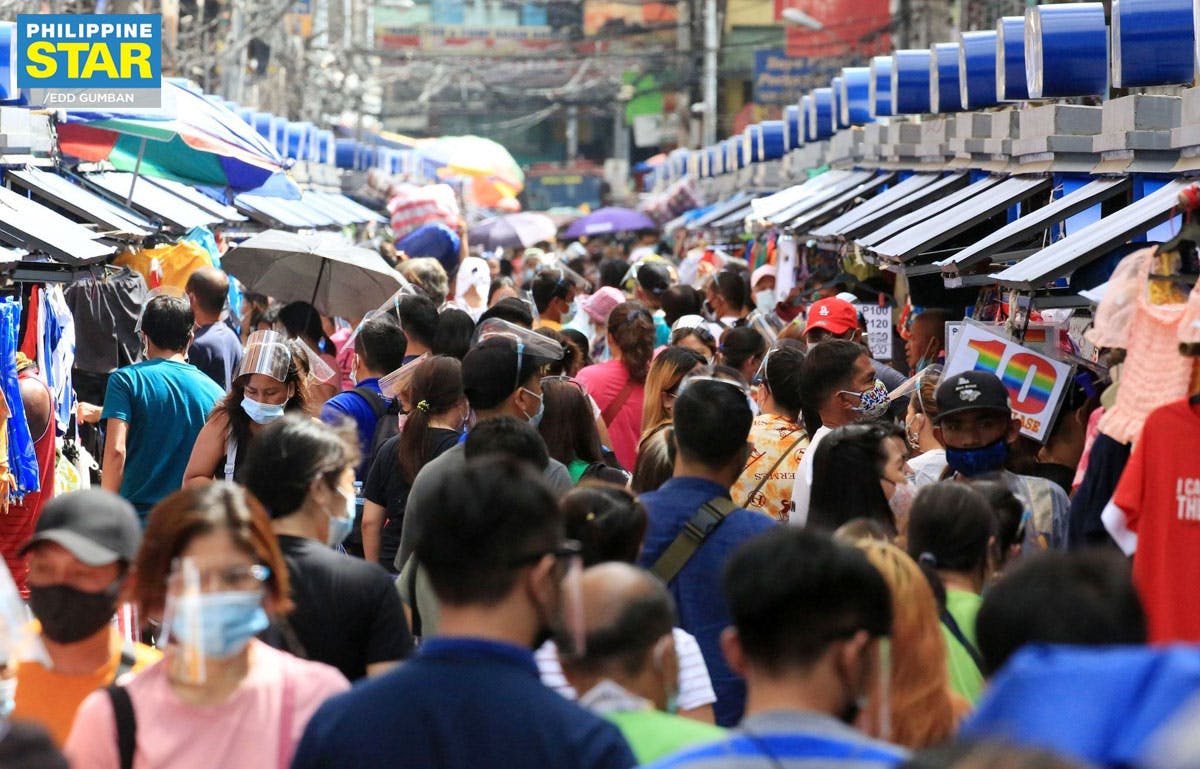
The country’s “main enemy” now is the people’s “complacency” even as the coronavirus disease 2019 (COVID-19) continues to spread since a global pandemic was declared on March 11 last year.
“People are, I don’t know, maybe they behave like they are less scared now. I think that’s what really gets me. It seems that people are getting used to the pandemic so the fear (of the virus) is gone,” Technical Working Group (TWG) on COVID-19 Variants member and pediatric infectious disease expert Anna Ong-Lim noted.
According to Lim, the lack of vigilance at present could be because there are still families that have not experienced having a member who contracted the virus.
“So that particular perception that ‘we are going to be OK anyway,’ I feel is our main enemy at this point,” she told “The Chiefs” on One News / TV 5 on Monday night, March 8.
The expert reminded the public to remain “vigilant” as COVID-19 “is still out there” and there are even new variants to contend with. She was referring to the South Africa and United Kingdom strains that were detected in the country.
According to Lim, there is no evidence yet if the presence of the new variants is the one driving the surge of cases in the Philippines.
Lim said the number of positive cases attributed to the new variants is “less than five percent."
Aside from this, there is not enough swab samples being subjected to genome sequencing to determine the presence of variants.
She stressed that regardless of variants, “same interventions” must be done to stop the spread of COVID-19.
These protocols are proper wearing of face masks and face shields, hand washing or hand sanitizing and physical distancing.
Inconsistent compliance
A survey conducted by the OCTA Research group revealed inconsistent compliance with different health protocols implemented to prevent the spread of COVID-19.
While most of the respondents said they wear face masks and sanitize their hands regularly, a significantly larger number said they do not follow other measures such as observing physical distancing or staying at home when it is not necessary to go out.
The survey, conducted from Jan. 26 to Feb. 1 with the results released on Tuesday, March 9, showed that 91 percent of the 1,200 respondents regularly wear face masks to avoid contracting or spreading the viral illness.
Ninety percent said they regularly clean their hands with water and soap, alcohol or sanitizer, while 82 percent use face shields.
Only 67 percent of the respondents stated that they observe social distancing, while 60 percent stay at home when it is not necessary to go out. Only 57 percent said they cover their nose and mouth when sneezing or coughing.
Less than of the respondents said they take vitamins (43 percent), avoid crowded places (43 percent), avoid people who are ill (41 percent), avoid domestic travel (25 percent), consult a doctor when not feeling well (20 percent) and avoid international travel (15 percent).
On the frequency of following health protocols, the survey showed 89 percent of the respondents always wear face masks while nine percent do it all the time.
Only 64 percent said they always wear a face shield when going out, while 24 percent do it most of the time, nine percent do it only sometimes, and two percent rarely follow it.
The survey also indicated that 68 percent of the respondents always observe physical distancing when engaging with other people outside of the house, while 26 percent do it most of the time. Five percent observe physical distancing sometimes, while one percent rarely do it.

“The Department of Health (DOH) prescribes that the minimum public health standards should be done together every day or regularly by Filipinos to ensure maximum protection against COVID-19,” OCTA said.
In its earlier monitoring report, the group said that the deteriorating compliance to health protocols of some Filipinos may have contributed to the recent spike of cases in metropolitan areas.
“In this light, we appeal to our citizens to continue to do their share by being vigilant and by being disciplined in following the minimum health standards set by the DOH, such as staying at home, wearing of mask/face shields, and practicing social distancing and proper hygiene when citizens absolutely need to go out,” it said in its report last Sunday.
“We also continue to appeal to our citizens not just to avoid crowded and enclosed areas but also to refrain from joining or organizing social gatherings during this period of surge,” it added.
‘You have only one life’
President Duterte also blamed the recent spikes in COVID-19 infections on non-compliance with safety measures and has reminded the public to strictly observe minimum health protocols to avoid catching the virus.
Duterte urged Filipinos to contribute to the efforts to contain the pandemic by following the government's advice on physical distancing, proper hygiene, and wearing of face masks especially in public places.
"Many have died and many have gotten sick... What's the cause of this? Well, those who do not believe in social distancing, those who do not believe in personal hygiene," the President said during a pre-recorded public address last Monday, March 8.
"We’re trying to find out a way of effectively combating this new development of COVID-19 variants. I hope you can help. Follow the protocols and we can bring down the number of COVID cases," he added. "You have only one life to live so please guard yourself."
COVID-19 fatigue
The Department of the Interior and Local Government (DILG) said COVID-19 fatigue could be the reason for the complacency of the public and police officers that led to a surge in cases of the dreaded virus in Metro Manila.
DILG spokesman Undersecretary Jonathan Malaya said on Tuesday people and law enforcement authorities have grown tired after a year of facing the COVID-19 pandemic.
“Nagkaroon na po tayo ng tinatawag na COVID fatigue at hindi lang po 'yung ating mga kababayan, kahit po 'yung nag-e-enforce, 'yung kapulisan ay nagkaroon na rin po,” he said in Laging Handa briefing.
Malaya lamented even local government units (LGUs) have become complacent in enforcing minimum health protocols.
The apparent complacency prompted DILG officer-in-charge Undersecretary Bernardo Florece Jr. to order a crackdown against violators of minimum public health standards such as wearing of face masks and face shields in public places as well as strict observance of physical distancing protocols especially in crowded places.
He said more police officers were deployed to the cities of Pasay, Navotas, Malabon and other hotspots to enforce the health and safety protocols.
However, Malaya said another problem is there are still some LGUs that do not have ordinances imposing penalties on violators.
Malaya did not name the LGUs that have yet to pass ordinances penalizing violators of health and safety standards.
“Alam niyo naman po ang ating mga kababayan. Kung walang risk of punishment ay hindi po sila sumusunod sa alituntunin ng ating pamahalaan,” he said.
Malaya urged the LGUS to craft and pass local laws to add more teeth to the enforcement of the government's health and safety guidelines.

No flattening of the curve
The World Health Organization (WHO) said Tuesday the upward trend in COVID-19 cases in the Philippines cannot be classified as a “second wave.”
“In a sense, I wouldn't classify this as a second because if you're talking of a second wave, we should have seen a complete flattening of the curve,” WHO country representative Rabindra Abeyasinghe noted.
He said in the case of the National Capital Region, the flattening of the epidemic curve has not been seen.
“We always knew that there was quite a big chain of transmission although the number went down at some stage to 400 (cases) on a daily basis,” he added.
According to Abeyasinghe, they believe that the surge in COVID-19 cases in the country is “not entirely driven” by the new variants.
This as the DOH reported that the number of confirmed COVID-19 cases in the country hit 600,428 due to the 2,668 new cases recorded on Tuesday.
Based on the DOH case bulletin, seven patients succumbed to the virus, raising the death toll to 12,528. On the other hand, 171 patients have survived the virus, bringing the number of recoveries to 546,078.
The number of active cases is 41,823, representing 7 percent of the total cases. Some 91.6 percent of them are mild while 3.9 percent are asymptomatic.
The bulletin shows that 57 percent of the 1,900 intensive care unit beds in COVID-19 wards are still available while 64 percent of 13,500 isolation beds are unoccupied.
On the other hand, 73 percent of the 6,000 ward beds for COVID-19 patients remain vacant while 76 percent of 2,000 ventilators are not in use.
Malacañang reiterated that the imposition of city-wide lockdowns is not advisable despite the spikes in COVID-19 infections.
"Our strategy is localized lockdown. It is really the obligation of local governments to intensify their isolation (and) detection (efforts), ensure that those who tested positive would be transferred to quarantine facilities, and avoid home quarantine," presidential spokesman Harry Roque said.
Roque previously said the Philippines could no longer afford to implement a wide-reaching lockdown because of the need to address hunger and loss of livelihood.
During a meeting of the government's pandemic task force also last Monday, Health Secretary Francisco Duque III said the cities of Pasay and Malabon are now considered critical risk areas while Makati, Navotas, and San Juan are now classified as high-risk areas. He said Central Visayas and Cordillera posted the highest health care utilization rates but the two regions are still classified as low risk. Davao Occidental is also considered a high-risk area while Lapu-Lapu City, Ormoc City, Nueva Vizcaya, Santiago City, Ifugao, Mandaue City, Mandaluyong City and Cebu province are classified as moderate risk areas.
Duque said a higher number of COVID-19 infections has been recorded in the last two weeks.
"While the number of cases in these areas is increasing, we are making sure that our health care capacity is enough. If there are areas with inadequate capacity, we are ready to expand their capacity," the health chief said.
Duque recommended the deployment of additional contact tracers in Pasay, Malabon, Navotas, and Makati to stem the transmission and to isolate people who have been infected with the virus.
Duterte said the LGUs, including barangay chiefs, would play an important role in enforcing the health protocols and in facilitating the vaccination program. "The barangay is the most important...If all barangay captains are ready to work, really work at it...we might decrease the number of transmission."
COVID-19 impact
The same OCTA survey also showed that 73 percent of the respondents became closer to their family members because of COVID-19.
Fifty percent lost their job or source of income, while 46 percent said their salary or income decrease.
Some 28 percent revealed they experienced emotional problems like stress or extreme sadness, while nine percent experienced mental health problem like depression.
Around three percent said they became a locally stranded individual while two percent got a job or source of income. About 1.5 percent of the respondents bared that their salary or income increased, while one percent experienced severe illness or abuse.
The survey used face-to-face interviews with adult respondents aged 18 or above. It had a margin of error of +/- three percent at 95 percent confidence level.
For the question on the impact of COVID-19, OCTA said it replicated the questions used by Pulse Asia in its survey last September 2020.


