



Brace For ‘Second Round’ Effects Of Inflation — Economist
Filipinos must brace for more effects of the high inflation rate, including possible fare adjustments and increase in prices of consumer products in the coming months, an economist said.
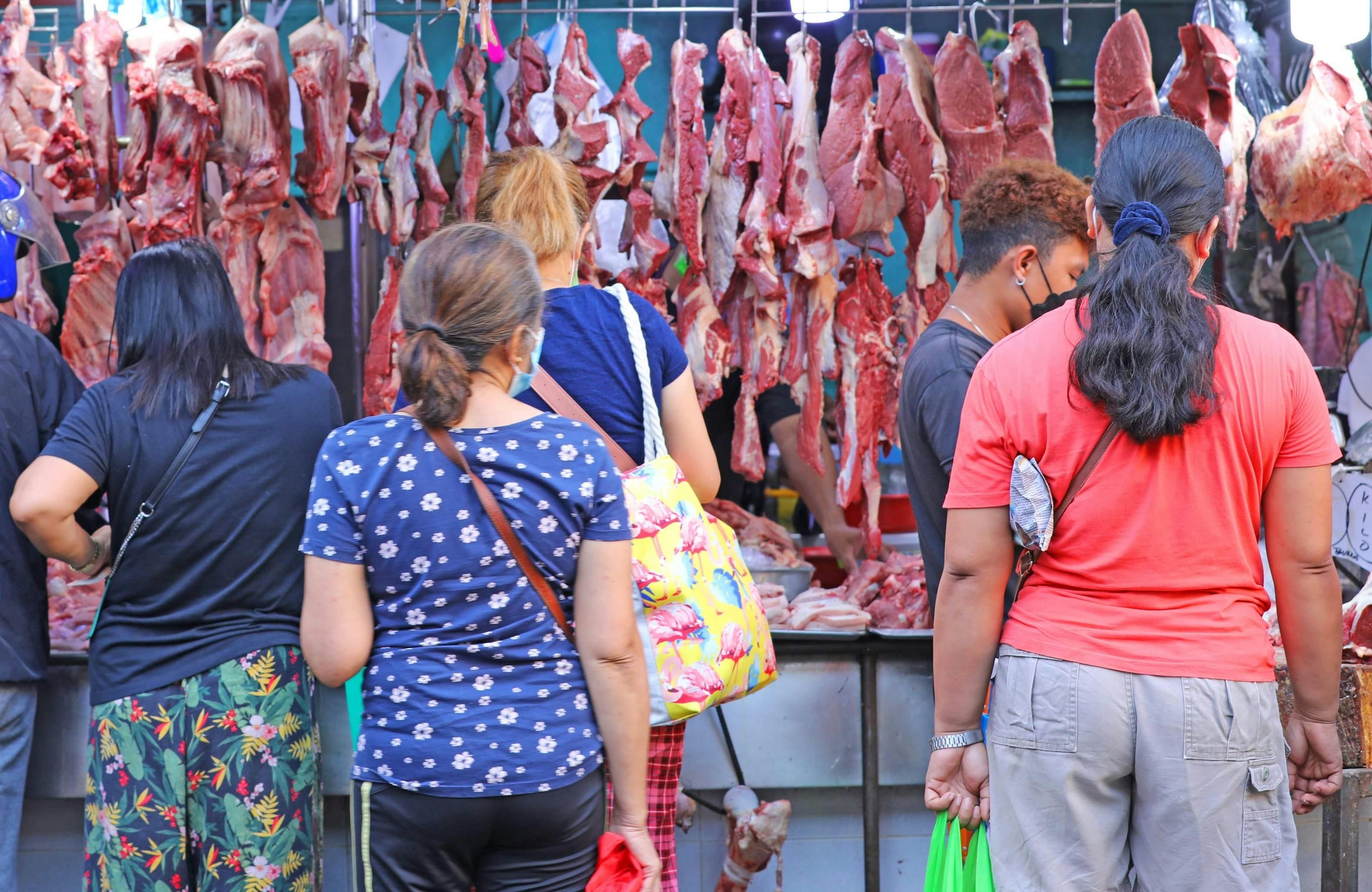
The Philippines will have to deal with a “second round effects” of inflation in the coming months amid the rising prices of utilities and the weakening of the peso, an economist said on Friday, July 8.
“What we've been through in the past few months is the first round effect. So this I guess is ‘the right hook to your chin,’” ING Manila senior economist Nicky Mapa said over “BusinessWorld Live” on One News.
“In the next few months, we'll be dealing with the second round effects,” he added, citing possible transportation fare adjustments and the increase in prices of consumer products due to the rise in cost of production.
Mapa said these additional impact of inflation may be felt by Filipinos in the second half of the year.
“You actually have inflation at seven percent by November, mainly because the second round effects will come into play and… whenever they start to sort of evolve, they sort of infect the rest of the CPI (consumer price index) basket,” the economist said.
Mapa also predicted that more items in the CPI basket will also be affected by the inflation, saying that companies have no choice but to increase prices because of the rising cost of production.
“When firms have to check out a little more for wages, you'd be sure that they're going to be taking that on the sticker price,” he said.
According to a report of the Philippine Statistics Authority (PSA) published Tuesday, July 5, the country’s headline inflation rate is at 6.1 percent for June 2022. This number is a three-year high since October 2018’s 6.9 percent and November 2018’s 6.1 percent.
The PSA cited that the jump in inflation was due to the higher annual growth rate in the prices of food and non-alcoholic beverages, as well as transportation costs.
Comparatively, this month’s record is higher than June 2021’s 3.7 percent and 5.4 percent in May 2022.
During a press briefing in Malacañang on July 5, President Marcos expressed disbelief over the latest inflation rate, saying: “I think I will have to disagree with that number. We are not that high.”
Finance Secretary Benjamin Diokno later clarified that Marcos’s reaction was misunderstood as he was referring to the full-year figure, which is currently around 4.4 percent.
Adjusted forecast
Meanwhile, the Development Budget Coordination Committee (DBCC) announced on Friday, July 8, that it has adjusted its inflation rate forecast for 2022, now at 4.5 to 5.5 percent.
It cited supply constraints and the continuing Ukraine-Russia crisis as the reasons for the adjustment.
The Philippine peso also continued to fall, breaching the P56 level against the US dollar – the weakest in 17 years. Mapa said that this is due to international and domestic factors.
“On the international front you have safe-haven demand for the currency, so many things going on, you have fears of recession,” he said.
“On top of that, you have domestic factors that are sort of piling in on this you have the current account deficit that is now forecast to hit 19.5 billion by the end of the year. This tells us that more dollars will be leaving the country and that's one of the reasons why we're experiencing such a push on spot,” he added. “Lastly, I guess the third aspect of it would be the, I guess anxiety that the market has over the projected interest rate differential of the Philippines and the US.”
Despite the effects of inflation, Mapa said the Philippine economy still has the momentum to recover and not fall into recession.
“As long as you keep the economy open, no lockdowns and the like, I think there's significant momentum. You know, the demographic dividend comes into play, consumption is still going to be quite healthy,” he said.
“Of course, inflation hurts and we hope that the authorities can help bring that down. But the economy is slowly returning to its pre-COVID form… It might be a while before we get back to full pre-COVID form of six to seven percent growth, a robust five percent growth is nothing to sneeze at, and I think that's where we're headed next year,” he added.