



Asean To China, US: Cool It On Taiwan
The Association of Southeast Asian Nations’ foreign ministers called for “maximum restraint” as Beijing accused the United States of breaking the status quo with the Taiwan visit of House Speaker Nancy Pelosi.
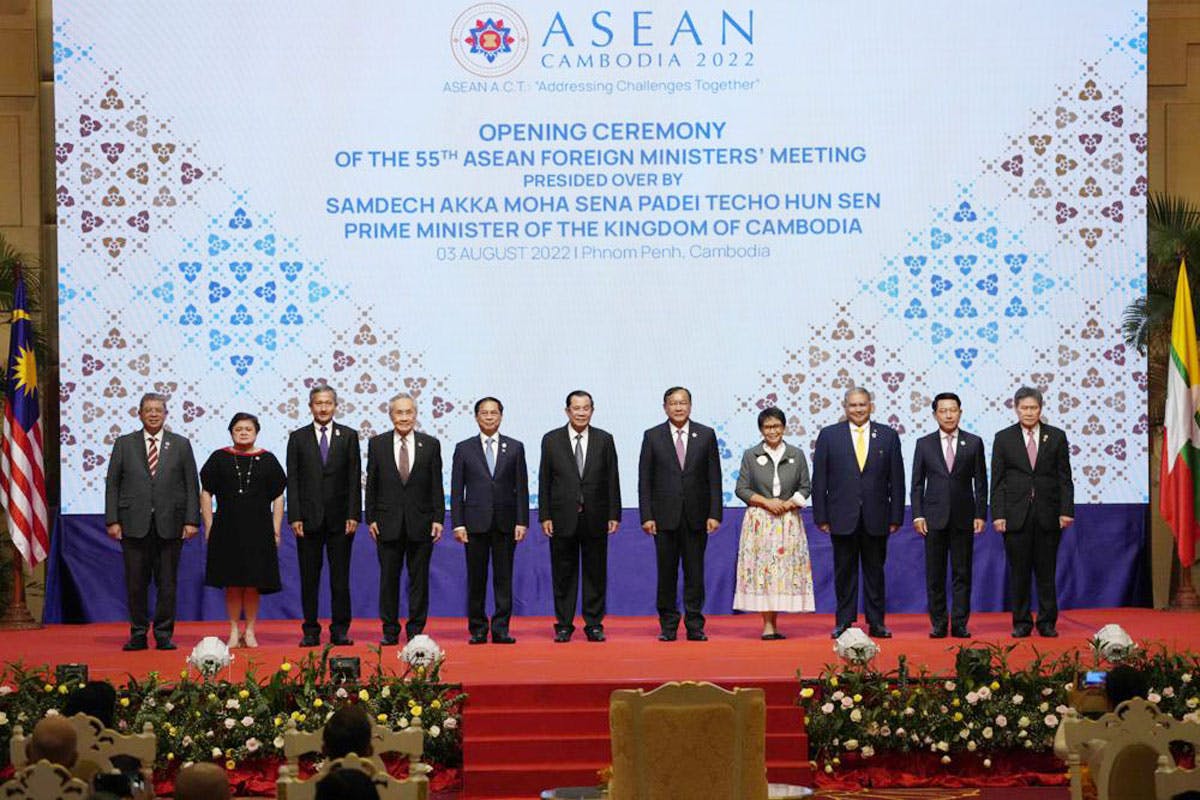
PHNOM PENH – The Association of Southeast Asian Nations (ASEAN) is calling for calm in the Taiwan Strait, urging against any “provocative action” in the wake of a visit to Taipei by US House Speaker Nancy Pelosi that has infuriated Beijing.
In a rare statement on such issues from the 10-nation group, some of whose members drift more toward China in allegiance and some toward the United States, ASEAN foreign ministers meeting in Phnom Penh, Cambodia said on Thursday, Aug. 4, that they were concerned the situation could “destabilize the region and eventually could lead to miscalculation, serious confrontation, open conflicts and unpredictable consequences among major powers.”
Both US Secretary of State Antony Blinken and Chinese Foreign Minister Wang Yi were taking part in the ongoing ASEAN meetings in Phnom Penh on Thursday and Friday, Aug. 5.
Pelosi received a euphoric welcome as the first US House speaker, and highest ranking US official, to visit Taiwan in more than 25 years, and China swiftly responded by announcing multiple military exercises nearby.
China claims the self-governing island of Taiwan as its territory and opposes any engagement by Taiwanese officials with foreign governments.
Beijing has accused the US of breaking the status quo with the Pelosi visit, while the US insists there has been no change to its “one-China” position of recognizing the government in Beijing, while allowing for informal relations and defense ties with Taipei.
On the other side, with China’s recent increase in military activities around Taiwan, Washington accuses Beijing of no longer accepting the status quo.
Shortly after Pelosi landed Tuesday night, Aug. 2, China announced live-fire drills that reportedly started that night, as well as the four-day exercises starting Thursday. The People’s Liberation Army Air Force also flew a contingent of 21 warplanes toward Taiwan.
Meantime, the US has an aircraft carrier group and other naval assets in the region.
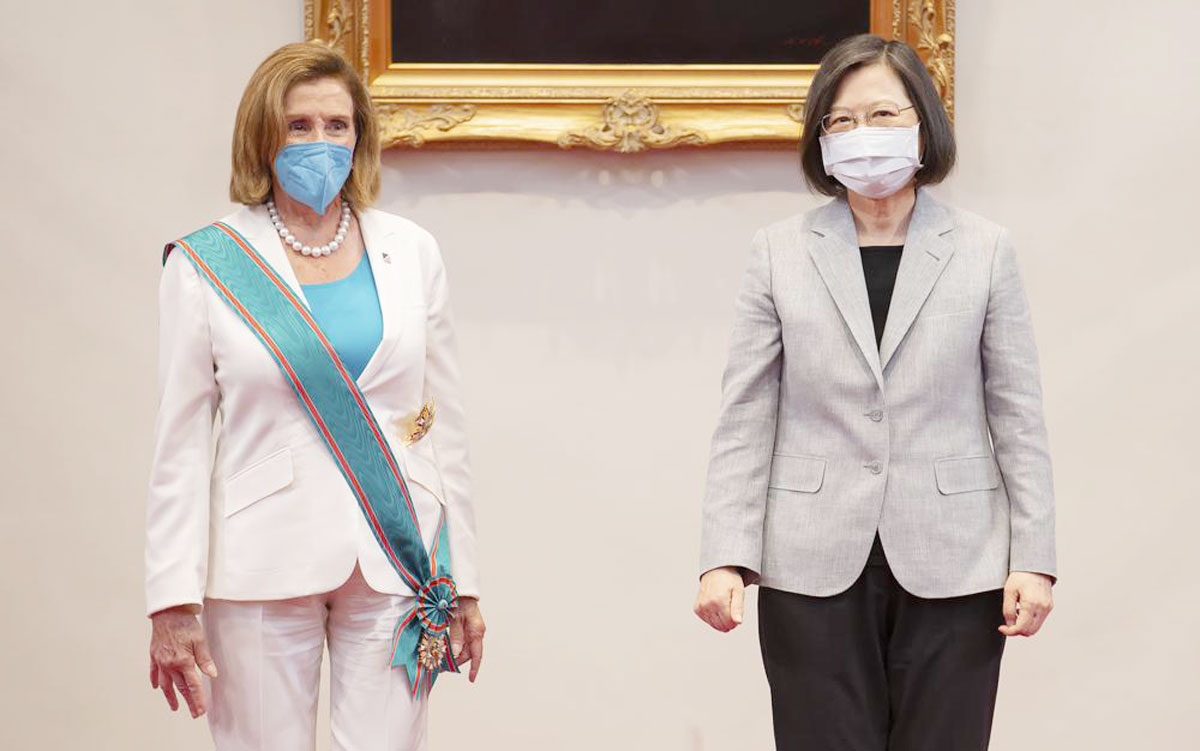
In their statement, the ASEAN foreign ministers called for “maximum restraint” and for all sides to “refrain from provocative action.”
“The world is in dire need of wisdom and responsibility of all leaders to uphold multilateralism and partnership, cooperation, peaceful-coexistence and healthy competition for our shared goals of peace, stability, security and inclusive and sustainable development,” they said.
“We should act together and ASEAN stands ready to play a constructive role in facilitating peaceful dialogue between all parties including through utilizing ASEAN-led mechanisms to deescalate tension, to safeguard peace, security and development in our region.”
ASEAN is made up of the Philippines, Brunei, Cambodia, Indonesia, Laos, Malaysia, Myanmar, Singapore, Thailand and Vietnam.
In Manila, the Department of Foreign Affairs (DFA) said it is “concerned with the rising tensions” in the Taiwan Strait and reiterated the Philippines’ adherence to the One-China policy.
“The Philippines urges restraint by all parties concerned. Diplomacy and dialogue must prevail,” the DFA said.
Michael Castillo, deputy director general of the National Security Council, said that while the Philippines does not need to prepare for war with other countries, it has to have contingencies for a crisis situation.
“Remember, it is in our Constitution that we renounce war as an instrument of national policy, but while we do not have the intention of engaging in a war with any country, we might be caught in crossfire with warring countries,” Castillo said in an interview, referring to the possible impact of Pelosi’s trip to Taiwan. – With Pia Lee-Brago, Ralph Edwin Villanueva


