



1,700 Schools Resume Face-To-Face Classes In Level 1 Areas
Education Secretary Leonor Briones said more schools are expected to participate in face-to-face classes with the easing of quarantine restrictions in the country, particularly in Metro Manila.
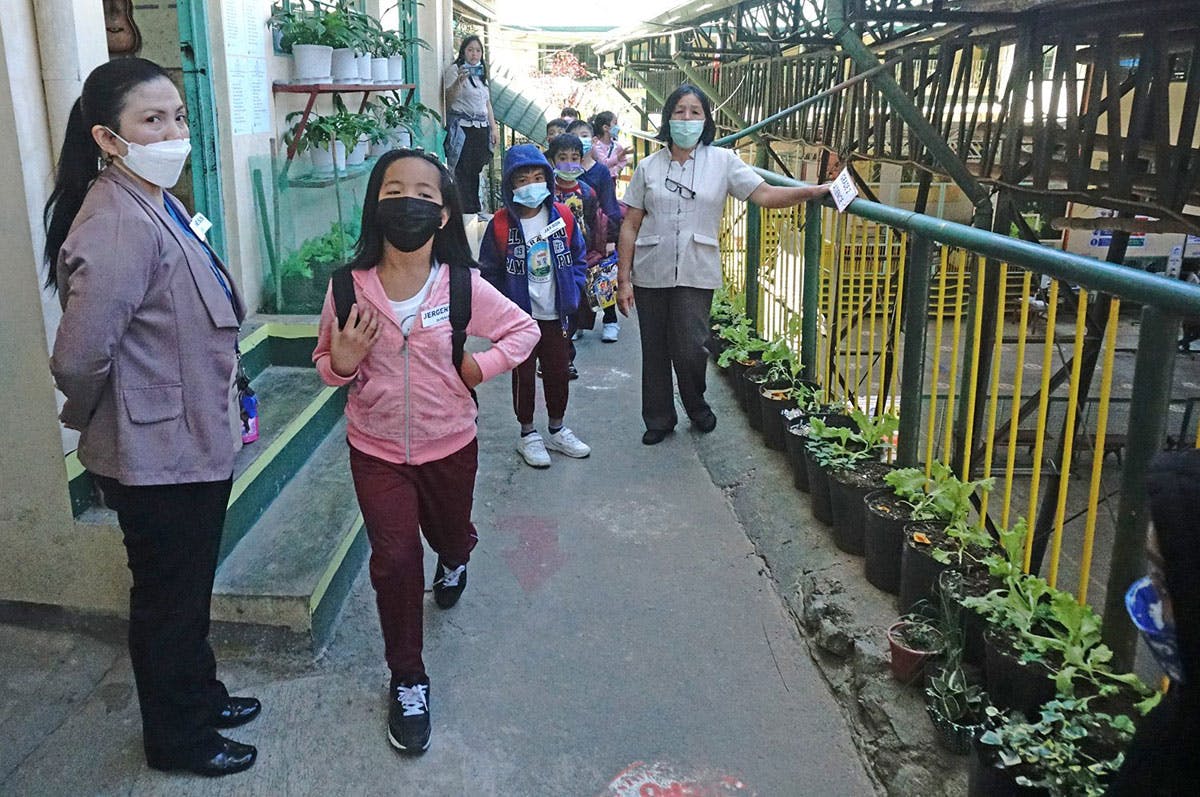
Over 1,700 schools nationwide have resumed limited face-to-face classes, the Department of Education (DepEd) reported on Tuesday, March 1.
Education Secretary Leonor Briones said a total of 1,726 schools have joined the expanded in-person classes that were suspended when the pandemic started two years ago.
Briones said more schools are expected to participate in face-to-face classes with the easing of quarantine restrictions in the country, particularly in Metro Manila.
During Monday’s Talk to the Nation, Briones told President Duterte that with the shift to Alert Level 1, the education sector is keen on relaxing face-to-face protocols to open up more schools for in-person classes.
Briones said they would discuss with the Department of Health if it is possible to loosen up COVID protocols in schools.
An estimated 6,000 schools passed the safety standards for in-person classes, but Briones said the number would still go up if protocols are eased.
With more schools opening up for face-to-face classes for the basic education level, Briones said they are looking to strengthen blended learning.
Briones said the department has taken steps to implement blended learning better, such as the empowerment of DepEd regional directors to make decisions without waiting for approval by the central office.
The National Economic and Development Authority (NEDA) is supportive of resuming in-person classes, saying it would generate more economic activity and improve productivity and learning outcomes.
“As the vaccination rate of children increases, we can open all schools gradually. This will provide a big boost to the economy while improving the learning and productivity of children,” NEDA director general Karl Chua said during a meeting of the government’s pandemic task force on Monday night, Feb. 28.
Chua said the placing of Metro Manila and 38 other areas under Alert Level 1 would not be fully implemented if parents are at home assisting their children in their online classes instead of working.
Face-to-face classes, Chua added, would free up the time of one-fourth of parents who skip work or reduce work time to supervise their children.
“We will increase economic activity by P12 billion per week because the services around the school such as transport, dormitories, food stalls and school materials will resume,” he said.
Chua said resuming in-person classes would also improve learning outcomes by 50 percent.
Full economic recovery would only be possible if face-to-face classes resume as in-person learning is expected to increase business activity and allow parents to go to work, according to Chua.
“If we want a full recovery, Alert Level 1 is not enough. Face-to-face learning should resume,” he said at a press briefing. Resuming in-person learning would also avert about P11 trillion in productivity losses for every year of school closure, Chua said.
Health Undersecretary Maria Rosario Vergeire said her agency is supportive of the resumption of face-to-face classes because safety protocols are already in place.
Sen. Sherwin Gatchalian pushed for the participation of schools and DepEd field units to increase vaccination coverage in the pediatric population as the government prepares for the fourth round of National Vaccination Day this month.
Gatchalian, who chairs the Senate committee on basic education, cited the crucial role of vaccination among learners to ensure the safe resumption of face-to-face classes.
He has been pushing for the resumption of in-person learning to jumpstart the recovery of the education sector.
The fourth National Vaccination Day will prioritize senior citizens and the primary series for the pediatric population.
He said tapping schools is an efficient way to identify and monitor learners who are eligible to receive COVID-19 vaccines.
Around 14 million students aged five to 11 are eligible to receive COVID-19 jabs, the DepEd said.
The government targets to inoculate 15.56 million children in this age group. – With Alexis Romero, Paolo Romero


