A Racket? Senators Seek Suspension Of Motor Vehicle Inspection System
A Senate panel conducted an inquiry into the motor vehicle inspection system and the operations of private motor vehicle inspection centers as motorists had to pay more than double their usual vehicle registration fees.
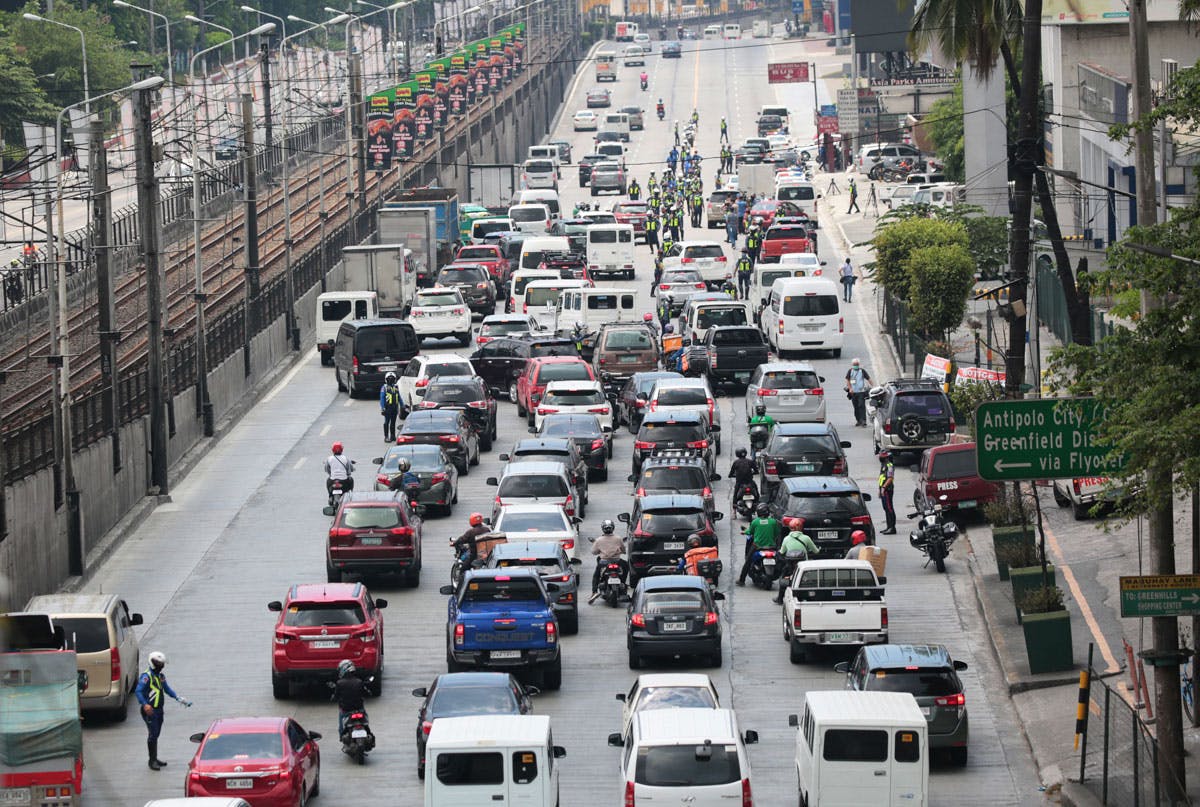
The Land Transportation Office’s (LTO) motor vehicle inspection system (MVIS) whose implementation was delegated to private firms is not only unconstitutional and illegal, but also appears to be a source of massive corruption based on what emerged at the Senate inquiry into the widely-criticized program on Tuesday, Feb. 9.
The Senate committee on public services, chaired by Sen. Grace Poe, also asked officials from the LTO and the Department of Transportation (DOTr) to provide the panel with the list of names of individuals who operate the private motor vehicle inspection centers (PMVICs) amid reports that they are owned or controlled by some high-ranking politicians.
“Who own these centers (PMVICs) that were given permits even prior to the issuance of the regulations?” Poe asked.
The senator was referring to the 17 PMVICs granted accreditation by the LTO last December. There are 23 PMVICs now in operation out of the 138 the agency aims to have accredited within the next two years, LTO chief Assistant Secretary Edgar Galvante disclosed during the inquiry.
She pointed out that the DOTr and the LTO removed from their guidelines an anti-corruption provision that prohibits any official of either agencies to engage or have a stake in PMVICs and similar businesses.
She also asked why the LTO insisted on rolling out the MVIS for private vehicles when public utility vehicles (PUVs) and large trucks that should be inspected first for roadworthiness.
Senate President Vicente Sotto III suggested to Galvante and other DOTr officials that LTO inspectors who issued safety certificates to buses and other PUVs and trucks that figured in accidents due to alleged vehicle defects be immediately dismissed.
Senate President Pro Tempore Ralph Recto on Monday, Feb. 8, warned the MVIS is providing a windfall of at least P8 billion annually to PMVICs that have been sprouting along with the rising complaints of high costs, and damage to vehicles reportedly caused by the testing due to lack of standard equipment, poorly-trained or unsupervised staff, or outright scamming.
Recto asked how the DOTr came up with the figure of 138 PMVICs that the department recently raised to 202. He said the DOTr’s pricing using comparisons with rich neighbors was erroneous even as it also failed to consult the National Economic Development Authority on the matter as mandated by regulations.
DOTr officials admitted under the set up, PMVICs pay the LTO only P100,000 annually.
The Senate committee on public services conducted an inquiry into the operations of PMVICs as motorists had to pay more than double their usual vehicle registration fees.
The inquiry was prompted by a resolution filed by Poe, who chairs the panel and who wants to look into the implementation of Department Order No. 2018-019 of the DOTr, Memorandum Circular No. 2018-2158 of the LTO and other related issuances.
DO 2018-19 is the order privatizing MVIS through authorization issued on Aug. 10, 2018. MC 2018-2158, issued on Nov. 28, 2018, sets the guidelines for the authorization of PMVICs.
According to Poe, many taxpayers find it difficult to accept that DOTr and LTO opted to privatize the MVICs allegedly due to shortage of funds as it had access to the motor vehicle user’s charge (MVUC) funds for decades before it was abolished.
President Duterte signed Republic Act (RA) No. 11239 abolishing the Road Board, the body that managed MVUC funds that he once described as a "milking cow" of corrupt officials.
RA 11239, which required the government to remit collections from the MVUC to the National Treasury, was signed into law on March 8, 2019.
From to 2001 to January 2020, MVUC collection totaled P29.4 billion.
‘Racket’
Sen. Imee Marcos questioned why LTO officials were “relaxing” in the last few years in enforcing inspection policies and suddenly rushed its implementation “out of the blue.”
“You waited in 2018, 2019 and suddenly you seem to be rushing fundraising here,” Marcos said, adding MVIS includes questionable “miscellaneous” charges including those for the inspection of a recovered carnapped vehicle.
Sen. Joel Villanueva said there are many immediately and easily enforceable laws that the LTO should pay attention to, like apprehending overloaded trailers passing through side streets, but does not making him suspect the MVIS is a “racket.”
Senators were unanimous in calling for the suspension of the MVIS.
“Whatever way you look at it, legally speaking, morally speaking, practically looking at this particular program, we must suspend this program…We have seen enough, we have heard enough. The people watching and hearing this hearing will think of think of nothing except that this is a racket,” Villanueva said.
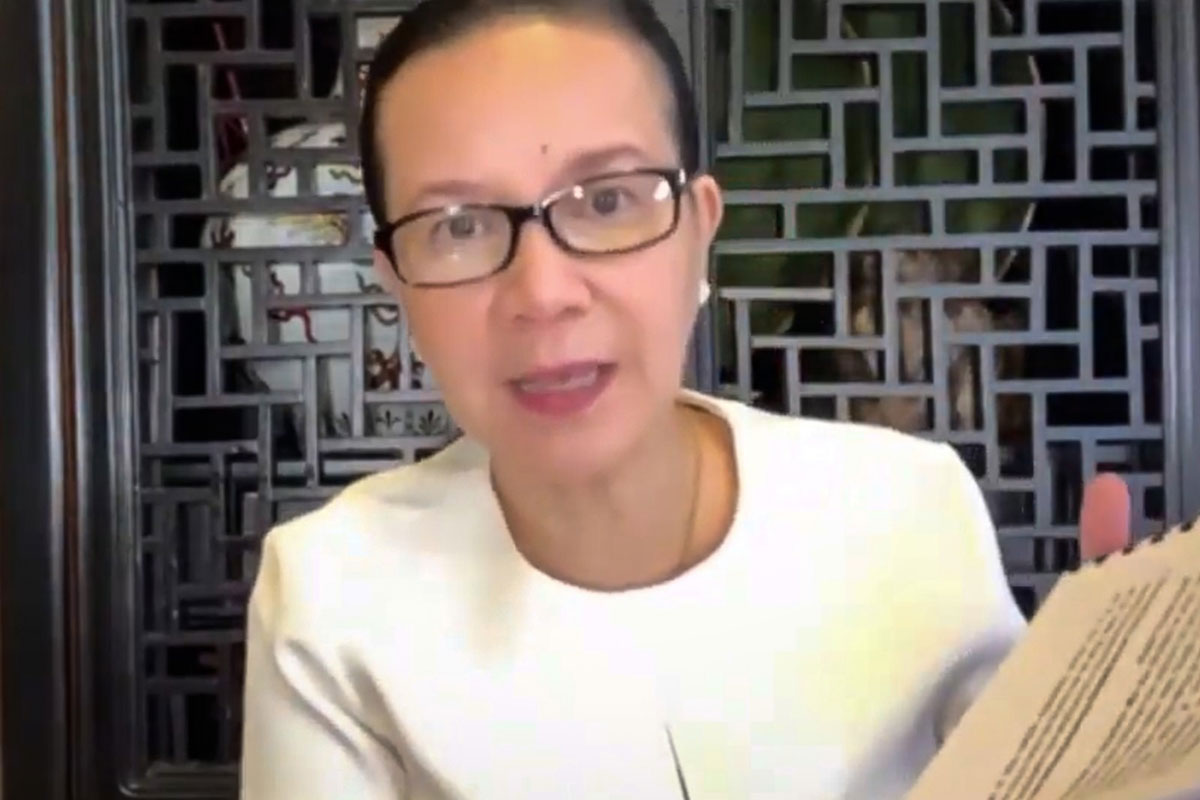
On Feb. 4, Galvante said the MVIS would not be suspended despite public uproar and the Senate investigation. “At this point, no, because that’s our way of finding out if registration of a vehicle can be renewed,” he said.
Galvante has repeatedly defended the MVIS and the PMVICs. He said motor vehicle inspections have long been a standard in the country, but have now been turned over to the private sector as the government currently lacks the facilities to undertake the task.
LTO used to perform motor vehicle inspections but its equipment had already become obsolete. Galvante said that the public should report to the LTO any case of corruption involving PMVICs.
He said erring private vehicle inspectors face suspension or cancellation of license to operate.
‘Unconstitutional’
Senate Minority Leader Franklin Drilon, Sen. Aquilino “Koko” Pimentel III, and Recto enumerated the various constitutional and legal violations, as well as other procedural lapses committed by the DOTr and LTO in implementing the MVIS.
Transportation Undersecretary for Legal Affairs Renier Yebra told the panel that the MVIS has the backing of 56-year old RA 4136, the Clean Air Act, and Executive Order (EO) No. 125 of 1987, which authorizes the agency to seek the assistance or services of the private sector in motor vehicle safety.
Drilon, however, pointed out nothing in the aforementioned laws and orders allows the DOTr to delegate powers granted to it by Congress, adding the Clean Air Act mandates specific actions from the agency and the Department of Environment and Natural Resources to undertake.
“Can you delegate a delegated power? Specifically, to the private companies?” Drilon asked.
He stressed the act of regulation of the DOTr and the LTO is a police power – such as inspection of motor vehicles and charging owners – can only be exercised based on the specific stipulations of Congress.
Drilon added the EO only authorizes the tapping of services – if needed from the private sector – not to have it enforce the law.
“But this (MVIS) not a service, it is a regulation. In fact, from taxes paid by the public,” he said.
Recto said paying the private MVICs for inspections was like taxation without representation, especially that many such firms are demanding that vehicle owners sign waivers so the latter practically have no avenue for redress.
Yebra later admitted the DOTr’s interpretation of the laws to justify the MVIS was a “stretch.”
Pimentel cited jurisprudence that Congress cannot pass a law that will not be evenly or equally implemented, noting that the MVIS is implemented only in areas where there are MVICs while the rest still go through emission testing centers.
Pimentel said the set up means vehicle owners in areas where there are MVICs pay higher amounts and the rest pay lower fees.
“From the point of view of the Constitution, this is unequal. If Congress cannot that, I doubt if a mere program or regulation can do so,” Pimentel said.
On the back burner
Earlier, Poe said “the intention behind the law is noble, but the fees following its implementation cannot come at a worse time” in the middle of a coronavirus pandemic where people are barely getting by and now have to add another item in their list of expenses.
Based on the LTO memorandum circular back in 2018, PMVICs were authorized to collect an inspection fee of P1,800 from motor vehicles weighing 4,500 kilograms or less. If the vehicle fails the test, it will be required to undergo necessary repairs and be brought back to the PMVIC, where the motorist is charged an additional P900 reinspection fee to obtain clearance.
On the other hand, motorcycles and tricycles are charged P600 for the inspection fee and P300 for reinspection, if necessary.
“Imagine, even those who rely on their vehicles, such as delivery people and public utility vehicle drivers, would see their earnings squeezed out from them and left with nothing to bring home to their families,” she said in Filipino.
The implementation of the MVIS to ensure the roadworthiness of vehicles and prevent road accidents had been put on the back burner for more than 12 years. Before the program was rolled out, motorists only had to pay an average of P500 for the emission testing fee.
The new inspection procedure is allegedly more thorough as it uses advanced technology to check the car from inside out, but this has also elicited a number of complaints from motorists.
“It’s hard to ignore the accounts from motorists who have experienced glitches in the PMVIC test results that incurred additional costs on their part for reinspection. The unreliability of the test results is problematic and burdensome, to say the least,” Poe said.
Another issue is the absence of interconnectivity between the IT system used by the PMVICs and the LTO, which means vehicle owners have to pay for another testing in another testing center.
The DOTr is targeting to roll out a total of 138 PMVICs nationwide. The lack of transparency in the selection of the PMVICs caused apprehension among concerned groups that the program has become a breeding ground for corruption.