



Speed Up Bike Lanes, Cyclists Ask Gov't Amid Lack Of Transportation
Cycling and walking have been promoted as a hobby and form of exercise for good health. Under the new normal due to the COVID-19 pandemic, bicycles have become a necessity for people who commute in the country.
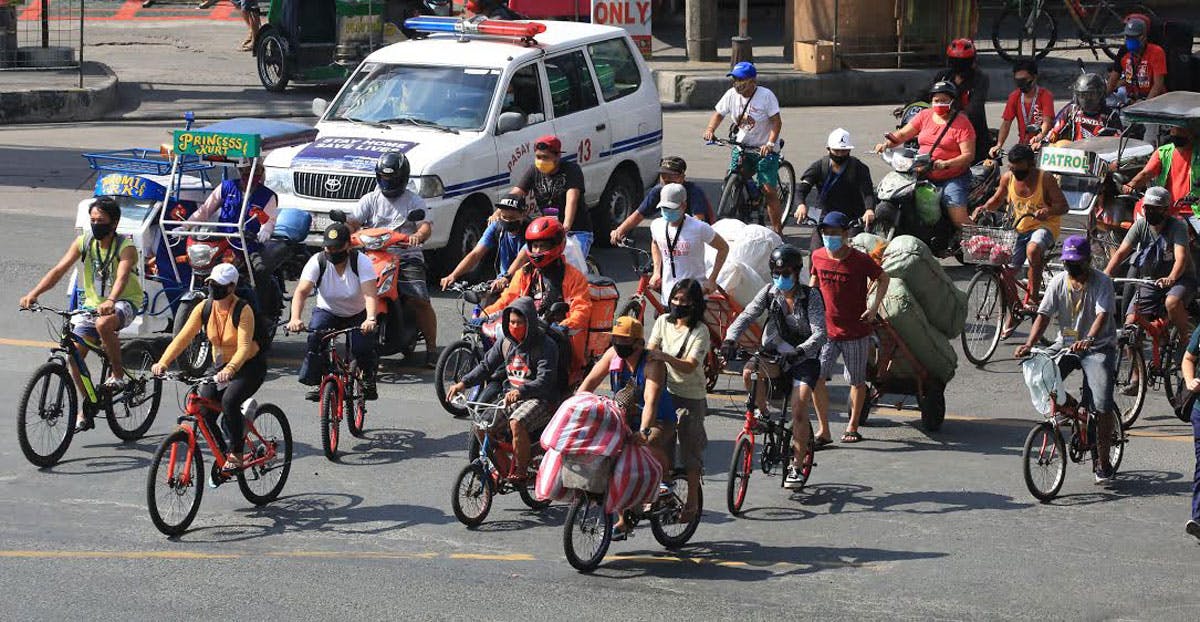
Adolfo Manaog, a security personnel, has been riding a bicycle to work since quarantine restrictions were imposed to beat the coronavirus disease 2019 (COVID-19) pandemic.
But Manaog finds it difficult to cycle along EDSA's bike lanes – 982.6 meters from White Plains to Temple Drive, and 2.105 kilometers from Ortigas to Santolan –because the lanes are not connected.
In between the two lanes, he passes through pedestrian lanes, and avoids trees in the middle of the lane, forcing him to just bike along the curb – a risky practice along Metro Manila's third deadliest thoroughfare with 19 deaths recorded last year.
"Putol-putol 'yung bike lane, hindi continuously na diretso... Sa bangketa lang ako nagpapatakbo ng bisikleta. Sana magkaroon na ng bike lane para hindi rin kami madisgrasya," Manaog told this reporter, who chanced upon him biking along EDSA corner Ortigas Avenue on Monday, June 1, the first day of the general community quarantine (GCQ) in Metro Manila.
The National Capital Region had been under enhanced community quarantine (ECQ) since March 17. On May 15, it was placed under modified ECQ or MECQ, which was further relaxed to GCQ on June 1 to gradually reopen the economy amid the continuing battle against COVID-19.
Cycling and walking have been promoted as a hobby and form of exercise for good health. Under the new normal due to the pandemic, bicycles have become a necessity for people who commute in the country.
The suspension of public transportation in areas under ECQ forced commuters to use bicycles to go to work. With mass transport facilities now operating at limited capacity in places under GCQ, commuters must still observe physical distancing while jostling for available public transport vehicles or free rides.
On Wednesday, June 3, World Bicycle Day was celebrated. Among other recommendations, the United Nations encouraged member-states to devote particular attention to the bicycle in cross-cutting development strategies and to include the bicycle in international, regional, national and subnational development policies and programs.
According to the UN, the bicycle can serve as a tool for development and as a means not just of transportation but also of access to education, health care and sport.
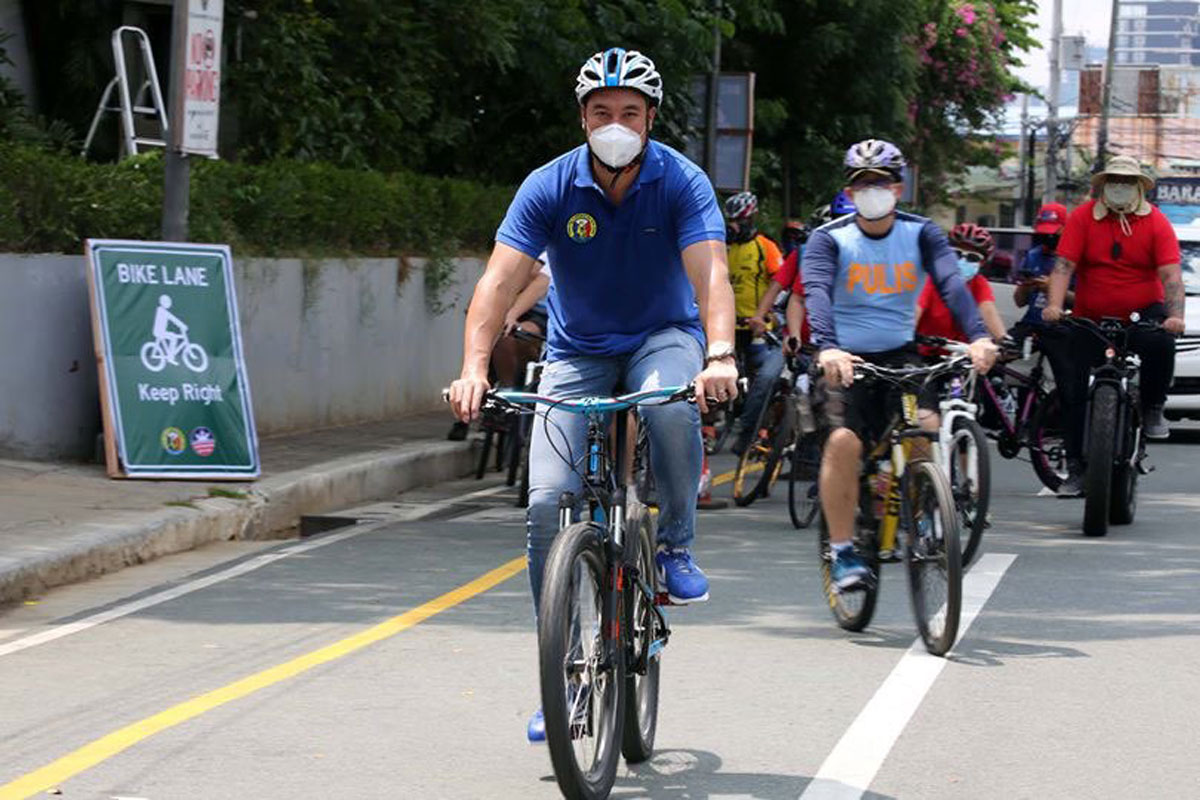
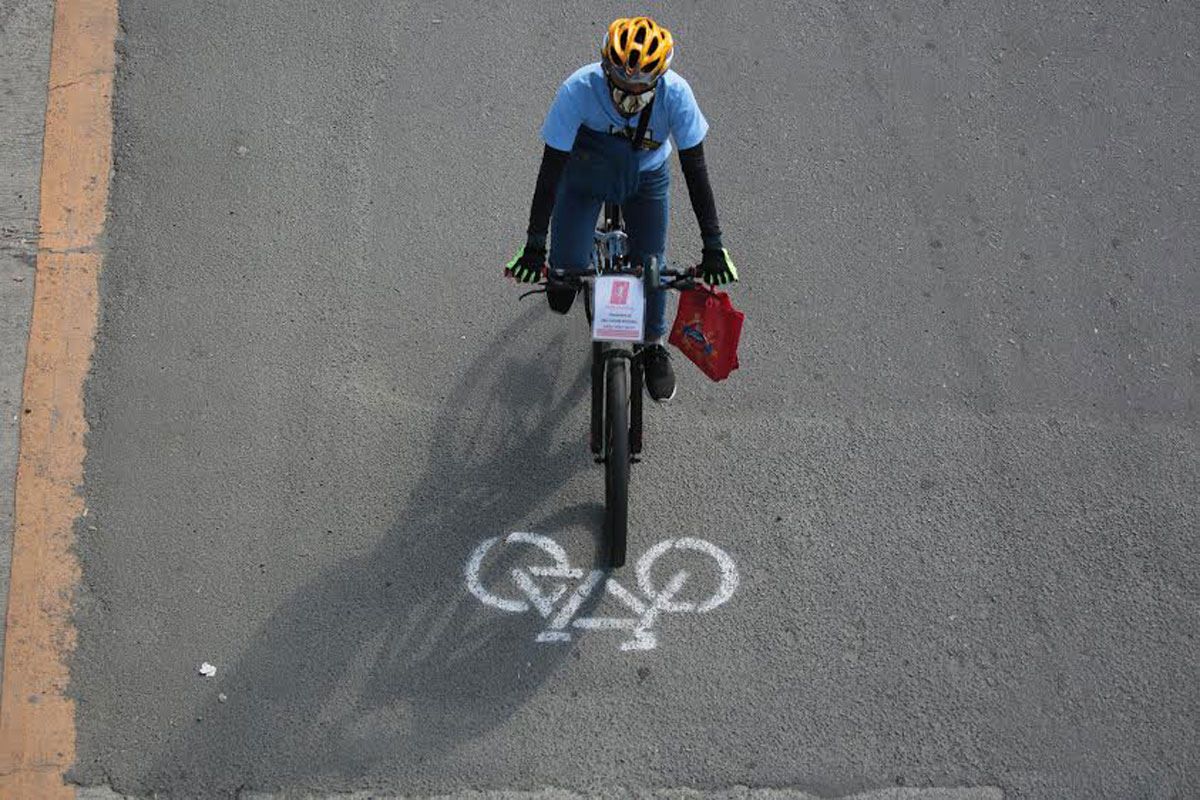
On June 1, advocate groups called on the Metropolitan Manila Development Authority (MMDA) and other transport agencies to let bicycle riders have their share of the road safely and conveniently.
But instead of support, they were met with warnings from MMDA traffic enforcers, who went to Commonwealth Avenue in Quezon City and confiscated the traffic cones made out of orange bottles set up by the Bikers United Marshall for a makeshift bike lane.
On Facebook, the group took videos of their encounter with traffic enforcers on June 3 even though, according to a volunteer member who spoke to The Philippine STAR, they had been doing this since Monday, and the enforcers even helped them set up the bike lane.
The group also gave away reflector vests for cyclists along Commonwealth Avenue due to observations that several bikers, whose numbers have increased on the road due to the lack of public transportation, were not wearing protective gear such as vests and helmets.
But the MMDA said it would impose a fine of P1,000 on the group for causing obstruction on the road despite its members' good intentions.
MMDA spokesperson Celine Pialago said she went to the area and was approached by members of the group, who asked that she pay the P1,000 fine. They also challenged her to join them in their initiative. In the end, the group was spared from paying the fine.
Pialago said the MMDA shared the group's hope for a bike lane during the new normal, but this initiative must be coordinated with the agency.
"Sila po ay aming naiintindihan sa kanilang frustration. Alam po namin na nais na nilang magkaroon ng protected bike lane. Kami din po. Pero hindi po solusyon ang improvised bike lanes without coordination," Pialago said.
She stressed that if ever their proposal for a pop-up bike lane is approved, the lane should be protected by a barrier, not plastic bottles, and should always be secured by enforcers.
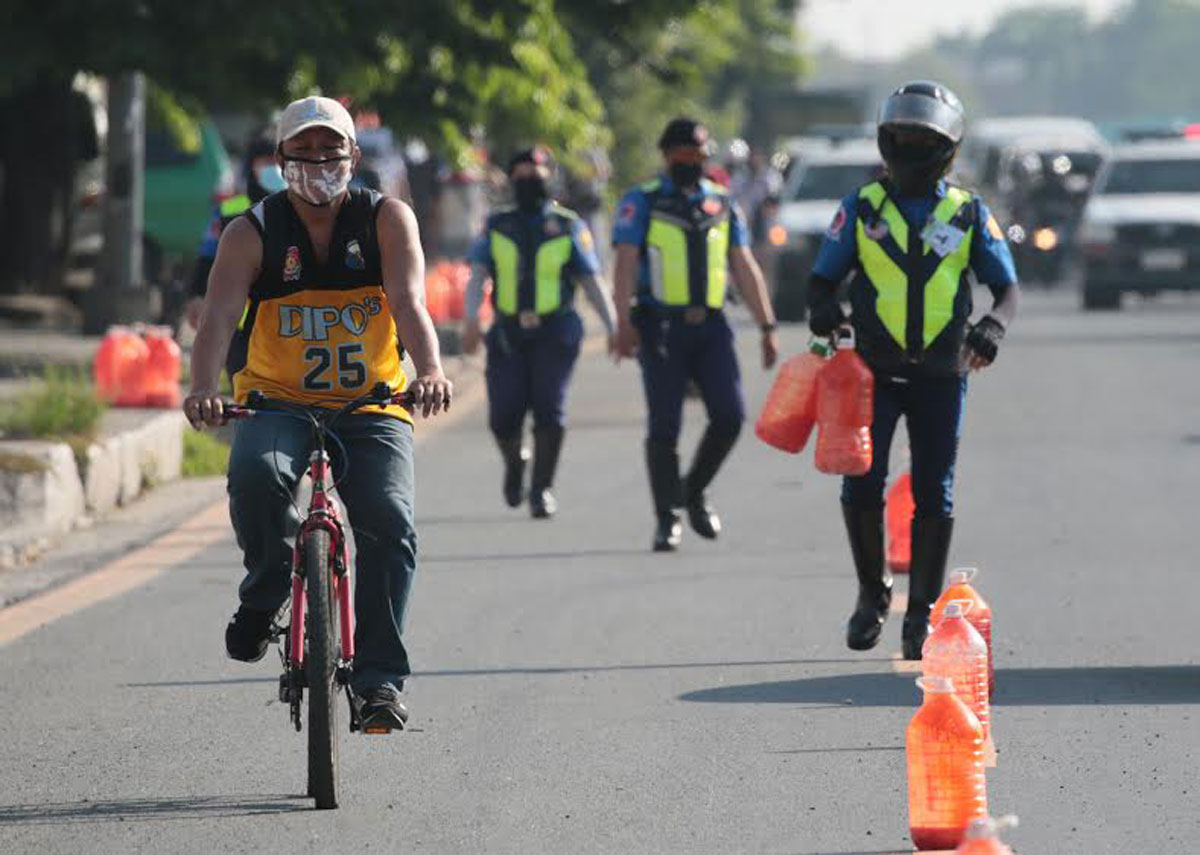
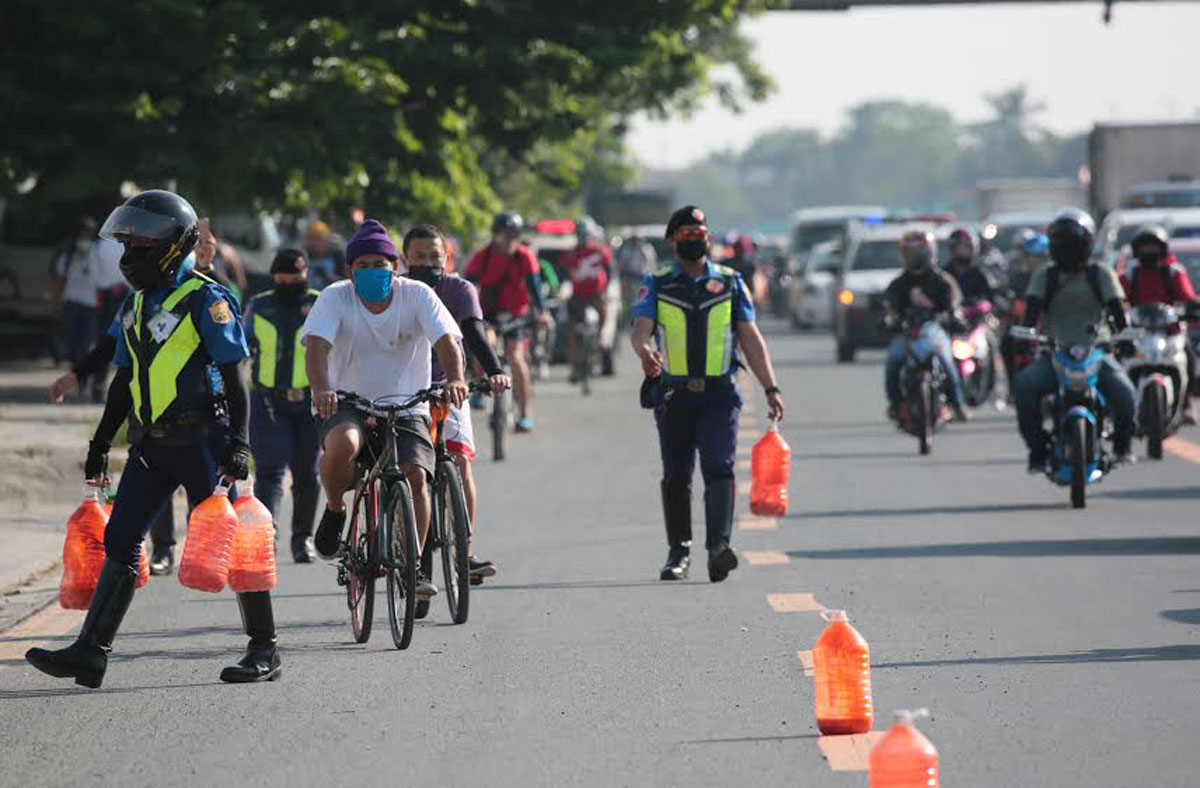
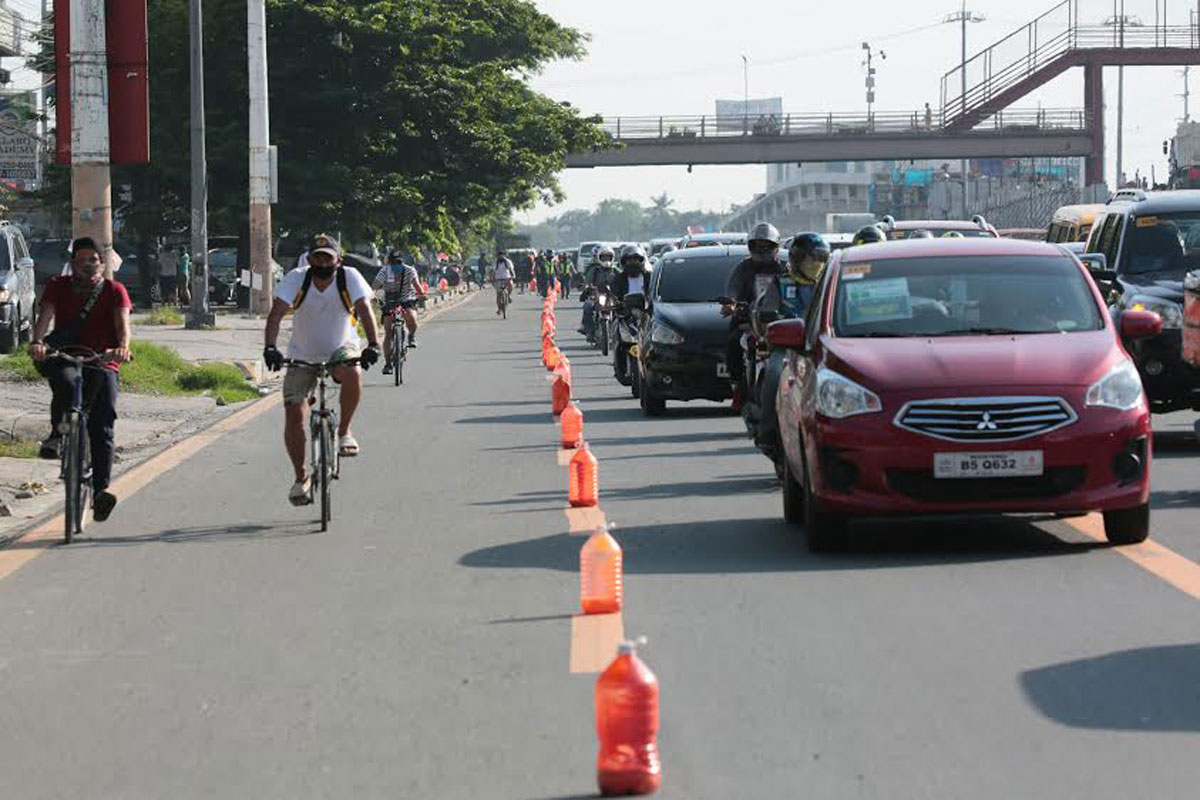
The MMDA considers pop-up bike lanes dangerous, and instead wants a protected, dedicated bike lane that is elevated and separated from pedestrians and the road. Installation of such a bike lane, however, would take time.
In the absence of a clear policy on bike lanes, the cycling marshals took matters into their own hands.
Since Monday, the group has been setting up pop-up bike lanes to protect cyclists from the road hazards of Commonwealth Avenue, known as Metro Manila's killer highway.
Pop-up bike lanes are part of the so-called tactical urbanism that involves various forms of interim improvements for the public, including creating or widening sidewalks for cycling and walking.
The group members call themselves "marshals" for volunteering to secure the bike lane, only because government would not do it for them.
"We will not stop until authorities realize that this is actually their job, to assure bikers that they are safe on the streets. We are actually just doing their jobs," said group volunteer Rodne Galicha, who was among 2018's The Outstanding Young Men and Women or TOYM for his work on the environment.
Geane, another volunteer who opted to identify herself only by her first name, said the group recorded 1,000 to 2,000 cyclists who have used the makeshift bike lane along Commonwealth since Monday.
Most of them were surprised and glad to know there was a bike lane along the avenue, Geane said. Some cyclists even gave them a high five as a sign of gratitude.
"We see in the bikers' eyes that they are very grateful because they are assured that their journey is safe," Galicha said.
The group acknowledged that safety should remain a priority for cyclists especially in one of the country's deadliest roads.
There were 23 deaths recorded along Commonwealth Avenue in 2019, making it Metro Manila's second deadliest road, according to the MMDA's latest Metro Manila Accident Reporting and Analysis System report. C-5 Road was the deadliest with 31 fatalities.
According to the same report, 20 bicycles or pedicabs were involved in fatal accidents last year, while 1,060 figured in accidents that caused non-fatal injuries. Motorcycles were the main killers on the country's roads, with 234 involved in fatal accidents last year.
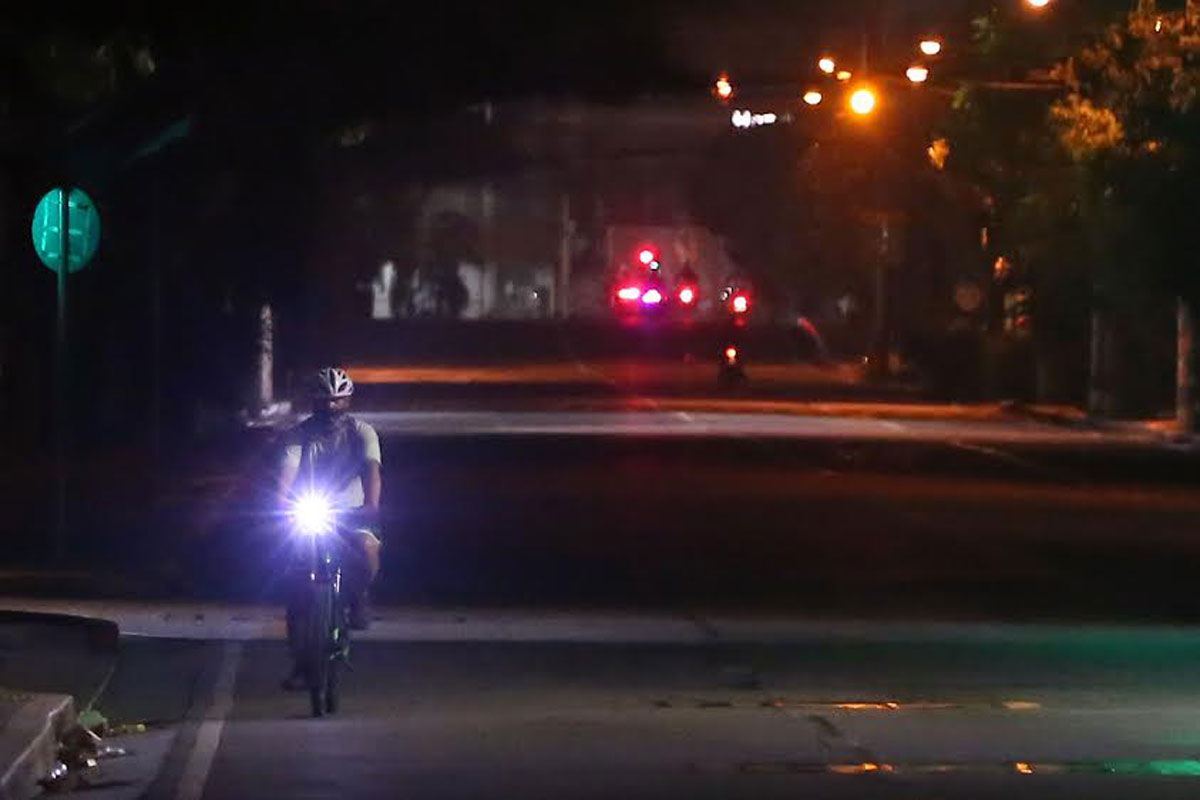
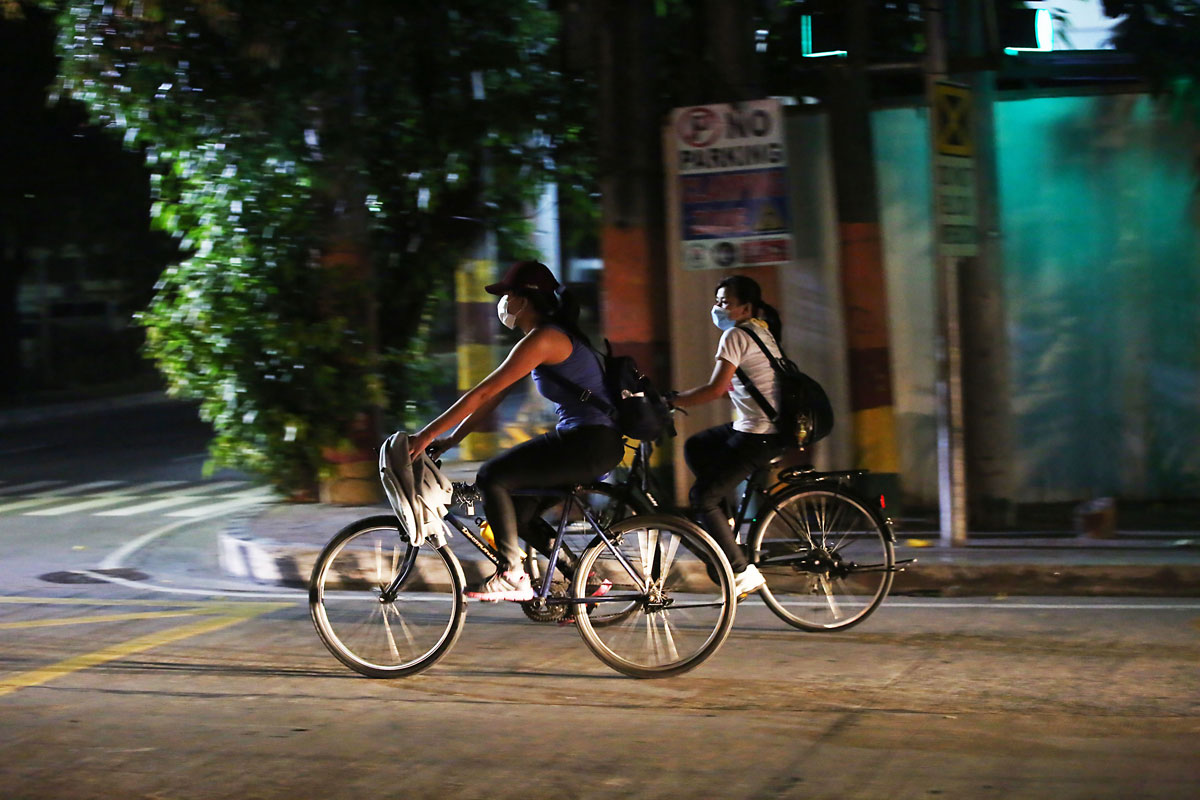
On the second day of the group's marshaling efforts on June 2, Eric Malana, a supervisor in a wholesaler company, was injured after his bicycle was sideswiped by motorcycle driver Deejay Chavez along Commonwealth Avenue.
The dangers are real for cyclists on the road, which makes setting up a dedicated bike lane, even one protected simply by plastic bottles, all the more important, the group said.
Cycling requires the rider to take precautions as well, especially under a harsh environment and high temperatures.
Along EDSA, a cyclist with existing health conditions collapsed on his way to work. Construction worker Enrique Minerva died along EDSA in Makati City on May 22, when Metro Manila was placed under MECQ.
"When a person decides to bike to work, he or she needs to be physically, mentally and technically prepared to be a safe and responsible road user," Mia Bunao of mobility group Kalyetista pointed out.
It does not help that Metro Manila still lacks interconnected bike lanes, which would make cycling safer and more sustainable.
Transport agencies are studying several proposals to connect the existing bike lanes in Metro Manila into one interconnected network, Department of Transportation (DOTr) Undersecretary Mark de Leon said.
Several local government units including Marikina, Quezon City, San Juan and Taguig have their own bike lane projects.
The DOTr has asked the Department of Public Works and Highways (DPWH) for P70 million to build elevated bike lanes protected by bollards in Metro Manila.
De Leon said the DOTr, MMDA and DPWH are in talks to consolidate the various proposals for a bike network in Metro Manila for the new normal.
"We have several proposals; the problem is just the budget. We have very limited space, so we really need to balance the demand for private car lanes and bicycle lanes," De Leon said.
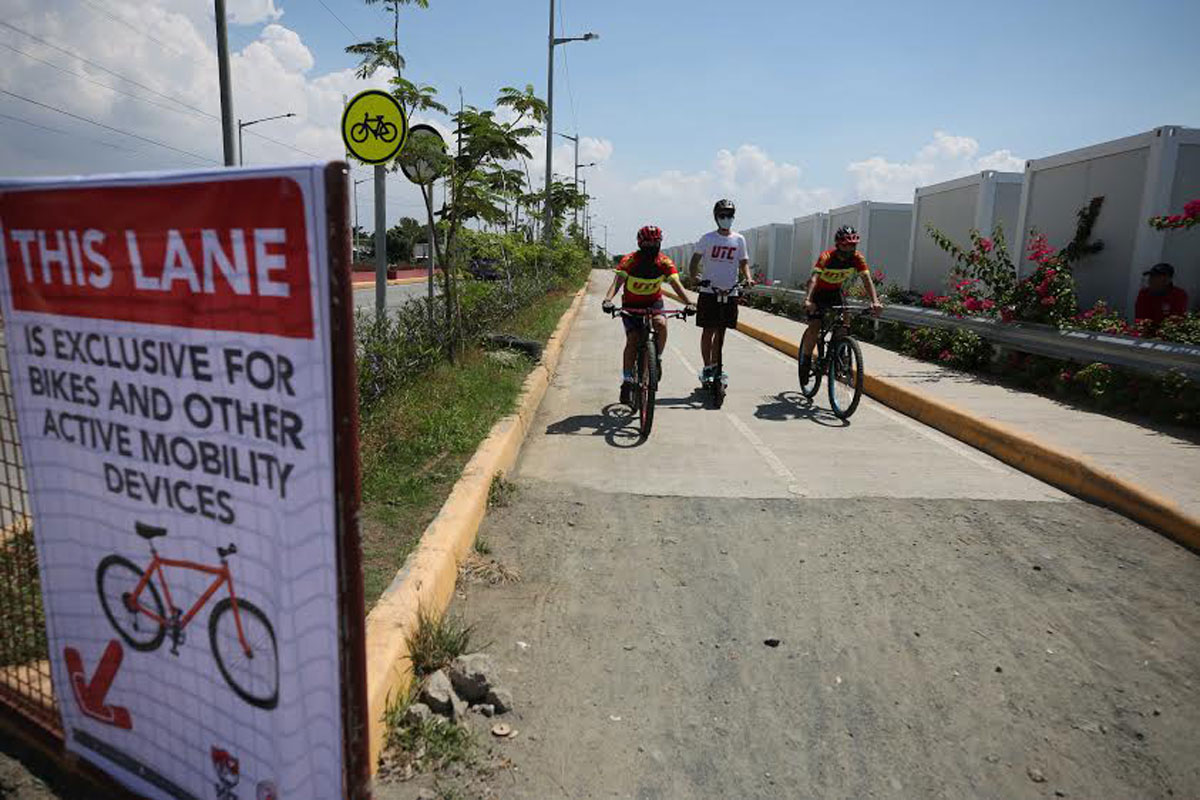
At the Senate, Sen. Pia Cayetano pushed for her proposed "Safe Pathways Act" or Senate Bill No. 1582 that would include the setting up of bike lanes and sustainable transportation.
She said the bill "seeks to create a network of pop-up bicycle lanes that can be used by our essential workers during the pandemic."
"The lanes shall strictly be for bicycles and other non-motorized vehicles, and shall connect users to essential destinations like medical facilities, among others. The lanes shall also have enough space to accommodate one-meter physical distancing," Cayetano noted.
"In Europe, China, and the United States, and all over, urban cycling networks surged after lockdowns were imposed. In cities like New York, Mexico, and Berlin, they set up temporary bicycle lanes to facilitate people's mobility," she said in her sponsorship speech delivered on World Bicycle Day.
Transport economist Jedd Ugay said the government should prioritize the construction of bike lanes because bicycles as a mode of transportation are the most compliant with physical distancing.
Many frontliners and health workers opt to ride bicycles to work to avoid infection in public transportation, he noted.
"There is a big demand to buy or borrow bicycles now, especially among frontliners. If you want to protect our health workers, we should provide protective bike lanes," Ugay stressed.
MMDA general manager Jojo Garcia said the agency would support the installation of elevated bike lanes that are separated from private vehicles.
"We don't want to compromise the safety of our bicycle riders. One death could cost the whole project. We are going to put international standards in bike lanes. Putting up cones will not ensure safety," Garcia told One News' "The Chiefs" on Monday.
With no protected bike lanes in sight yet, cycling advocates are urging the government to allow even pop-up bike lanes. They note that after all, it was the government that encouraged the public to bike to work when it allowed bimodal transportation like bicycles during the quarantine.
"Having protected bike lanes will lead us to a better normal, away from the old normal when bikers are not safe on the road," Galicha said.
"Bikes should have a respectable space allocated for them as the vehicle for the new, better normal," Bunao also said.


