



NO VIPs? Gov’t Workers Seventh In The List Of Priority Groups To Get COVID-19 Vaccines
Officials like President Duterte and Health Secretary Francisco Duque III have expressed willingness to be immunized from COVID-19 to promote the safety of the vaccines, but the 1.76 million medical frontliners are top priority.
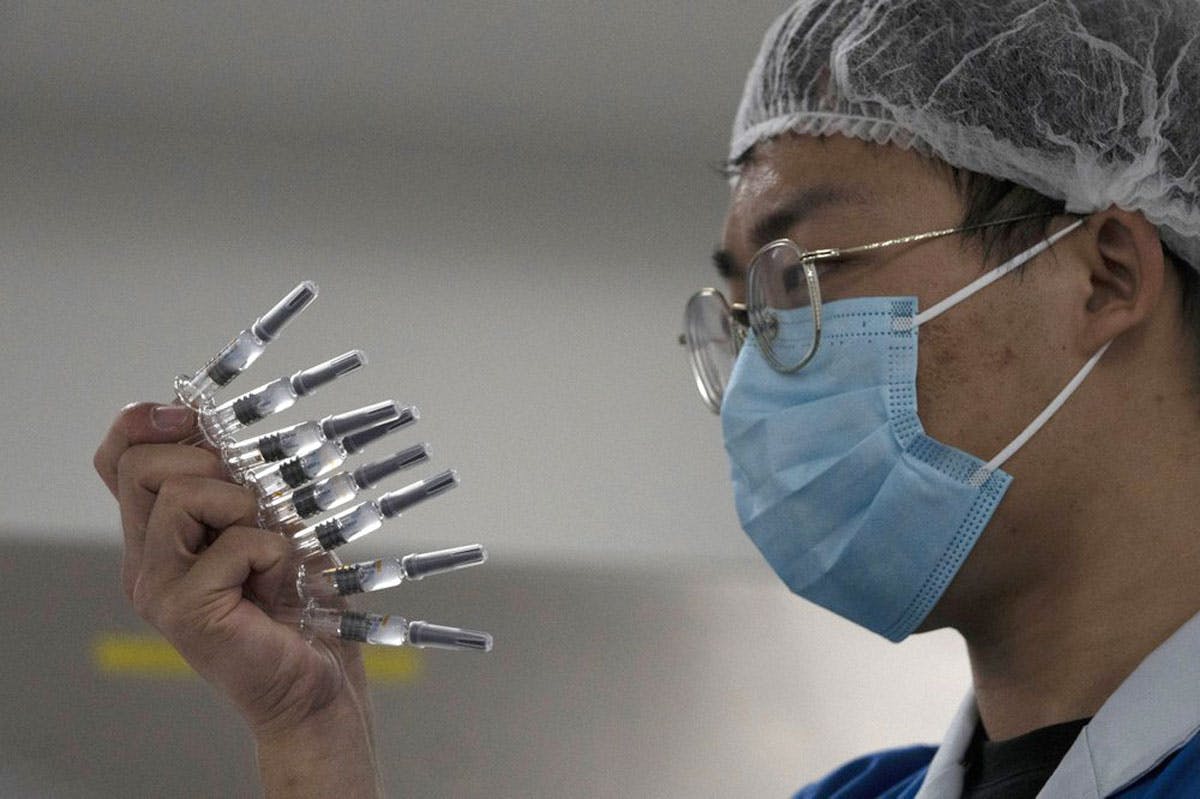
Health Secretary Francisco Duque III accepted on Monday, Dec. 7, the challenge of Sen. Christopher “Bong” Go to be among the first to get immunized from coronavirus disease 2019 (COVID-19) once drug regulators allow the use of vaccines in the country.
Health Undersecretary Maria Rosario Vergeire also said Duque and the entire agency would take the vaccine to show their confidence in the Philippine vaccine experts’ assessment and the processes of the Food and Drug Administration (FDA).
“Ang secretary of health po natin at ang buong Department of Health ay bukas po tayo at, kung kailangan, talagang tayo po ay mauuna sa pagpapabakuna (Our secretary of health and the whole Department of Health are open to it and, if we need to, we will be the first to get vaccinated,” she said.
Also on Monday, Presidential spokesman Harry Roque reiterated that President Duterte had volunteered to be the first to be vaccinated against COVID-19 as early as August to persuade people to be inoculated. He described the Chief Executive as the "best communication tool" when it comes to the COVID-19 vaccination program.
Vice President Leni Robredo said on Sunday, Dec. 6, that she was ready to be inoculated as well but noted that healthcare workers would be prioritized in the immunization program when the vaccines arrive.
She stressed it is important to have the names prepared because there are many medical frontliners and they all need to be protected against COVID-19.
In the list prepared by the Department of Health (DOH) and cited by Roque during his regular press briefing, a total of 24.7 million Filipinos would be prioritized in the rollout of the vaccines.
Roque said the first priority are the 1.76 million medical frontliners including those working for public and private facilities, barangays, local governments, and national government agencies.
The second priority will be the 3.79 million indigent senior workers while the third will be the remaining 5.68 million senior citizens. The fourth priority will be the remaining indigent population, which number about 12.9 million, while the fifth will be the more than 525,000 uniformed personnel.
"We will order (vaccine doses) good for 30 million individuals or 60 million dosages," Roque said.
The others in the list of priorities are the following: (sixth) teachers and school workers in the public and private sectors; (seventh) all remaining government workers; (eighth) "essential workers" in agriculture, the food industry, transportation and tourism; (ninth) socio-demographic groups in significantly higher risk areas other than the senior citizens and indigent population (persons deprived of liberty, persons with disabilities, and Filipinos living in high-density areas); (10th) overseas Filipino workers; (11th) other remaining workforce; and (12th) students.
No-brainer
Duque said in a television interview that he will definitely take the vaccine “as long as it has undergone the scientific evaluation by the Vaccine Expert Panel (VEP), (the) Single Joint Ethical Review Board (of the DOH) and the Food and Drug Administration’s own technical and regulatory evaluation.”
“That’s a no-brainer,” he stressed.
Duque noted he also finds “no problem” in receiving a vaccine covered by the emergency use authorization (EAU). Last week, Duterte signed Executive Order No. 121 allowing the FDA director general to issue emergency use authorization for COVID-19 vaccines and medicines. The order permits the use of COVID-19 drugs and vaccines pending approval by regulators as long as there is credible information suggesting that the medicine or immunization can stop, diagnose, or treat the virus.
The health chief challenged his fellow Cabinet members to join in being vaccinated against COVID-19.
Duterte first
"So kung papayagan na po ng FDA, I think po mangunguna ang Presidente at nag-volunteer naman po siya, in fact gustong-gusto na niya (If the FDA allows it, I think the President would be willing to go first and he volunteered to do it. In fact, he wants to do it already)," Roque said in a press briefing.
Asked whether Duterte is ready to receive the vaccine even if the approval is just for emergency use, Roque replied: "Yes, that is the impact of the executive order on EUA."
The Philippines may have COVID-19 vaccines as early as March next year if pharmaceutical firms secure emergency use authorizations in January, FDA director general Eric Domingo said last Thursday, Dec. 3. The government is planning to borrow P73.2 billion to purchase vaccines for 60 million Filipinos.
Roque said Duterte could no longer wait to be vaccinated.
"He (Duterte) already wants to be immunized so he can show to the entire nation that it (vaccine) is safe and effective, that it went through an expert panel group and it comes with their highest endorsement that it is safe and effective," he added.
Personal decision, no VIPs
The Palace spokesman, meanwhile, shrugged off Robredo's statement that she is willing to be among the first to get the COVID-19 vaccine.
"Again, the President was first to say that he's willing. Let’s hope she (Robredo) can be a guinea pig," Roque said.
With regard to suggestions that Cabinet members like Duque and COVID-19 policy chief implementer Carlito Galvez Jr. should be the first to be inoculated to allay fears about the vaccine, Roque said it would depend on the decision of the officials.
"That's the personal decision of officials. If that happens, the government would be criticized for prioritizing VIP's (very important persons) just like what happened during the conduct of PCR tests. So either way, there would be criticisms," Roque said, referring to polymerase chain reaction or swab testing for COVID-19.
"If there are top officials who want to be vaccinated to serve as an example and to prove that vaccines have no negative effects, we welcome that. But remember, if that happens, the opposition would say there is VIP treatment," he added.
Private sector initiative
Lance Gokongwei, president and chief executive officer of JG Summit Holdings Inc., disclosed companies have pooled P800 million to buy three million doses of COVID-19 vaccine developed by British-Swedish pharmaceutical firm AstraZeneca plc and Oxford University.
"I think as of this date, it's more than three million doses which is over $16 million, that’s about P800 million contributed by the private sector and at least half of it will go to DOH (Department of Health)," Gokongwei said.
"There should be no finger-pointing, no one should be left behind...We work together and raise funds to secure the doses of vaccines...so we have to step up so the Philippines can get its share," he added.
Gokongwei noted companies also want to prioritize their employees in the giving of vaccines to assure them their families “that their health is our concern.”
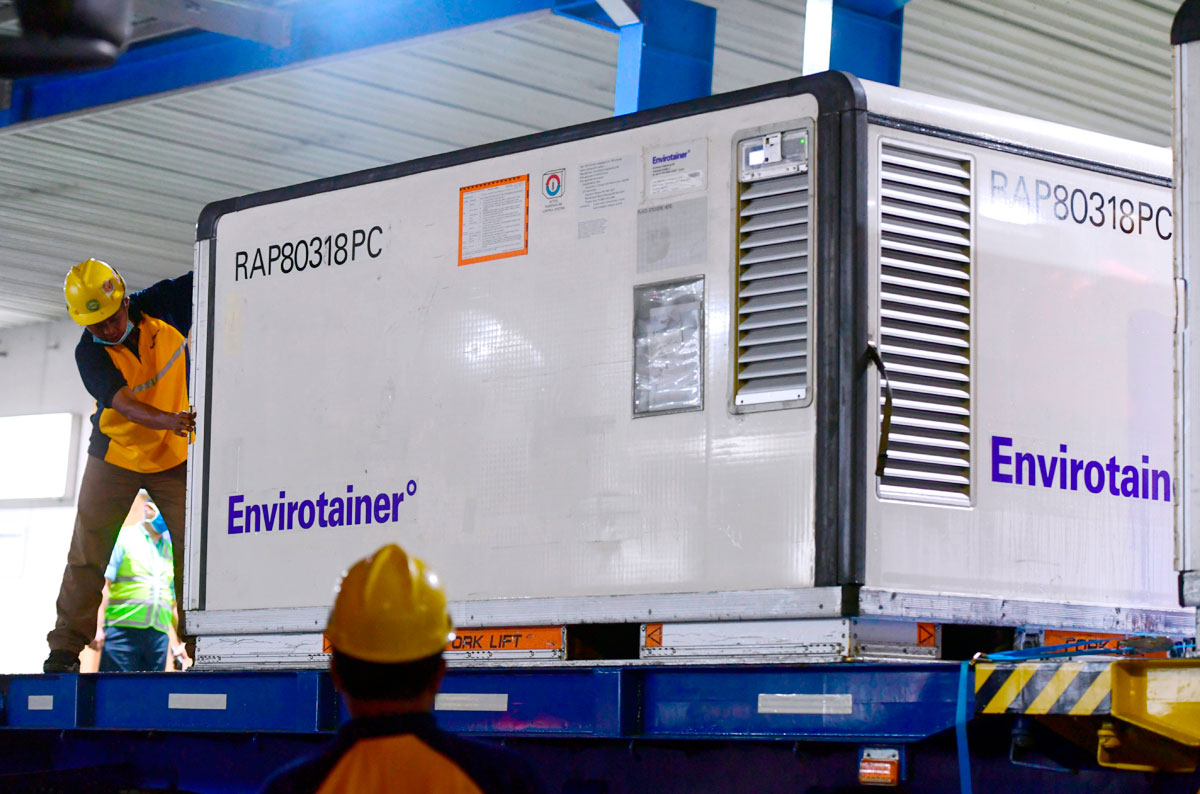
Roque said the government has prepared cold storage facilities for the vaccines.
"Everything is in place, napaghandaan naman po iyan, we will not be taken by surprise," he stressed.
Vaccine developers pass Ethics Review Board
The Ethics Review Board (ERB) has given its approval to three COVID-19 vaccine developers, allowing them to undergo evaluation by the FDA and taking them a step closer towards the conduct of proposed clinical trials in the Philippines.
Vergeire identified the manufacturers as the England-based AstraZeneca, Belgium-headquartered Janssen Pharmaceutical Companies of Johnson & Johnson, and the Chinese company Sichuan Clover Biopharmaceuticals Inc.
The vaccine developers have to hurdle a “parallel” review by the VEP before moving on to the FDA’s processes. “They need to be approved both by the Vaccine Experts Panel and Ethics Review Board before they can enter the process of the FDA,” she said in a mix of English and Filipino.
Vergeire bared the two other companies that secured the VEP’s approval were Clover and another Chinese firm Sinovac Biotech Ltd.
Although only Clover got both the approvals needed to undergo the FDA’s evaluation, registration, and authorization to conduct clinical trials, it has yet to conduct Phase 3 trials in its home country unlike the others.
While the developers are going through the VEP and ERB’s parallel review processes, Vergeire, in a virtual press briefing on Monday, explained that the FDA is already gathering initial information about these five vaccines so they can already start with their documentary evaluation.
AstraZeneca already announced an efficacy rate as shown by trial results. It disclosed on Nov. 23 that the vaccine it developed with the Oxford University was shown to be 70 percent effective in pivotal trials.
The Philippines has already secured the supply of 2.6 million doses of the AstraZeneca vaccine for around P700 million through a public-private agreement signed on Nov. 27.
Half of the doses, good for one million people, would go to the government, while the other half would be taken by some 30 companies that raised the funds.
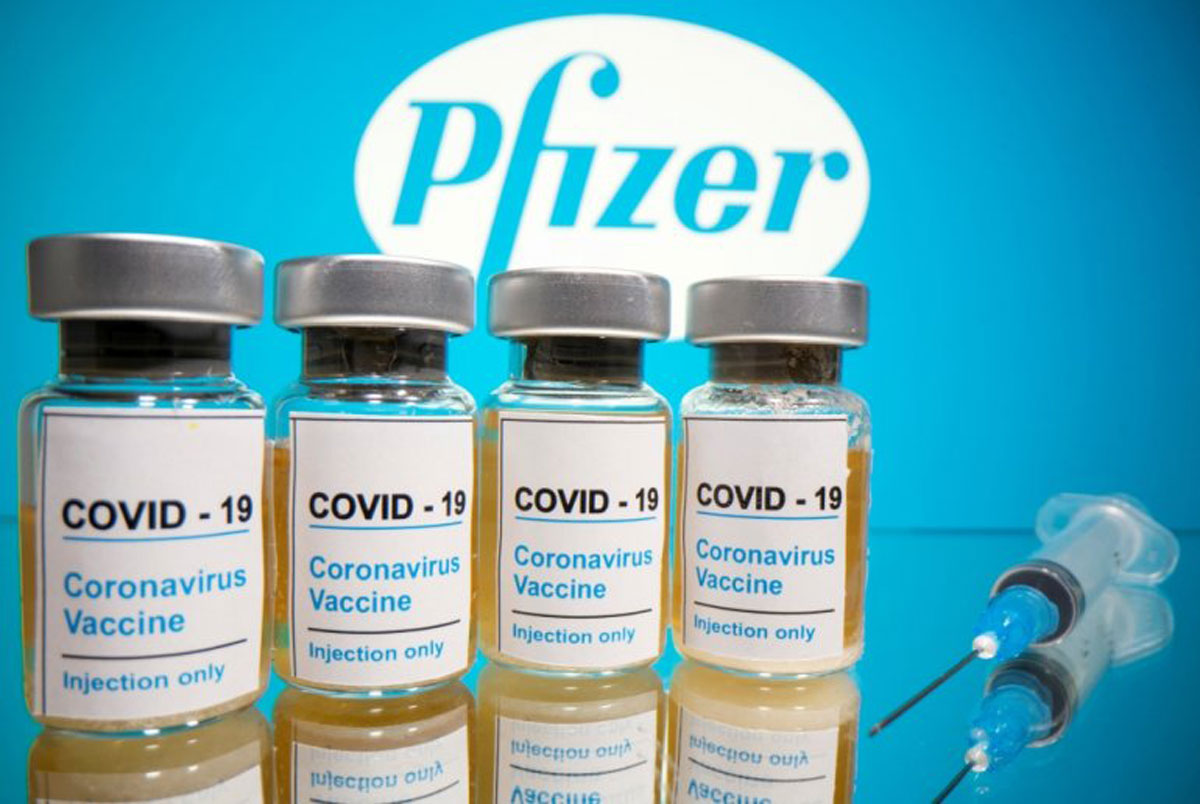
Meanwhile, the DOH is still going through negotiations with the two American companies seen to be leading the pack. Pfizer Inc. first announced a 90-percent efficacy rate on Nov. 10, and then updated it to 95 percent on Nov. 18. Moderna Inc., meanwhile, reported an efficacy rate of 94.5 percent on Nov. 16. On Dec. 2, Pfizer’s vaccine was approved for use by the United Kingdom, the first country to grant regulatory approval.
In the Philippines, Vergeire said the government has sent confidential disclosure agreements (CDAs) to Pfizer and Moderna, without mentioning if this was for the purpose of procurement or clinical trials.
While they were waiting for “comments” on the agreement with Moderna, Vergeire said the Department of Science and Technology, through the Philippine Council for Health Research and Development, had the CDA submitted to Pfizer for consideration and signed.
“For now, when our country has confidentiality disclosure agreements with any manufacturer, we cannot reveal any information as of this time,” Vergeire said.
Information drive readied against anti-vaxxers
Apart from the rigorous process of evaluating the safety of the vaccine candidates, Vergeire said the DOH will embark on an information drive by the third week of December as the country prepares for the challenge of not just securing the doses but also giving assurance to people who may be hesitant about inoculation.
Vergeire said that once the Phase 3 clinical trials were done in the home countries, the efficacy of the vaccines would have been tested. Even then, she stressed that the country would not just approve vaccine candidates for use without conducting its own evaluation processes.
“We make sure that when these come into the country, we can be able to scrutinize it further,” Vergeire said.
“So, we have nothing to worry about these vaccines. They’re tested, they’re safe, and their efficacy will be according to the targeted requirements of a vaccine,” she added.
Vergeire acknowledged the problem of “anti-vaxxers” who spread lies, false claims, misinformation and unfounded conspiracy theories about vaccines.
“We know a lot of those anti-vaxxers and we have been gradually releasing our information and we have finished the communication plan to start with the dissemination of information,” she said.
In a recent webinar, health experts also raised the problem of “vaccine hesitancy” following the controversy that hounded the dengue immunization program.
To recall, French pharmaceutical firm Sanofi Pasteur’s Dengvaxia vaccine to prevent denque was received by 830,000 Filipino school children in the government’s mass vaccination program from April 2016 to December 2017.
The program was stopped after Sanofi Pasteur disclosed new findings that Dengvaxia could increase the risk of severe dengue in seronegative recipients, or those who were never exposed to the mosquito-borne disease prior to immunization.
However, the firm refused to refund the payment for the unused doses and insisted that the vaccine would still be effective because an estimated 90 percent of the population in dengue-endemic areas were seropositive, although there was no easily available diagnostic test at the time.
Public Attorney’s Office chief Persida Rueda-Acosta led the filing numerous civil cases on behalf of the parents of children whose deaths were linked to the vaccine despite the lack of scientific evidence.
As a result, the government’s immunization programs using tried and tested vaccines suffered and the number of otherwise preventable measles cases spiked.
“Many parts of the world have very high levels of vaccine hesitancy, and I know that in the Philippines in particular, given the dengue vaccine, there is particular suspicion about vaccinations, and there is anti-vaccination misinformation out there on the internet and social media,” Lawrence Gostin, director of the O'Neill Institute for National and Global Health Law of the Georgetown University, said in a webinar held by the Philippine Working Group for an ASEAN Human Rights Mechanism on Dec. 1.
In the same webinar, Nina Gloriani, head of the Vaccine Research and Feasibility Road Map Group of the University of the Philippines, said fears of the side effects of vaccines may be overblown.
“You must understand also that vaccines are not 100 percent safe. There may be five percent who will experience pains, have slight headache. There would be rare side effects that would only manifest once it is rolled out to many people,” she explained.
Gloriani, however, emphasized that people should look at the vast majority who will benefit from protection from the more serious effects of diseases against which they are inoculated, which everyone would suffer from otherwise.
“If you are able to protect more and you have this little side effects, it’s good. It's like the polio vaccine, one in a million will revert to paralytic polio. But those protected, one million minus one,” she said.
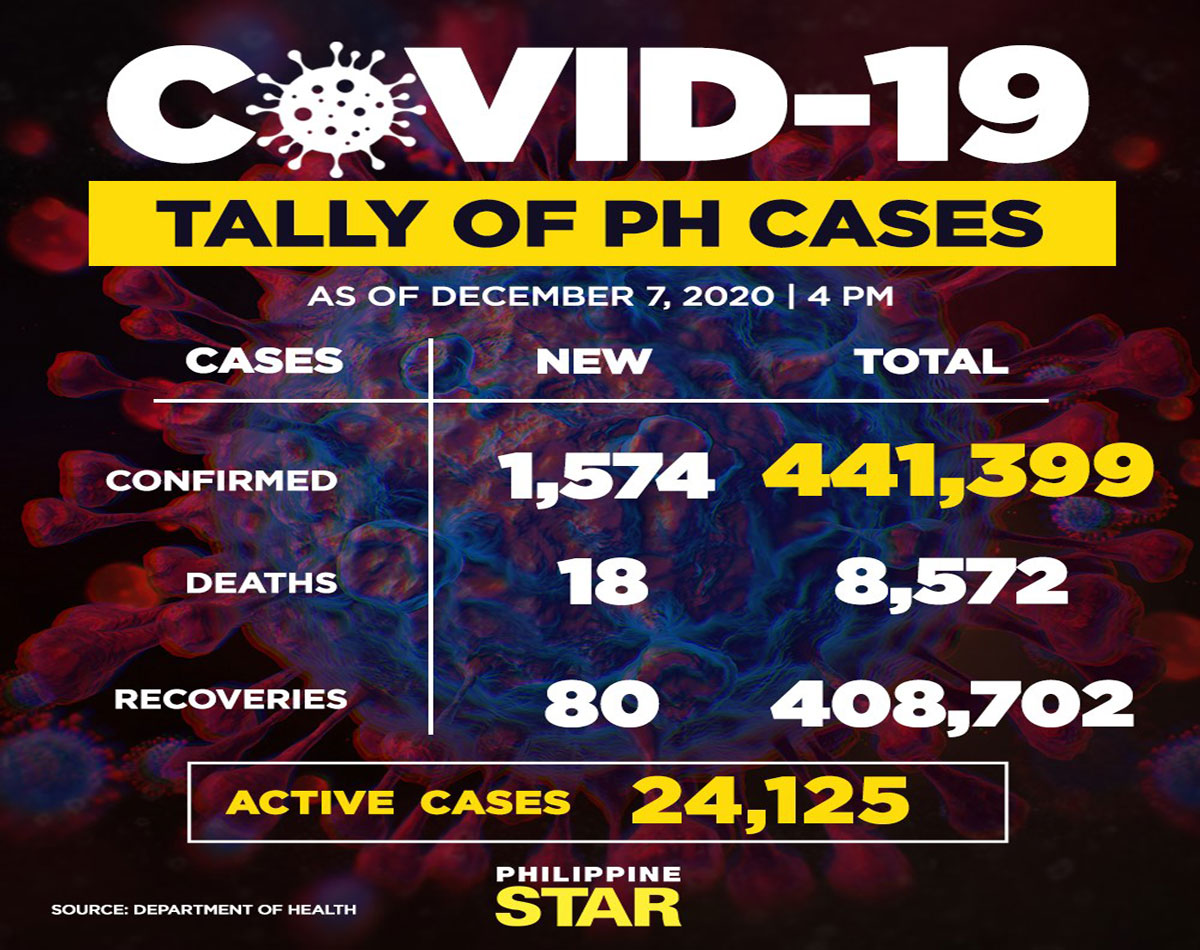
On Monday, Dec. 7, the country recorded 1,574 new COVID-19 cases, pushing the total to 441,339. Of these cases, 24,125 (5.5 percent) are active and 408,702 (92.6 percent) have recovered. However, the death toll increased by 18 to a total of 8,572 (1.9 percent).
The agency also reported that the availability rates of intensive care unit beds, isolation beds, ward beds, and ventilators each remain above 60 percent.


