



Celebrating Filipino History Through Simbang Gabi
As Catholics throughout the country begin nine mornings of ritual simbang gabi, it’s also an opportunity to revisit the country’s history and heritage.
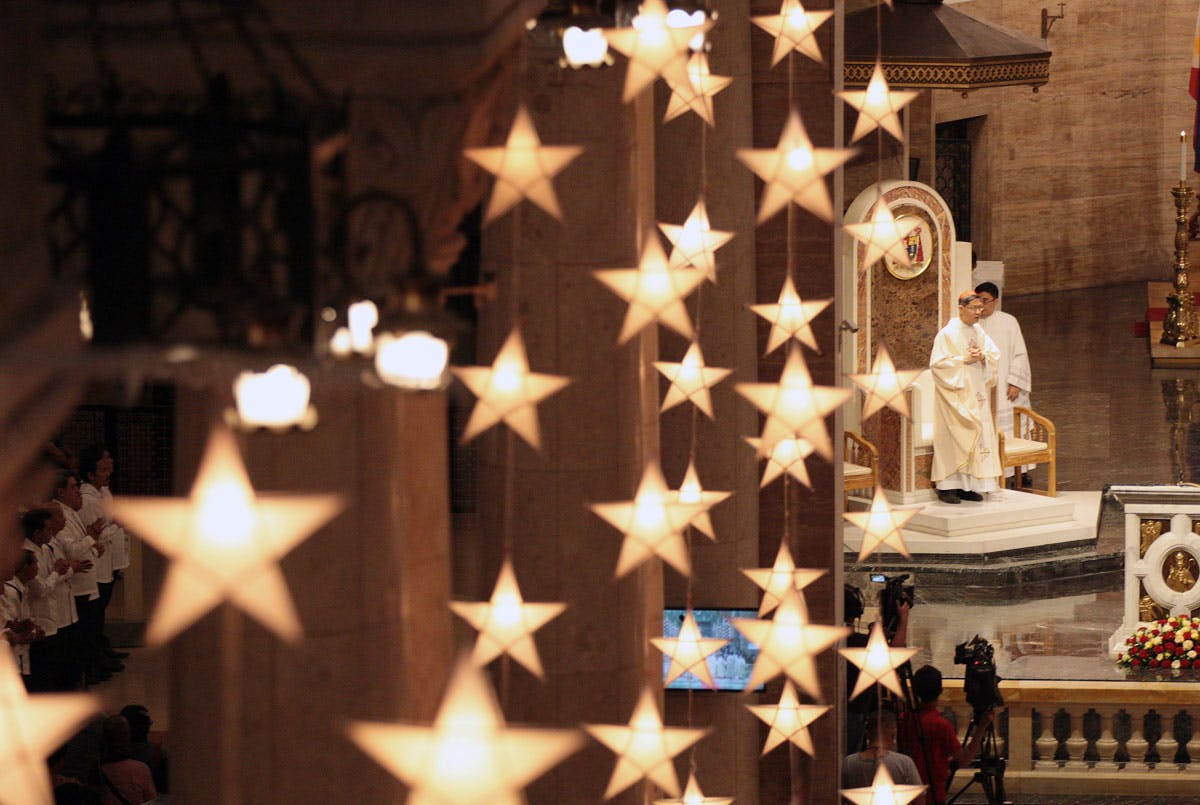
If you haven’t realized it by now, here it is: Christmas is all about celebrating the past.
Christians are, after all, looking back and celebrating the story of how Jesus Christ came to this world over a thousand years ago. It’s a history lesson on the origin of Christianity for all Catholics who began their devotion to attending simbang gabi yesterday.
Since simbang gabi is a history lesson anyway, why not make it an opportunity as well to learn about the country’s history by visiting and touring heritage churches?
Metro Manila alone has plenty of historic churches that are worth seeing and appreciating for their historical value, and there are several more in the periphery of the metropolis.
It’s also timely to visit them especially now that the country is closer to marking 500 years of the arrival of Christianity in 2021. By visiting, not only are you supporting parishes in keeping the Christian faith strong, you are also helping in the preservation of Filipino heritage, art and architecture.
Here’s a rundown of some of the heritage churches you can include in your list of simbang gabi destinations:
San Agustin Church
The best way to begin your heritage simbang gabi is to visit the oldest stone church in the country, San Agustin Church, in the Manila’s walled district of Intramuros.
Completed in 1607 under the auspices of the Augustinian friars, San Agustin Church represents the best of baroque architecture in the country and is a testament to the endurance of Filipino construction and design.
It has withstood several strong earthquakes during three centuries of Spanish rule and is the only church that remained unscathed in the American shelling of Manila during World War II that left much of the city destroyed.
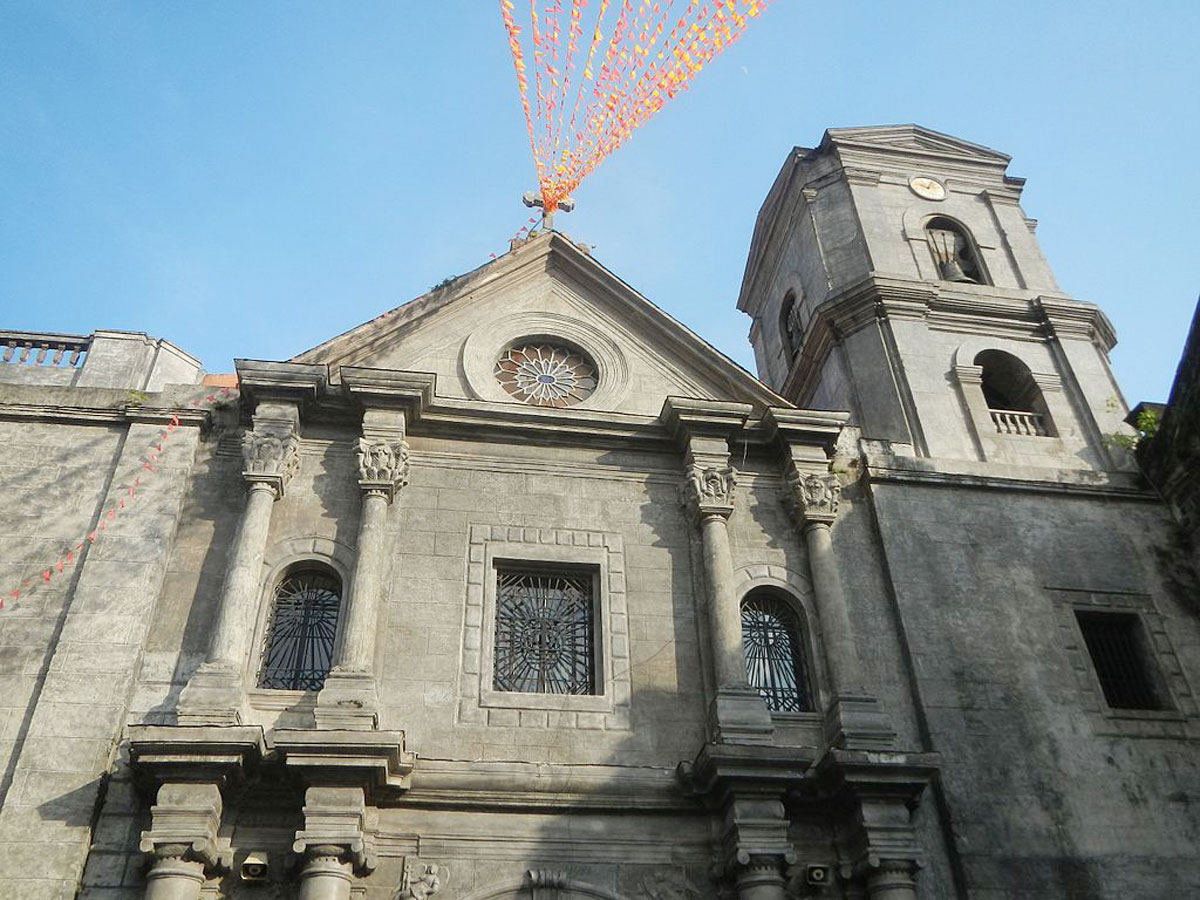
Today, the church is one of four baroque churches in the country that was designated by the United Nations Educational, Scientific and Cultural Organization (UNESCO) as a World Heritage Site.
The church has its own museum, where Spanish-era paintings, clergy vestments, statues of different Catholic saints, rare photos of the church’s history, and various pieces of Chinese porcelain are displayed. The church also allows guided tours to its crypt, where the remains of several members of influential families like the Roxases, Sorianos and Zobel de Ayalas are interred.
Visitors can also step inside the side chapel that houses the tomb of Spanish conquistador Miguel Lopez de Legazpi to understand and remember how the Cross and the Sword were used in the colonization of the Philippines.
San Sebastian Church
The lure of Asia’s first and only all-steel church, the San Sebastian Church, is the myth that it was designed by French engineer Alexander Gustave Eiffel, whose famous works include the Eiffel Tower in Paris and the steel lattice within the Statue of Liberty in New York.
Despite the fact that the church was designed by Spanish architect Genaro Palacios, the myth has persisted thanks to word of mouth.
The San Sebastian Church, established by the Augustinian Recollect friars in 1621, was originally made of wood and has been destroyed and rebuilt several times due to uprisings and natural disasters. Around the 1880s, the parish priest of San Sebastian, Esteban Martinez, commissioned Palacios to construct a new yet stronger church.
Given that the Philippines is prone to earthquakes due to its location within the Pacific Ring of Fire and the frequency of fires in Manila due to its tropical climate, Palacios conceived the idea of an all-steel church that could withstand these natural disasters.
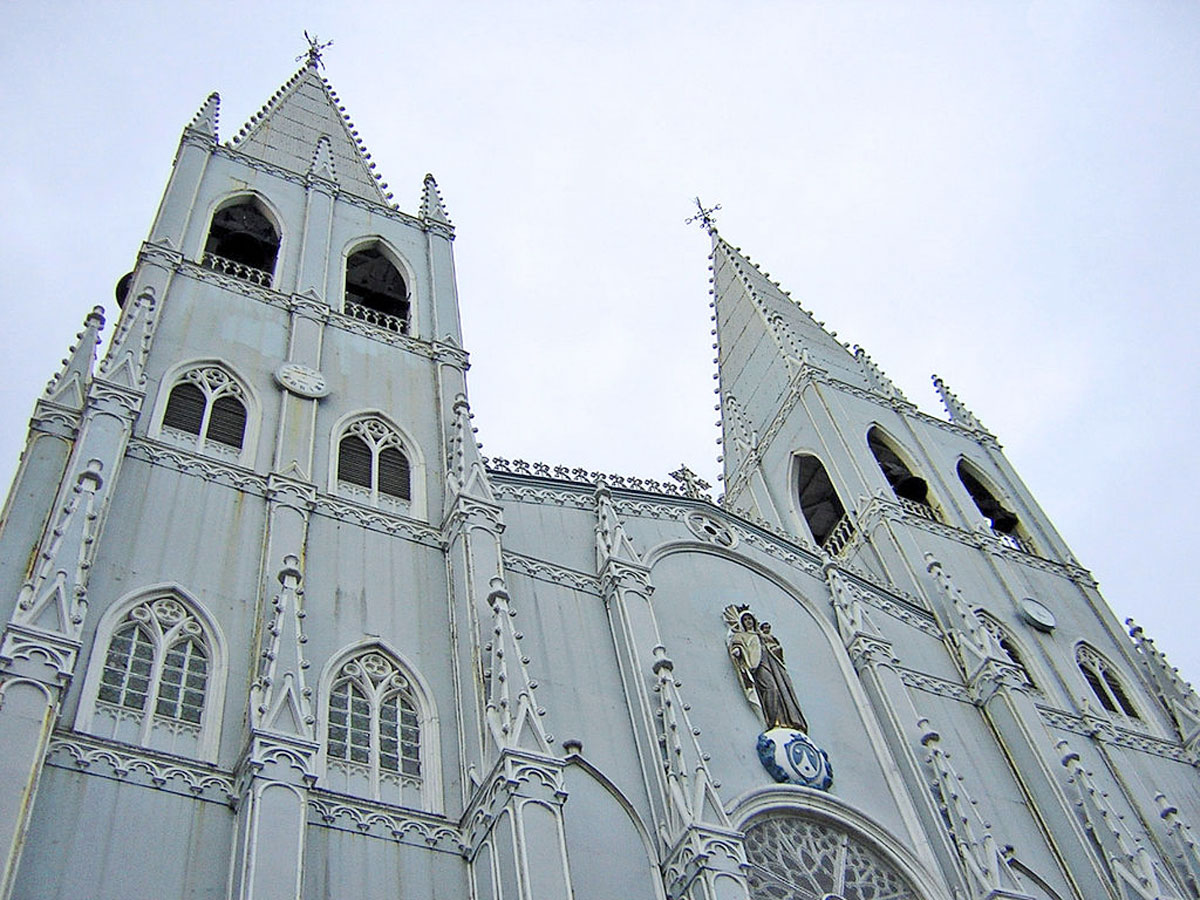
The church’s Gothic Revival Architecture is similar to the design of several famous cathedrals in Europe and the US, like the Burgos Cathedral in Spain, the Basilica of Saint Clotilde in Paris, the Cologne Cathedral in Germany, the Cathedral of St. John the Baptist in Savannah, Georgia, and the Church of Saint Peter and Saint Paul in Ostend, Belgium.
It was also in Belgium that the steel parts used to build the church were wrought and bolted. These parts were then shipped to the Philippines and assembled — an early example of prefabrication in the country. The church was completed in 1891.
The windows were decorated with stained glass made by Germany’s oldest stained-glass maker Dr. Heinrich Oidtmann GmbH, while the interior murals, sculptures and retablos were created by local artists Lorenzo Rocha, Lorenzo Guerrero, Isabelo Tampingco, Felix Martinez and Eusebio Garcia.
Today, the church is a National Cultural Treasure and has been included by the National Historical Commission of the Philippines in a tentative list of sites that could potentially be declared as UNESCO World Heritage Sites. Structural decay, however, forced its removal from the list in 2015, and the construction of a nearby condominium could hamper its re-inclusion in the list.
Santa Ana Church
Before it became part of Manila, Santa Ana was a separate settlement outside the walls of Intramuros.
According to historians such as Spanish friar Felix Huerta and American William Henry Scott, the settlement was the seat of Namayan, a pre-colonial kingdom whose boundaries extended up to the western shores of Laguna de Bay and up to the present border separating Parañaque and Las Piñas.
Excavations around the Santa Ana Church along New Panaderos Street during the 1960s yielded further proof of this kingdom such as large quantities of Chinese porcelain as well as human remains dating back to over a thousand years ago.
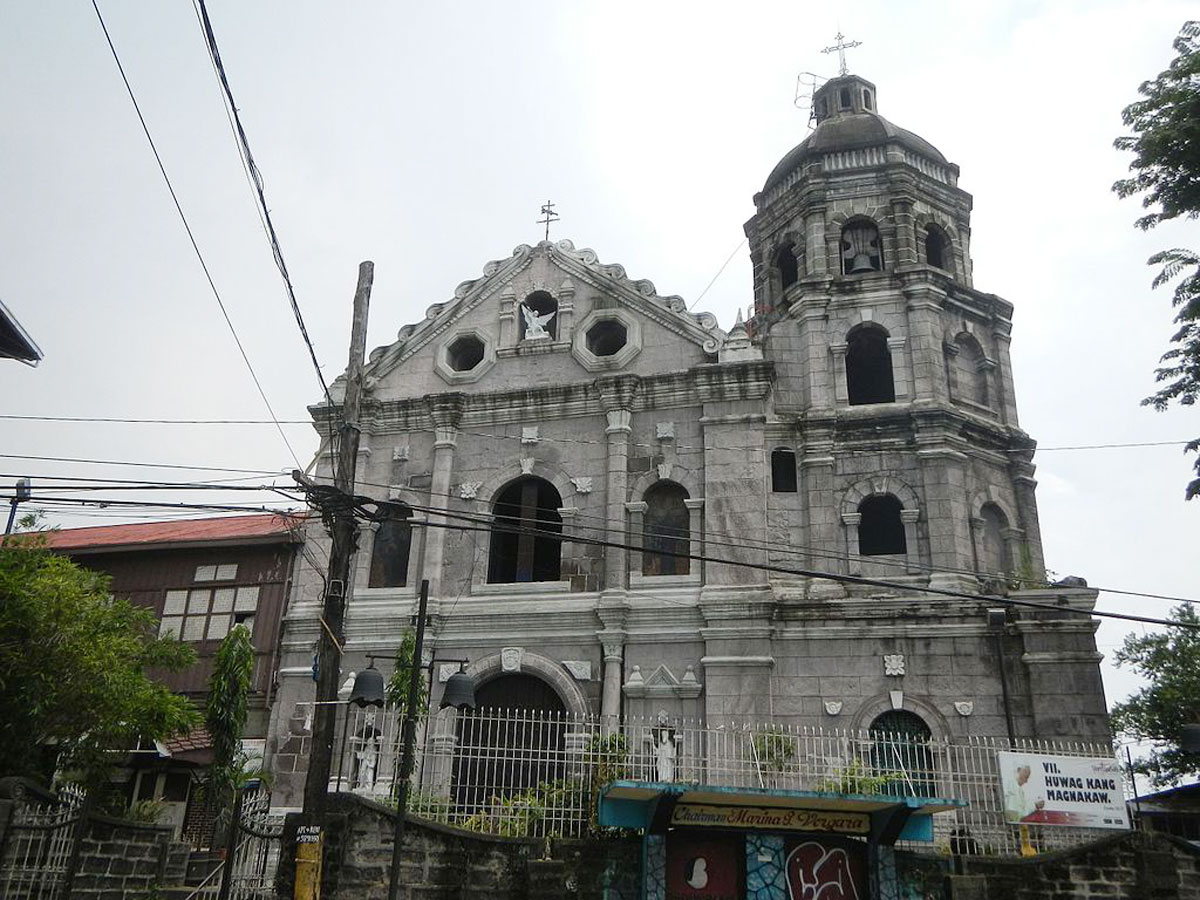
The church itself is historical as it was the first church built outside Manila’s walls when the Franciscan friars established it in 1578. The stone structure, completed in 1720, follows the baroque style and was inspired by the design of Basilica de la Virgen de los Desamparados in Valencia, Spain, which is also the church’s patron saint.
Inside the church, the Spanish-era bautisterio (baptistry), retablo and Camarin de la Virgen remain intact and well-preserved. These remain as testaments to the enduring creativity of Filipino artisans. Within the church grounds, the convent, its patio and the Pozo de la Virgen are also worth visiting. The patio is where the excavations of pre-colonial human remains in the 1960s were conducted.
St. Mary Magdalene Church (Kawit, Cavite)
The word Magdalo isn’t associated only with a former senator, but also with revolutionary president Emilio Aguinaldo, who was born in Kawit, Cavite, where the St. Mary Magdalene Church was established by the Jesuits in 1624.
It was in this church where Aguinaldo’s parents had him baptized. When Aguinaldo joined the Katipunan in 1895, he formed a local council of the group, which he named Magdalo, after the patron saint of his hometown.
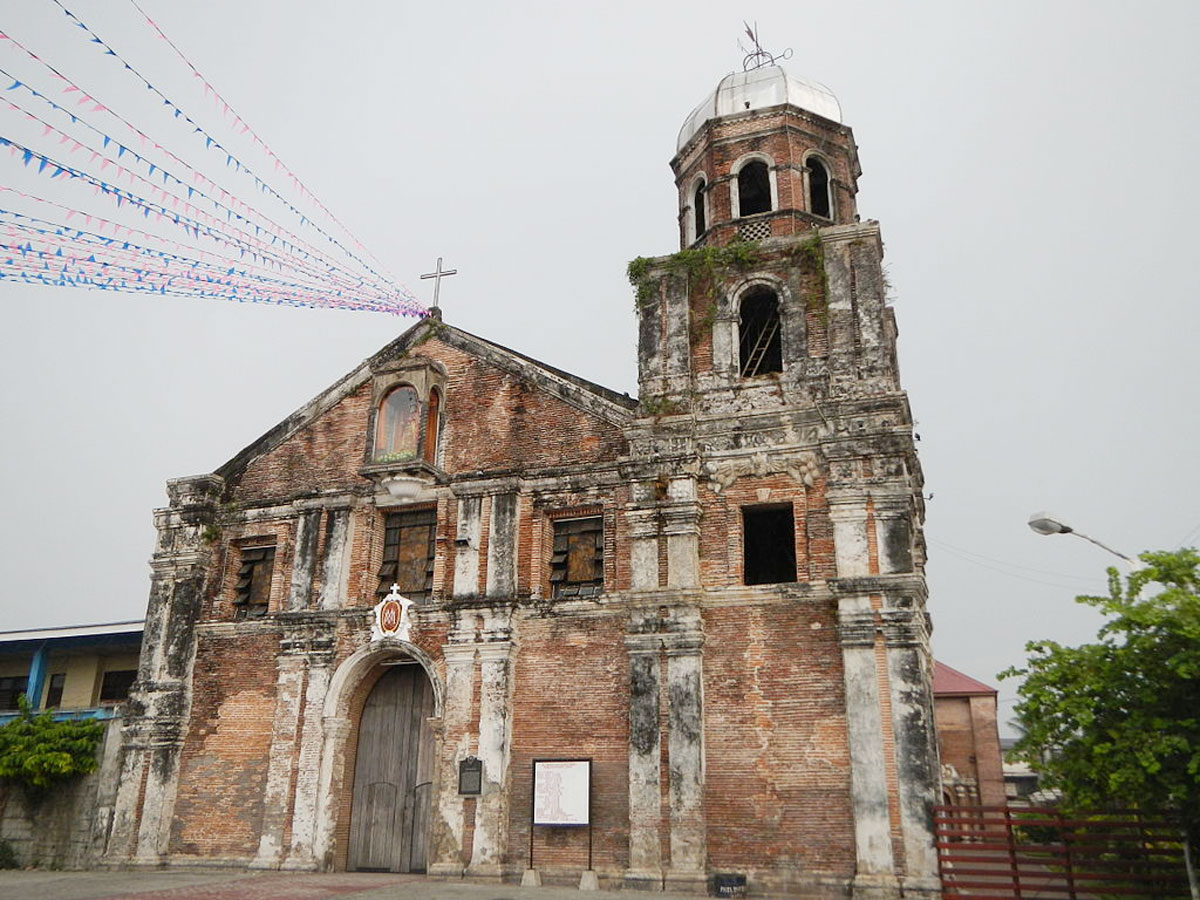
The church was destroyed after it was shelled by Filipino forces during the second phase of the Philippine revolution against Spain in 1898. It was rebuilt and the Filipino forces used the church as a hideout during the Filipino-American War.
The latest renovation of the church dates back to 1990. Today, the church’s red brick walls, polished marble floors, intricate stained-glass windows and elaborate retablo remain preserved for visitors and parishioners.
Santa Maria Magdalena Church (Magdalena, Laguna)
Another church dedicated to the reformed harlot and first witness to Christ’s resurrection is located in her namesake town in Laguna.
It was in this town that the former secretary and Brains of the Katipunan, Emilio Jacinto, relocated following the ouster of Katipunan founder Andres Bonifacio and the rise of Emilio Aguinaldo as the leader of the revolution. Here, Jacinto and his remaining followers continued the armed struggle against the Spanish forces even as Aguinaldo and his forces agreed to accept money in exchange for a temporary truce with Spain.
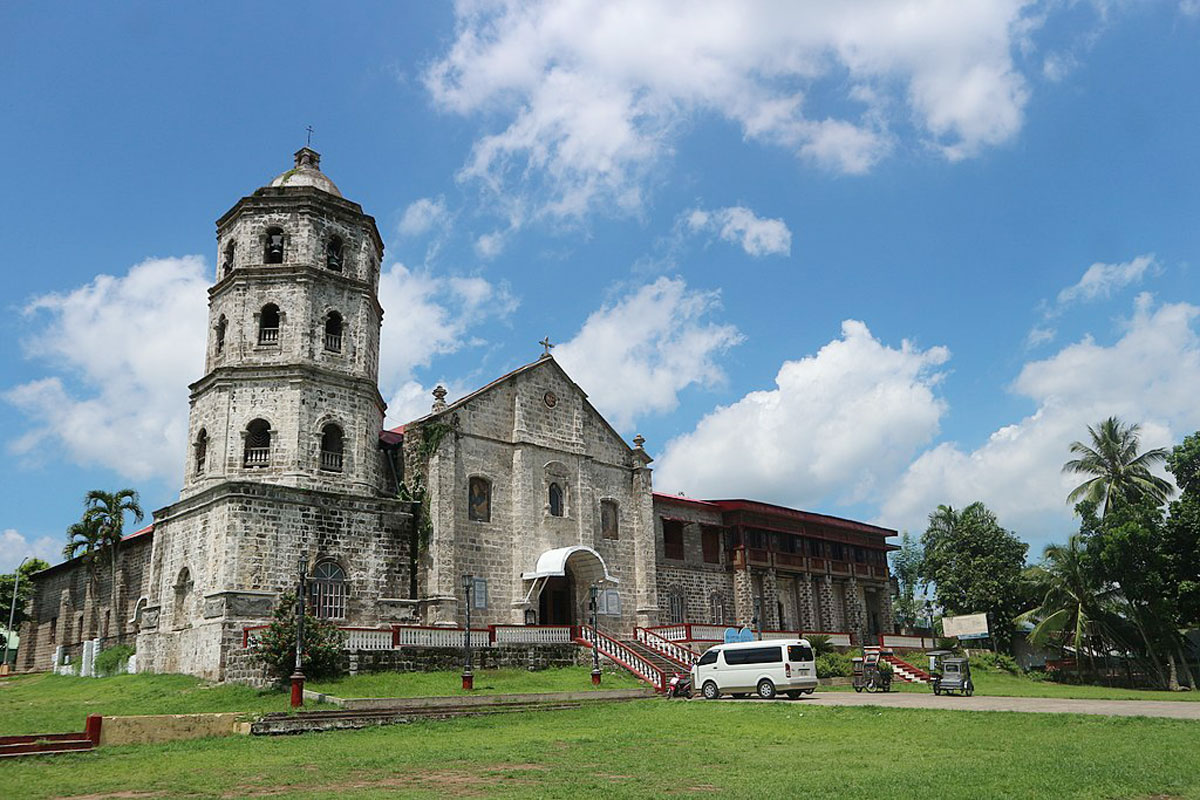
On Feb. 27, 1898, Jacinto was wounded in a battle against Spanish forces in Maimpis, one of the town’s villages. He took refuge at the Santa Maria Magdalena Parish Church where he recuperated from injuries. During his convalescence, he contracted malaria and was rushed to Sta. Cruz, Laguna where he died on April 16, 1899.
Today, Jacinto’s bloodstains remain visible in a portion of the church floors and walls, which have been marked with a plaque by the National Historical Commission of the Philippines. Outside the church, in the town plaza, a monument to Jacinto was erected in 2017.
Aside from this piece of history, the church is also part of movie history. The church was used as a location in shooting some portions of the climactic scene in the 2015 biopic film Heneral Luna, standing in for the convent of the St. Nicholas of Tolentine Cathedral in Cabanatuan, Nueva Ecija where Gen. Antonio Luna was murdered by members of the Kawit Battalion in 1899.
Further reading: School Of Second Chances Helps Restore Heritage


