



Gov’t Eyes Placing Seized Onions In Markets
Smuggled agricultural products are normally destroyed and disposed of after seizure as they have not undergone any food safety inspections, which poses a great risk to consumers and threatens the local agriculture and fishery industries.
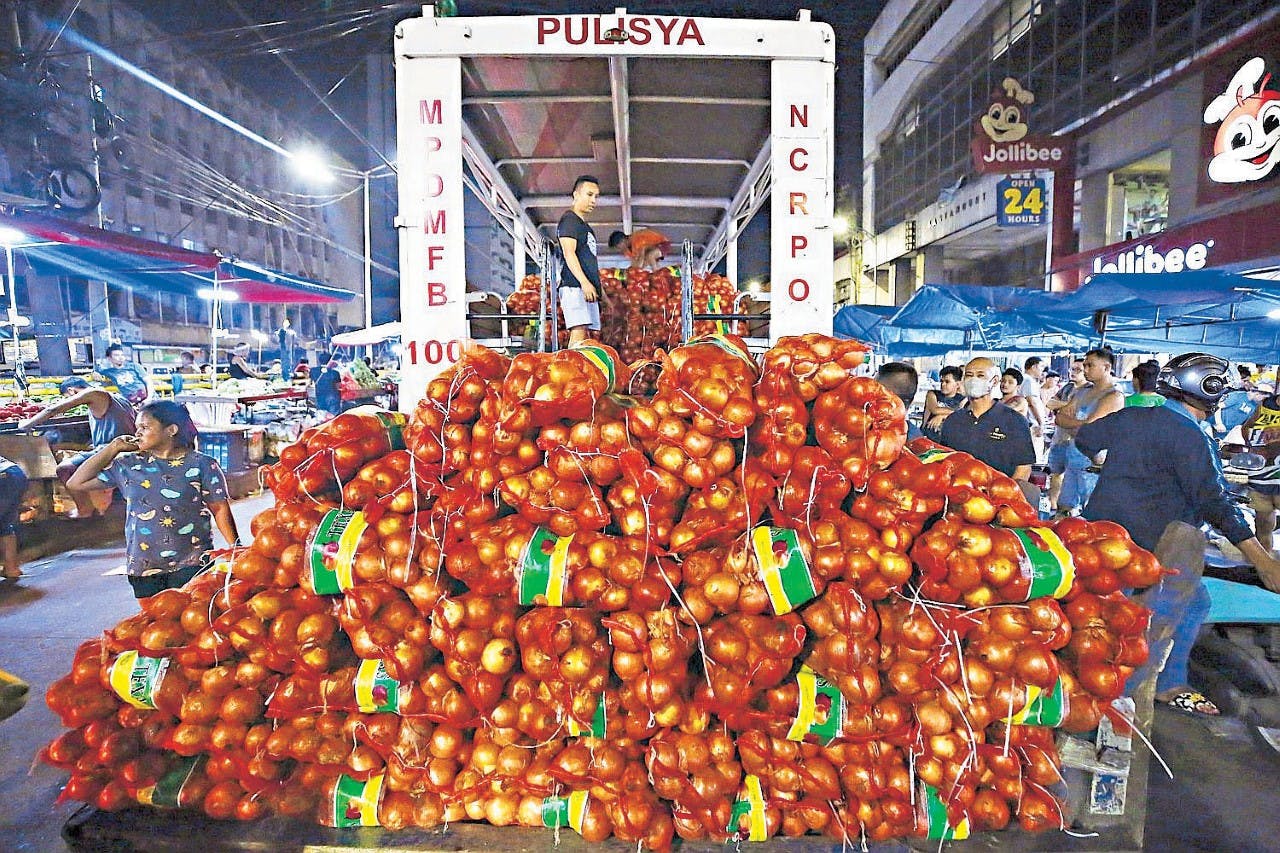
The government is finding ways to bring seized onions to the markets quickly as President Marcos confirmed on Saturday, Dec. 17, that the price of the commodity has spiked to P300 per kilo in many parts of the country.
The Department of Agriculture (DA), which the President concurrently heads, is looking at selling the smuggled onions confiscated by authorities in Kadiwa centers amid the shortage and price spikes.
Kadiwa markets, which sell agricultural commodities at lower prices, were first introduced during the administration of Marcos’ father, the late former president Ferdinand E. Marcos.
“A lot of smuggled (onions) are being discovered. As quickly as possible, we are looking for a way, because usually you sue the (smugglers) first before the auction. By the time of the auction, the (onions) are already rotten,” Marcos, speaking in Filipino, told reporters after inspecting a National Food Authority (NFA) warehouse inspection in Valenzuela City.
“So, I said let’s find a way to bring the commodity to the market right away. So that’s what we’re studying now. Maybe by next week we will have a solution,” he said.
Authorities recently intercepted a cargo of 100,000 kilos of white onions valued at P30 million that were misdeclared as bread/pastries.
But DA deputy spokesman Rex Estoperez earlier said the agency would not sell smuggled white onions confiscated in November until early this month as those were deemed unsafe for human consumption.
He added the smuggled onions seized by the government will undergo phytosanitary inspection for possible sale in Kadiwa centers.
Smuggled agricultural products are normally destroyed and disposed of after seizure as they have not undergone any food safety inspections, which poses a great risk to consumers and threatens the local agriculture and fishery industries, as cargoes may be carriers of transboundary diseases.
“We recommended for these to undergo phytosanitary inspection as DA Senior Undersecretary (Domingo) Panganiban ordered to check them for microbes that can affect the industry and health of the public,” Estoperez said.
The country has had no supply of white or yellow onions since July and no importation permits have been issued for the commodity, according to the DA.
White or yellow onions sold in public markets are likely smuggled, the agency said.
As to the pricing of the confiscated onions, DA said these could be sold below prevailing prices in wet markets.
The prices of red onions, on the other hand, remain elevated, as high as P280 to P300 per kilo. The current onion supply is sourced from Nueva Ecija, it added.


