



Barbershops, Salons, Nail Spas Can Operate At 30 Percent Capacity Under ‘Flexible’ MECQ – IATF
Restaurants, eateries, commissaries and other food preparation establishments are also allowed to resume dine-in services in areas under “flexible” modified enhanced community quarantine at 10 percent capacity.
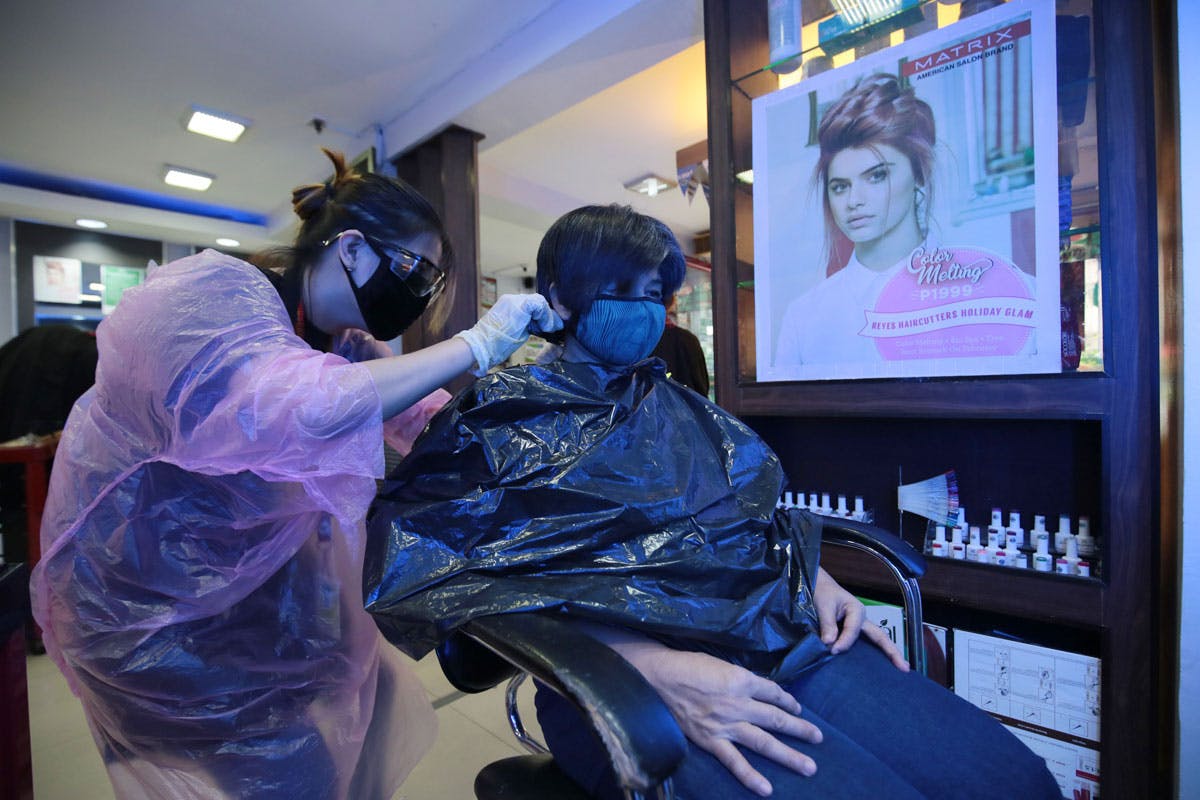
Beauty salons, beauty parlors, barbershops and nail spas are allowed to resume operations at an initial 30 percent capacity in the National Capital Region, Cavite, Laguna, Rizal and Bulacan or NCR Plus, which will remain under modified enhanced community quarantine (MECQ) until May 14.
Presidential spokesperson Harry Roque on Thursday, April 29, also announced that the Inter-Agency Task Force (IATF) for the Management of Emerging Infectious Disease approved the recommendation to allow restaurants, eateries, commissaries, and other food preparation establishments to resume their indoor dine-in services in areas under MECQ at an initial 10 percent venue or seating capacity beginning May 1.
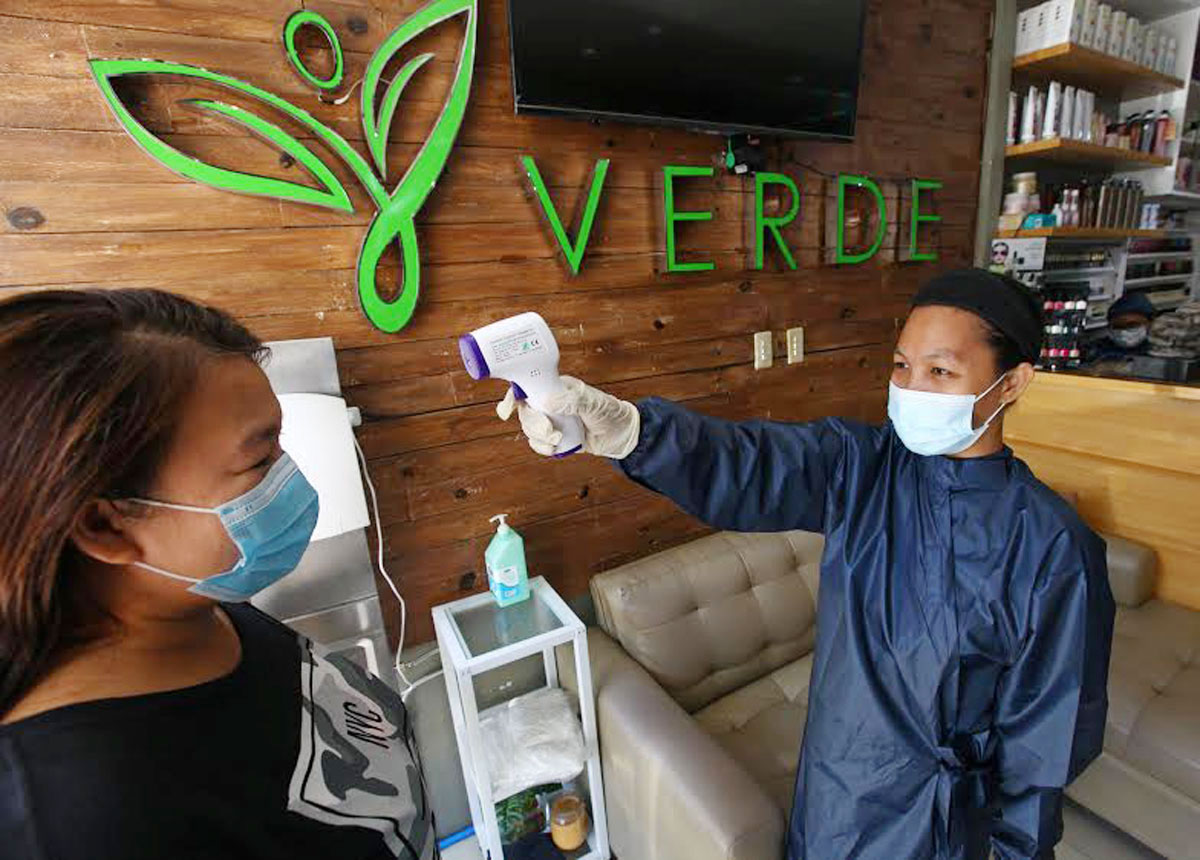
As far as the beauty and food preparation establishments are concerned, the IATF ruled that they may operate beyond their limitations, provided that they comply with Joint Memorandum Circular No. 21-01 (series of 2021) or the Safety Seal Certification Program.
Roque said the IATF mandates the personal care establishments to only provide services that can accommodate the wearing of face masks at all times by clients and service providers.
Personal care establishments and services not mentioned will not be allowed to operate.
Earlier, Roque said the government is yet to decide on the industries that would be allowed to operate under “flexible” MECQ approved by the Metro Manila mayors to soften the impact of quarantine restrictions on the economy.
During the meeting of the Metro Manila Council on Tuesday night, April 27, the Department of Health (DOH) proposed the “flexible MECQ” after being presented with data from the National Economic and Development Authority and the Department of Trade and Industry (DTI).
During the “Laging Handa” press briefing earlier on Thursday, DTI Undersecretary Ruth Castelo disclosed that Secretary Ramon Lopez “is really pushing for the reopening of personal care services because we have around 400,000 workers in the salon and barbershop businesses alone that could gain their employment back, the spas are not even part of that yet and then the restaurants, we are recommending to allow dine-in but in a small percentage.”
The undersecretary also bared that they were proposing outdoor salon and barbershop set-ups to convince the IATF to reopen the industry at 50 percent capacity.
She said the DTI sought the IATF approval for indoor dining at 10 percent capacity at the very least to bring back around 100,000 workers.
“The impact of indoor dining is still different because the risk (of getting infected with COVID-19) inside an air-conditioned room, as well as those in rooms without ventilation is still higher,” she added.
“If Secretary Mon’s recommendation to include indoor dining at a small percentage is approved by the IATF, we still really need to abide by health protocols set by the DOH,” Castelo noted.
On Wednesday night, April 28, President Duterte announced that he approved the recommendation of the IATF to extend the MECQ in NCR Plus from May 1 to May 14 because the COVID-19 cases is still high and hospital facilities are still swamped with patients.
Also placed under MECQ until May 31 are Santiago City, Quirino and Abra.
Read more: Duterte: NCR Plus Under Extended MECQ Until May 14; MM Mayors Want It To Be ‘Flexible’
Roque said in a briefing on Thursday that the two-week extended MECQ is a way to give hospitals time to prepare more beds in their intensive care (ICU) units amid the surge in COVID-19 cases.
“We decided the two-week period as our cases in the NCR are really going down. Our attack rate went down, the R-naught that what we call is under one. But we need to sustain this, which means we need to have more ICU beds,” Roque explained.
“So the DOH is taking steps to have more ICU beds. If we do not have more ICU beds, then our gains from the one week travel bubble, two-week ECQ and two-week MECQ will be put to waste,” Roque said in English in Filipino.
‘Flexible MECQ’ may increase COVID-19 cases
But as the government pushed to reopen more industries under flexible MECQ, Dr. Maricar Limpin, vice president of the Philippine College of Physicians, warned that this may lead to an increase in COVID-19 cases.
Limpin told “The Chiefs” on One News / TV5 on Wednesday night that flexible MECQ means “we are relaxing the community quarantine measure that we have in place.”
“The chance of getting more people infected will be higher,” she stated.
Limpin pointed out that hospitals are only starting to feel the effects of the ECQ from March 20 to April 11. She said there was a slow down in the number of people getting infected and the emergency rooms are not as overwhelmed like in March.
But hospital rooms, she stressed, are still full.
“So we have not really seen the translation of the MECQ right now,” she said.
As of Thursday, the DOH has recorded 8, 276 new COVID-19 cases, bringing the Philippines’ total tally to 1,028,738, with 69,354 active cases. Of the total cases, 942,239 have successfully recovered from COVID-19, while 17,145 succumbed to the respiratory disease.
The latest DOH data also showed that ICU beds in NCR hospitals are 72 percent utilized.
Avoid India-like surge
For the Philippines to avoid an India-like surge in COVID-19 cases, an infectious disease expert suggested against the full reopening of the economy for now.
"It should not be a priority to open up (the economy). OK lang ‘yung 40 to 50 percent," Dr. Rontgene Solante, head of San Lazaro Hospital's adult infectious diseases and tropical medicine unit, said in an interview with The Chiefs also on Wednesday night.
Aside from more infectious COVID-19 variants and low vaccine coverage, Solante added, the opening of society leads to unrestricted interactions and is one of the major factors that led to the surge of COVID cases in India.
He also noted India’s high population density.
While the vaccine coverage in the country is still low, Solante called for stricter implementation of health and safety protocols such as wearing of face masks and observing physical distancing, especially when staying in an enclosed space.
With studies showing that an airborne transmission of the virus is possible indoor, Solante reminded business owners to enhance the ventilation in their establishments.
According to Solante, the government is exerting efforts to increase the capacity of health facilities despite the shortage of manpower.
But he said the contact tracing and isolation must also be improved considering the high transmission of cases in homes.
Many of the COVID-19 patients being admitted in the hospitals are not aware if the people they are in close contact with have been tested or have undergone quarantine.
Community restriction is just a temporary measure, thus Solante said the government must enforce more palpable and sustainable measures to avoid lockdowns that have been hurting the economy.
He urged those who have been experiencing symptoms of the infection to immediately notify their barangay.
Home care, Solante said, can help in decongesting hospitals but the patient must be under monitoring of a physician as some cases progress into severe cases on the fifth and seventh day of the infection.
As cases of the infection soars, Solante said the manifestation of COVID-19 has also become varied such as stroke and not just respiratory symptoms.
He advised people experiencing anything unusual in the body to immediately consult with doctors, especially if they have possible exposure with COVID-19 positive individual.


