


Asian Cultural Council Auction Features Luminous Landscapes By Amorsolo, Genre Works By Masters
The two works by Fernando Amorsolo were acquired directly from the national artist by Alex Frieder, the Jewish-American businessman who persuaded then president Manuel Quezon to open the Philippines to Jews fleeing Nazi persecution.
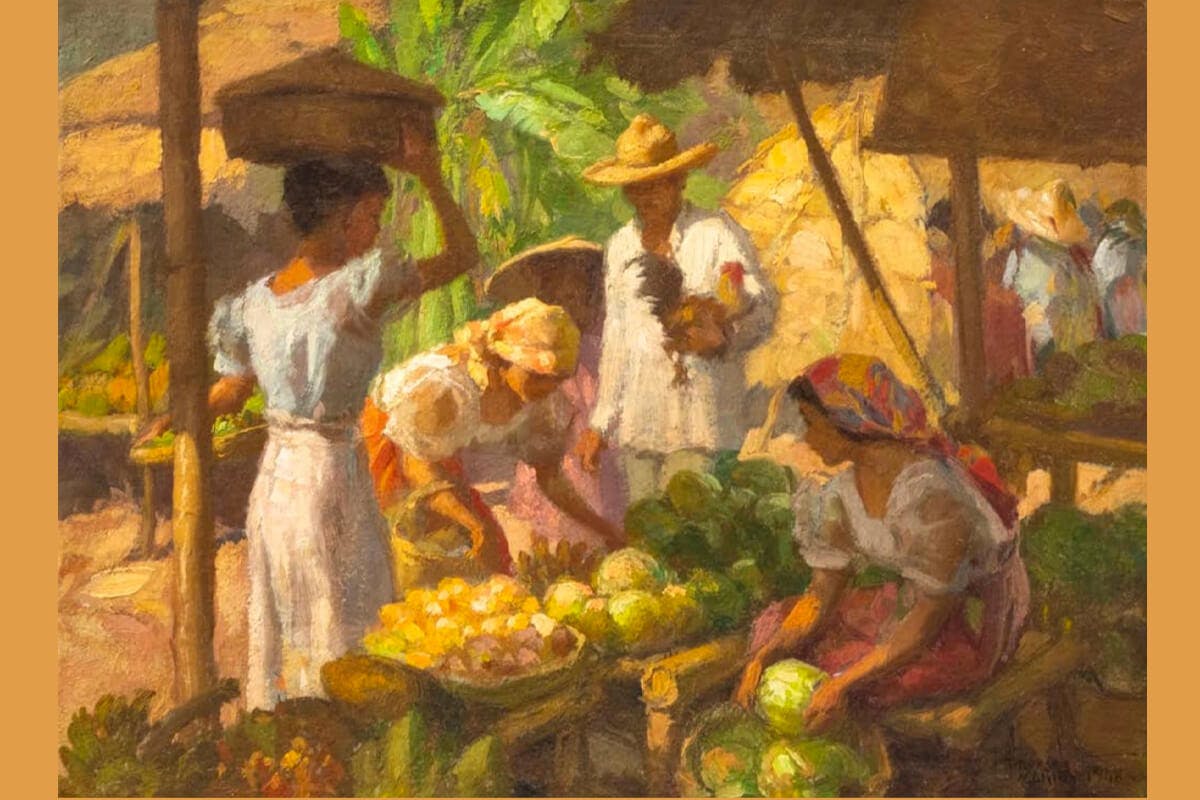
On Valentine’s Day, Feb. 14, Leon Gallery’s Asia Cultural Council Auction will spotlight two luminous landscapes by National Artist Fernando Amorsolo – paintings that mirror the country’s yearning for renewal before and after war. Together, “Marikina” (1933) and “Market Scene” (1948) trace a passage from pastoral calm to post-war optimism, rendered in the maestro’s signature light.
“Marikina” captures the pre-war countryside at the foothills of the Sierra Madre: rice fields, carabaos, and the glint of river water under the midday sun. Painted en plein air, it reflects Amorsolo’s devotion to nature studies, where, as he once said, he painted “in absolute freedom of spirit.”
“Market Scene,” executed just three years after Liberation, transforms a village marketplace into a metaphor for recovery. Its warm light falling on a central female figure suggests Inang Bayan – Motherland – steadfast amid ruin, embodying a people’s fragile but gathering hope.
Both works share remarkable provenance. They were acquired directly from Amorsolo by Alex Frieder, the Jewish-American businessman who persuaded then president Manuel Quezon to open the Philippines to Jews fleeing Nazi persecution. Through the Jewish Refugee Committee of the Philippine Islands, established in the late 1930s, more than a thousand Jews from Germany and Austria found sanctuary in Manila.
Another highlight is Amorsolo’s “Site of U.P. Diliman” (1947), signed and inscribed “UP Site Feb 1947.” Painted two years before the university’s formal transfer from war-ravaged Ermita, it preserves Diliman as open pasture beneath wide blue skies and distant hills – an academic dream still unbuilt. A longtime UP professor and later director of its School of Fine Arts, Amorsolo captures a campus on the cusp of history.
Other notable Amorsolos to be bid out include”Sabungero” (1937), “Vinta” (1948), “Lavanderas” (1949), and “Potrait of Dona Marcela Meer and Don Nicolas C. Millar” (1954).
Other masters
Other notable landscapes up for bidding include Romulo Galicano’s “France” and “Barrio Scene.” They reveal his plein-air mastery and lyrical pastoral realism. Whether depicting the French countryside or a tranquil rural path at home, Galicano dignifies everyday life through luminous color, gentle light, and a deep harmony between nature and humanity.
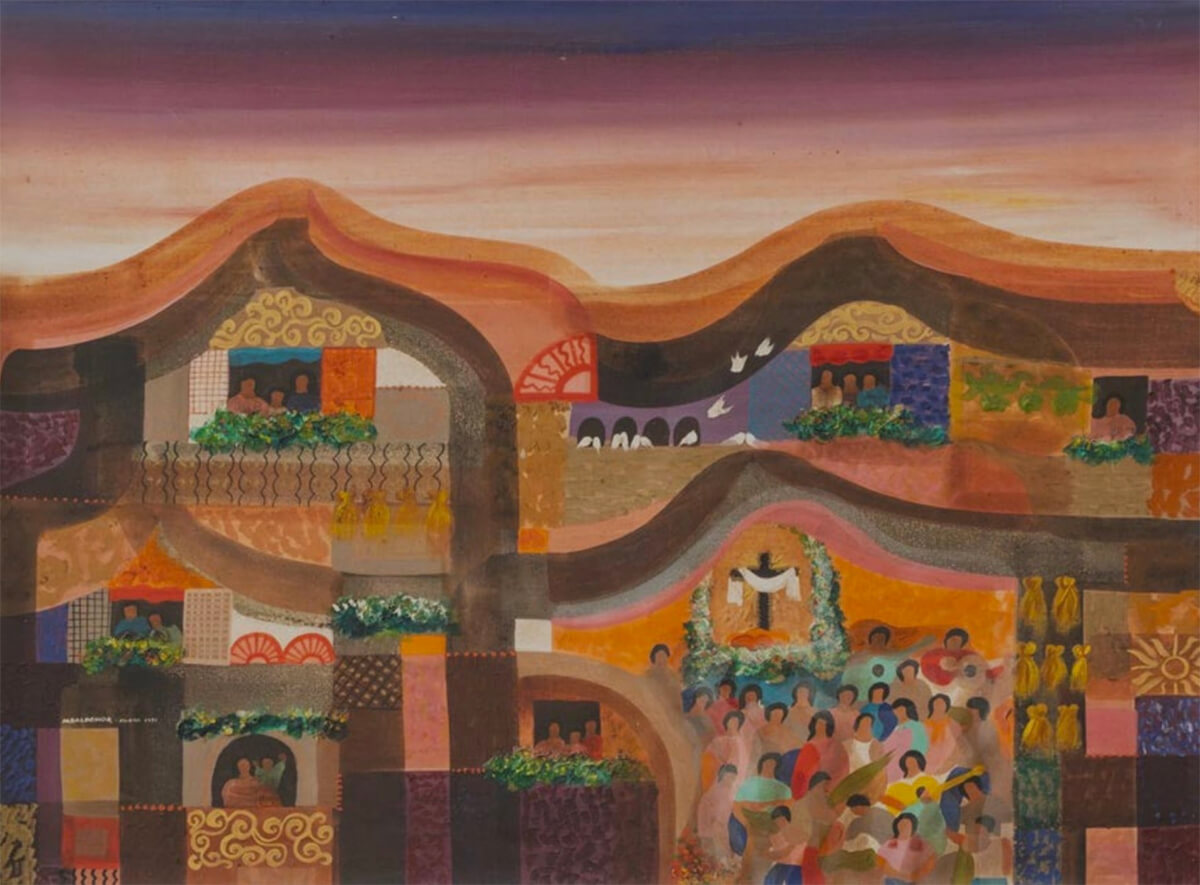
Manuel Baldemor’s “Prusisyon Series” (1981) captures rural devotion in his signature geometric folk style, weaving houses, churches, and townsfolk into a vibrant tapestry that celebrates faith, community, and the enduring rhythms of Filipino provincial life.
Tam Austria’s “Pagoda sa Ilog” (1978) channels the spirit of bayanihan through a dense choreography of workers raising beams and structures. Painted during the authoritarian years, the canvas reads as quiet allegory – resilience, unity, and nation-building rendered in earth tones – underscored by a certificate of authenticity from the artist.
Justin Nuyda’s “Year of the Gold-Breasted Dragon” (1988) soars across the canvas in luminous, butterfly-inspired hues. Painted in the Year of the Earth Dragon, it evokes strength and good fortune, blending Nuyda’s airy abstraction with enduring Sino-Filipino cultural symbolism.
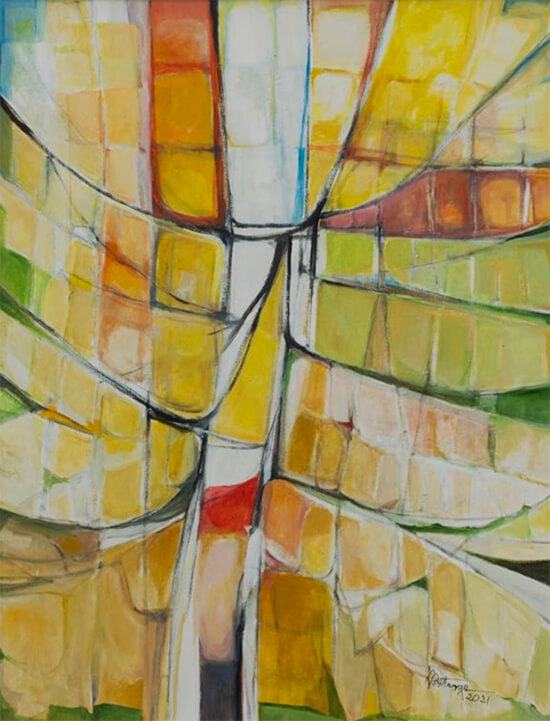
Rosario Bitanga’s “Falling Leaves” (2021) reveals the veteran abstractionist’s lyrical command of color and form, painted with undiminished vitality at 87.
National Artist Cesar Legaspi’s “Still Life” (1983) refracts everyday objects through synthetic cubism, imbuing flowers and books with introspective modernist depth.
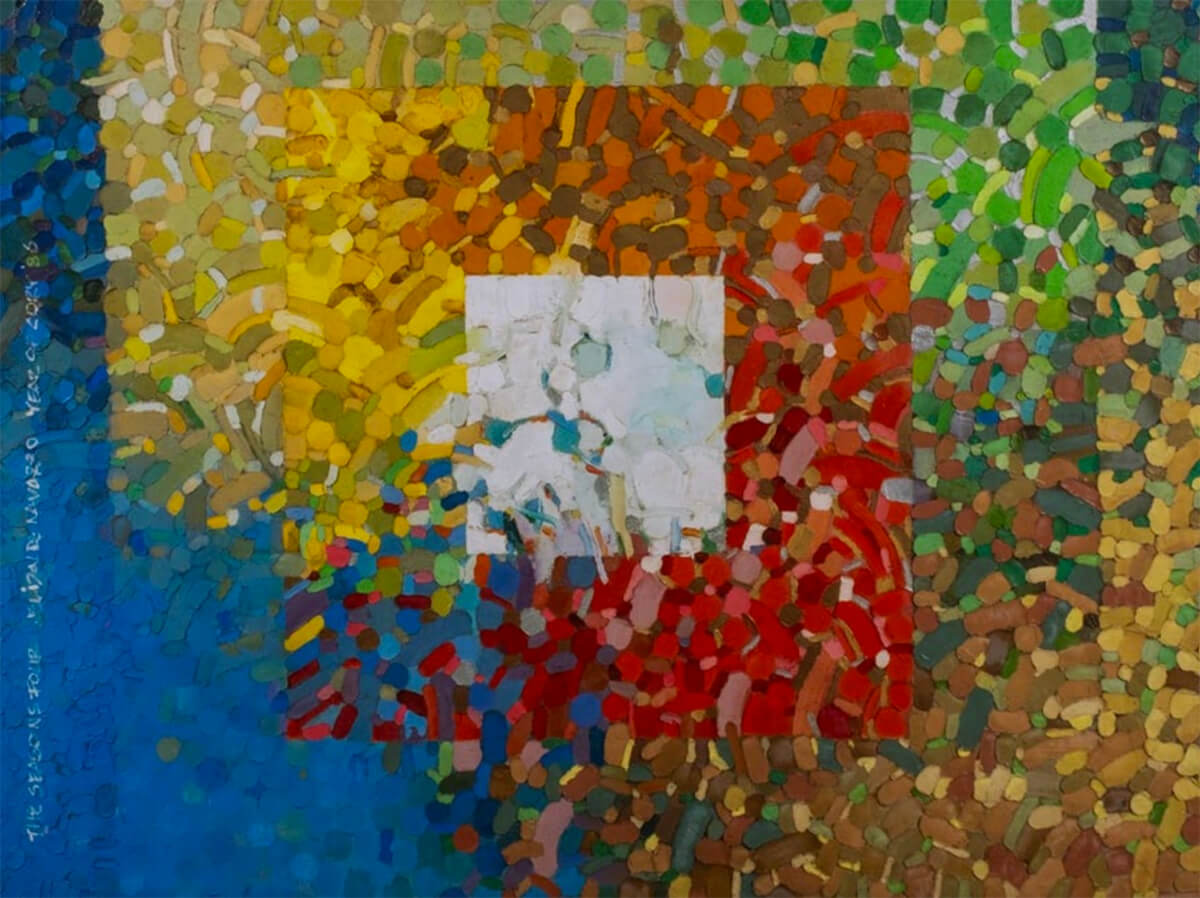
National Artist J. Elizalde Navarro’s “The Seasons Four Year of Cory ’86” and “88” fuse political renewal with his enduring “Four Seasons” motif. Through vibrant, flag-inflected colors and cyclical abstraction, Navarro transforms nature’s rhythms into an allegory of democratic rebirth, memory, and the unfolding stages of human life.
Collaborative mural
Also commanding attention at Leon Gallery’s forthcoming Asia Cultural Council auction is “Paglaom Padayon” (1996), a monumental mural by the Sanggawa collective – Elmer Borlongan, Mark Justiniani, Joy Mallari, Karen Flores, and Federico Sievert. A Cebuano phrase meaning “move forward with hope,” the work pays homage to Botong Francisco’s “Filipino Struggles Through History,” reimagining the nation’s turbulent past and aspirational future in a single sweeping canvas.
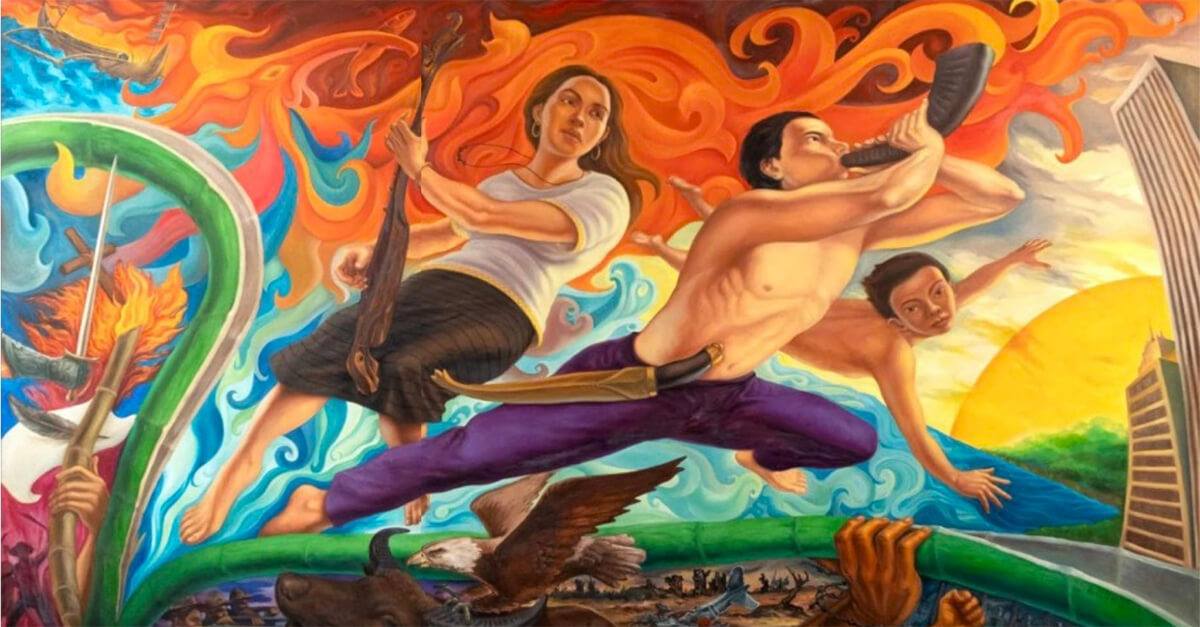
Leon Gallery director Jaime Ponce de Leon notes that this year’s highlights “underscore the remarkable collaborations between our esteemed Filipino artists.” In “Paglaom Padayon,” he adds, the artists’ individual styles merge into one voice, capturing “the Filipino people’s collective power, fueled by a shared vision and hope for the nation’s advancement.”