



Addressing Errors In Textbooks
According to the Commission on Audit, errors found in the learning materials acquired by the Department of Education rendered these of poor quality.
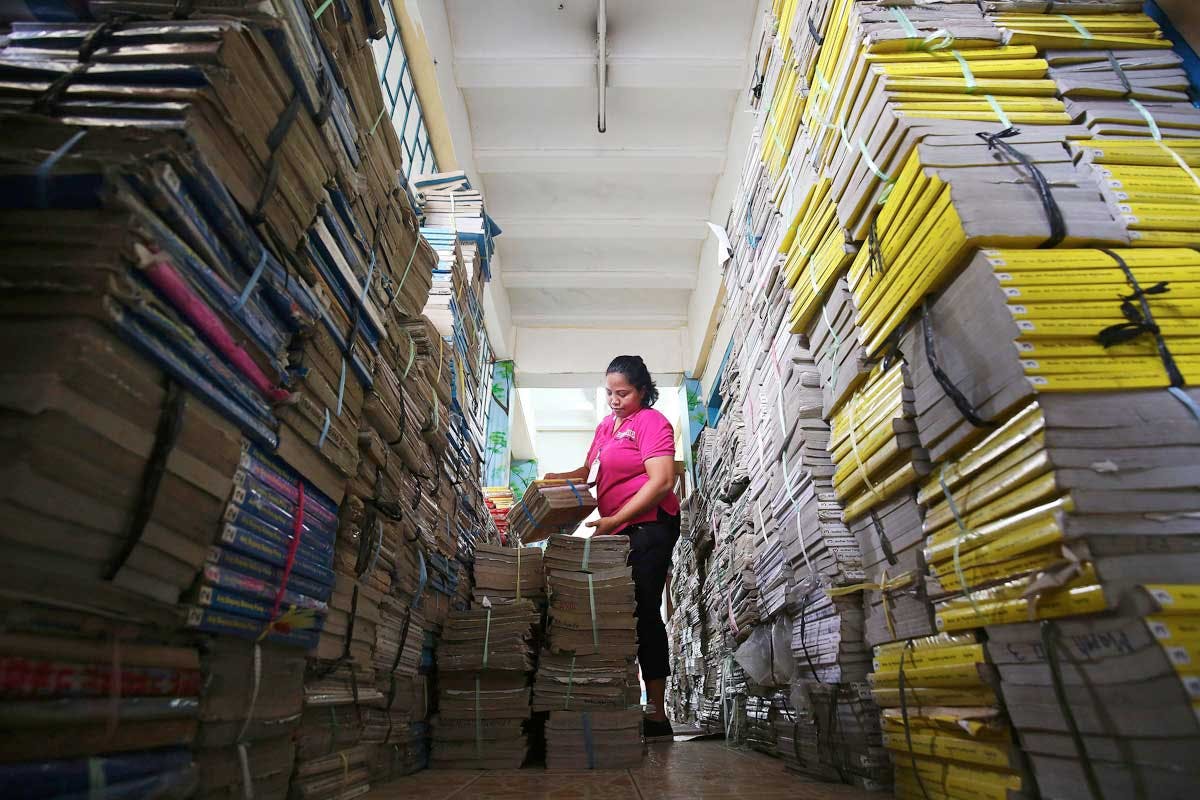
The Department of Education (DepEd) has recently drawn flak over reports that some of the textbooks it acquired for public schools were “error-filled.”
The Commission on Audit (COA), in its 2018 audit report of DepEd, flagged the agency for procuring over P254 million worth of learning materials that supposedly contained significant errors and deficiencies that “rendered these instructional materials of poor quality.”
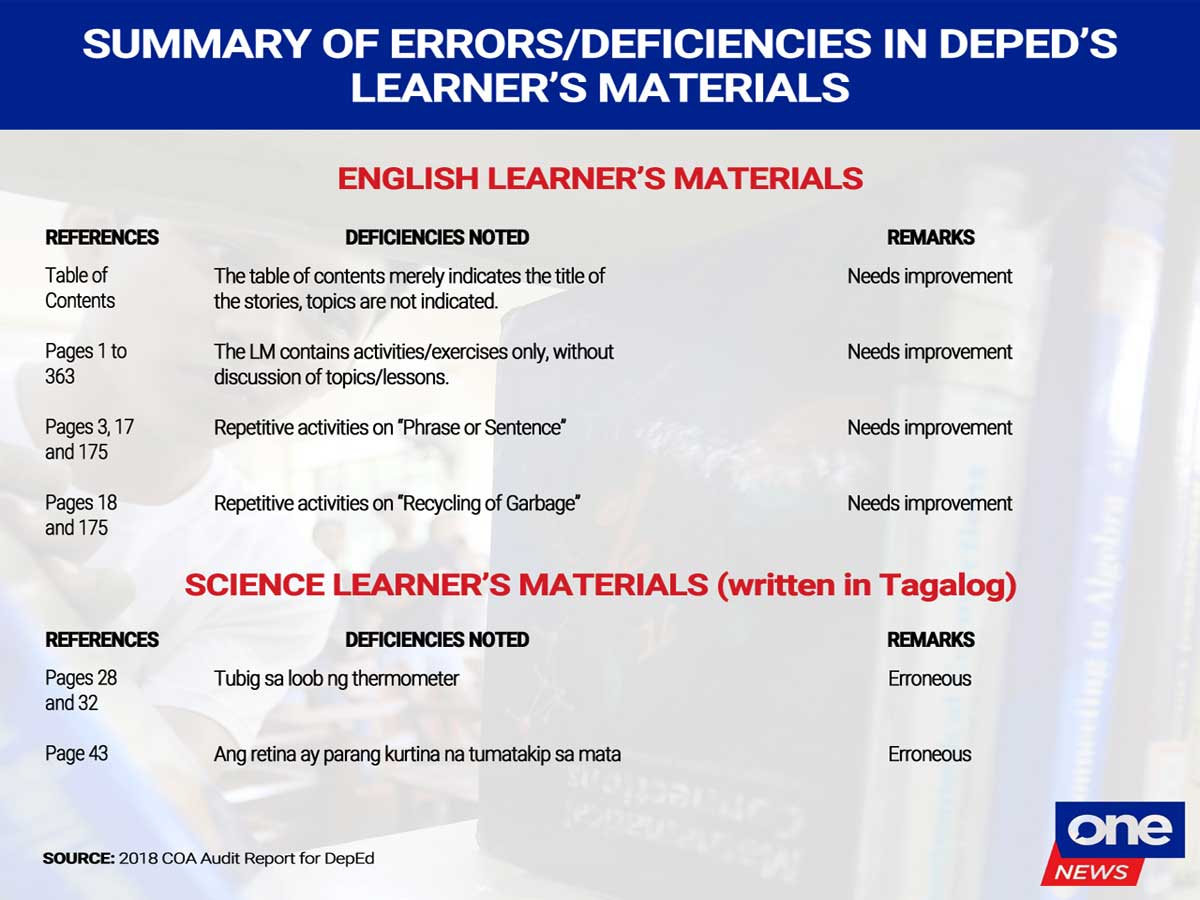
The observation was based on the results of the assessment conducted by the audit team on various learning materials, particularly the Grade 3 textbooks on English, Araling Panlipunan and Science.
The audit was based on articles written by “sick books crusader” Antonio Calipjo Go, who claimed that the Grade 3 Araling Panlipunan learning material had 1,308 errors, while the Grade 3 English learning material had 430 errors.
The Grade 3 Science learning material, meanwhile, supposedly had 317 errors, or an average of 1.7 errors per page.
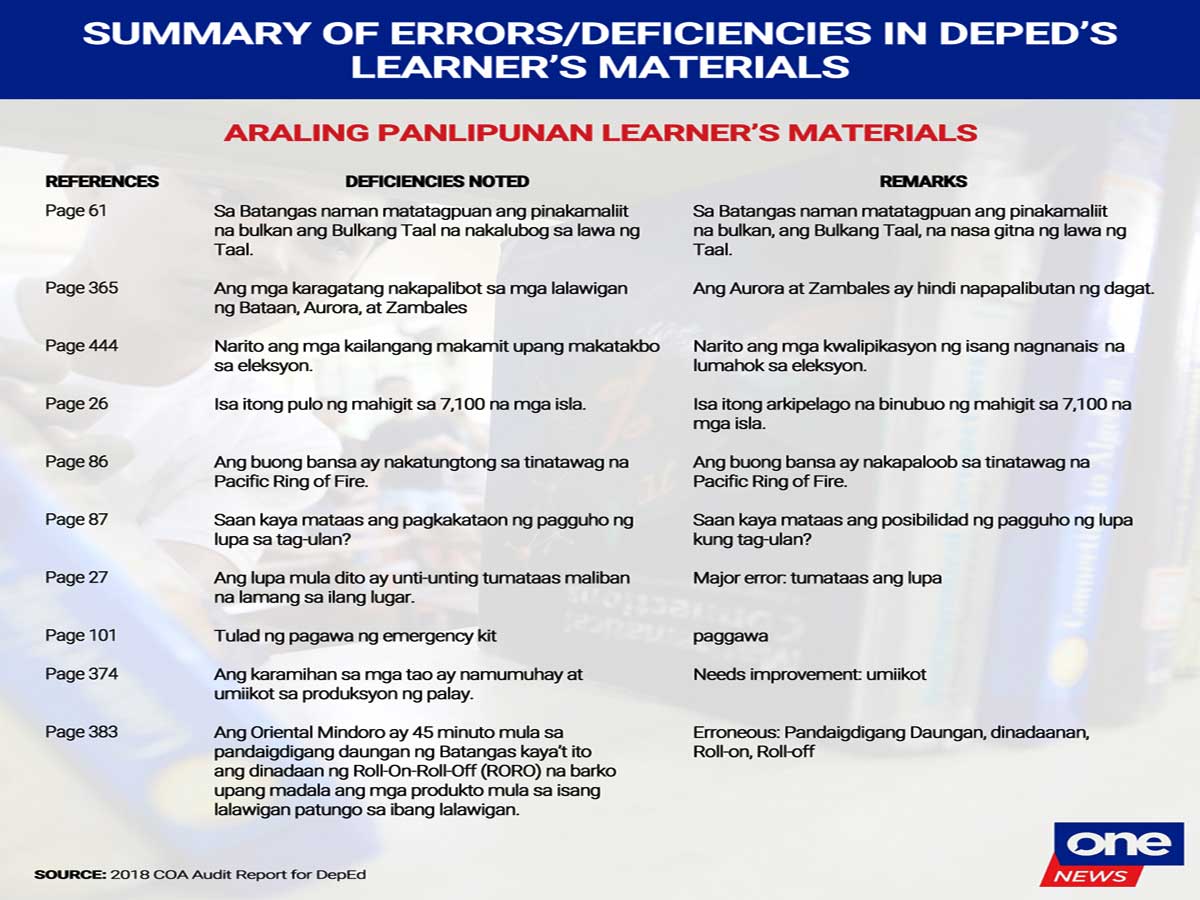
In the audit report, the COA claimed to have found significant errors after the review of the said learning materials. It released a list of 17 “notable errors/deficiencies” in the learning materials:
Moreover, COA said it conducted personal interviews with teachers in public elementary schools to evaluate the impact of these errors and deficiencies to educators and learners. Significant observations and comments include:
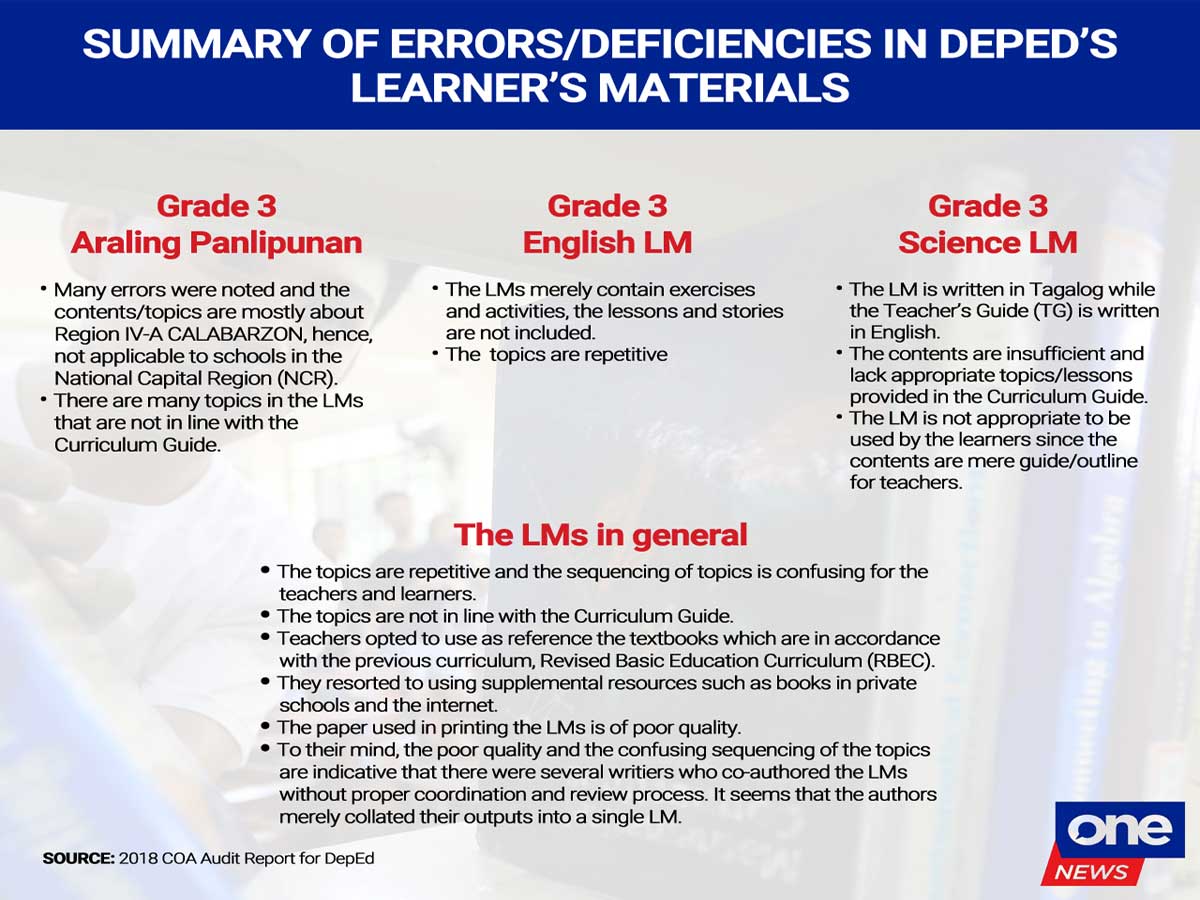
According to COA, the errors found in the learning materials rendered these of poor quality.
“The existence of error-filled learning material is an indication that the diligent and meticulous checking/review/evaluation processes of the manuscripts prepared by the writers it had selected and engaged were not undertaken by the concerned bureaus, before its mass production,” read the audit report.
“This is a reflection that the DepEd’s mandate of ensuring the adoption of quality instructional materials to promote quality basic education to the Filipino youth is not fully served,” it added.
DepEd: Not ‘error-filled’
While there may be minor errors in some textbooks and learning materials used in public schools, the DepEd maintains that the learning materials were not “error-filled.”
Education Undersecretary Nepomuceno Malaluan said most of the examples cited by the COA are not actual errors but may involve matters of usage and editorial preference.
“We have yet to be shown an error-filled textbook. The one that was shown by COA, we are disputing that it is error-filled,” he said, noting that the audit observation only had a handful of items in its list of “notable errors/deficiencies.”
“We invite everyone to look into the error observations of COA on Araling Panlipunan and you would see…that these are matters of usage and not really errors,” he added.

In a Senate hearing last week, Education Secretary Leonor Briones also disputed the findings of COA on the issue of textbooks being error-filled.
She questioned the scope of COA’s mandate, noting the injection of “editorial preferences” in the corrections that it noted.
“I will not argue about the grammatical errors. But how about style? How about usage?” she told the meeting of the Senate committee on basic education, arts and culture.
“How about the difference between a common noun and a proper noun? An observation in a Grade 3 textbook, ‘pandaigdigang daungan’ is a common noun and, therefore, it is in lowercase. The audit observation said it should be capital ‘P’ and capital ‘D’,” she added.
Moving forward
Still, the DepEd admitted that errors may indeed exist in some textbooks, although supposedly not to a point that these are “error-filled.”
“Every publication can have these, even the best publications may have certain errors,” Malaluan said in a mix of English and Filipino.
He said the agency already conducted workshops involving academics and validators to verify comments and recommendations regarding learning resources and textbooks for kindergarten to Grade 10.
“Validated findings, description of errors found and recommendations on how to correct these will comprise the ‘notes of teachers’ that the department shall issue through a memorandum to the regions,” said DepEd in a separate statement.
The agency is also seeking an expansion of its authority under Republic Act No. 8047 or Book Publishing Industry Development Act, which limited DepEd’s mandate to preparing the minimum learning competencies; and testing, evaluating, selecting and approving the manuscripts or books to be submitted by the publishers for multiple adoption.
Under the existing law, the department is prohibited from developing manuscripts for textbooks, even as it noted that private publishers are unable to meet the demand.
Briones also committed to revisit the textbook review system to identify areas for enhancement.


