



15 To 20 Students In A Class Being Studied As Schools Open on Aug. 24
The Department of Education says only a small number of students may attend classes in schools to practice physical distancing while others may study from home as part of the “new normal” in light of the coronavirus disease 2019 outbreak.

It’s official. The Department of Education (DepEd) announced on Tuesday, May 5, that classes in public elementary and high schools would begin on Aug. 24.
But aside from opening almost three months late from its original schedule on June 1, the upcoming school year will also feature a range of learning options that takes into account the “new normal” in light of the coronavirus disease 2019 (COVID-19) pandemic.
“Ang napili natin na school opening date ay Aug. 24,” Education Secretary Leonor Briones said during the “Laging Handa” public briefing.
“Pero hindi ibig sabihin na lahat physical na papasok, kasi may lockdown tayo sa iba’t ibang lugar. Pwedeng virtual, pwedeng physical sa mga lugar na ina-allow ang physical na pagbubukas ng paaralan,” she added.
DepEd has yet to release the updated school calendar, although Briones disclosed that the next school year would end on April 30, 2021.
According to Briones, national events such as the Palarong Pambansa would remain suspended due to the threat of the pandemic.
“Ang pinakamalaking konsiderasyon natin dito ay to protect the health, safety and wellbeing of the learners. ’Yun ang pinaka unang priority natin,” she said of the decision to set the opening of classes in the last week of August.
“Whether virtual, online or physical would depend on the decision of IATF on the status of a particular province,” she said, referring to the Inter-Agency Task Force for the Management of Emerging Infectious Diseases.
The IATF earlier recommended that school opening be delayed until September while experts from the University of the Philippines said it should be in December as young people interact more and may be prone to transmission of the virus.
Lean classes in schools, study from home
Over the past weeks, education officials have raised the possibility of adopting different alternative learning options for the post-pandemic recovery period.
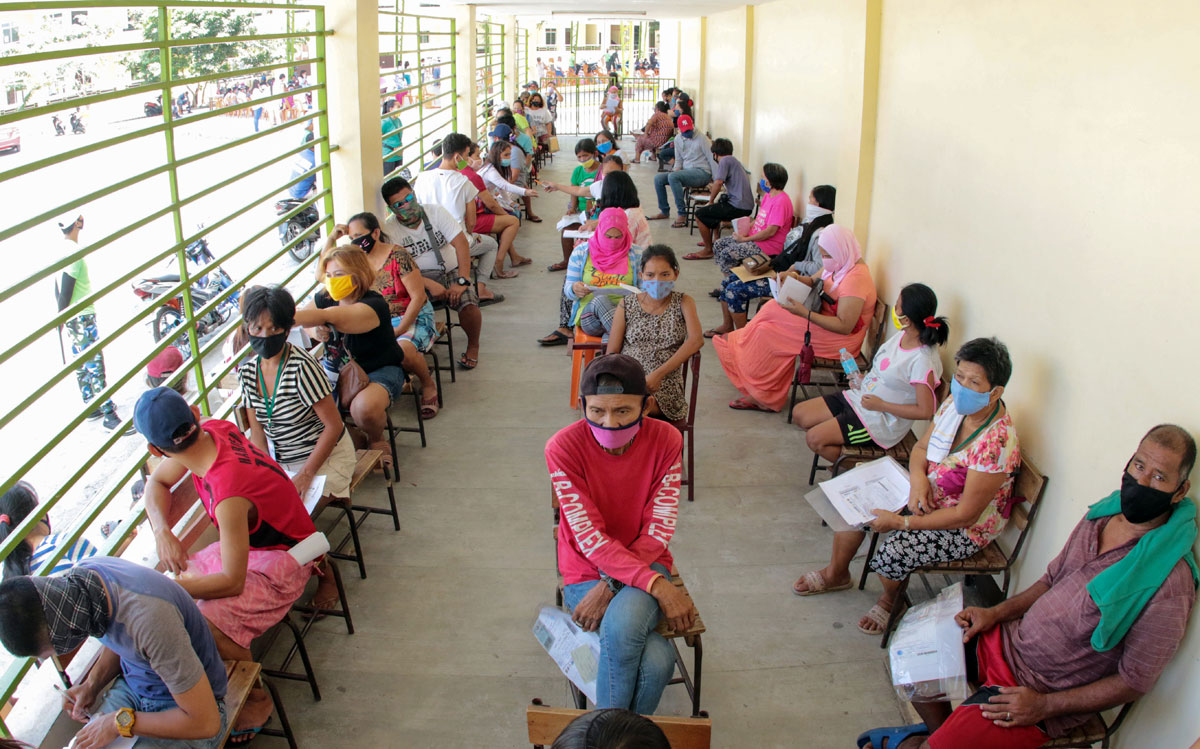
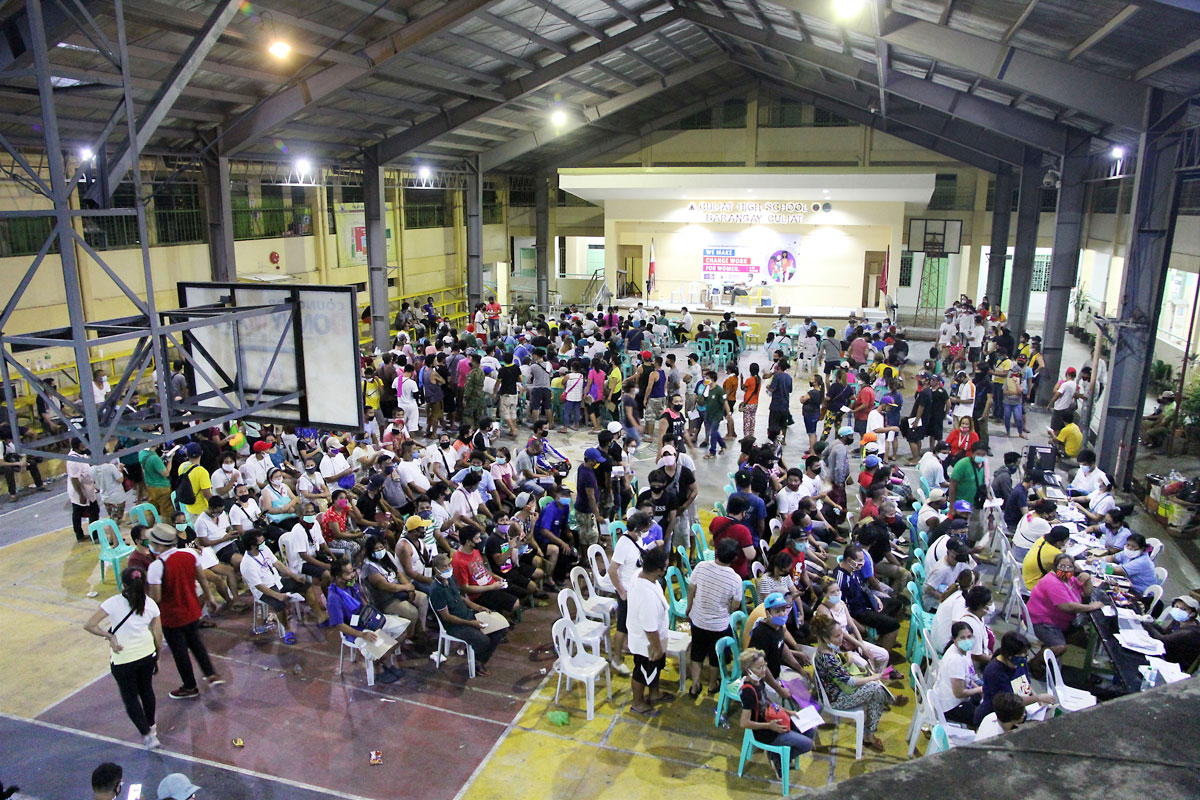
While a return to classroom-based education is possible especially in areas no longer under quarantine protocols, the need for strict social or physical distancing may result in changes to the way physical classes are conducted.
“Ini-expect natin na maliit ’yung class sizes dahil kailangan natin ma-implement ’yung strict social distancing measures,” Abram Abanil, DepEd director for information and communication technology service, said during the Department of Health press briefing on April 29.
“We expect na magkakaroon lang ng mga 15 to 20 students bawat klase pagdating nitong upcoming school opening,” he bared.
To implement a smaller class size, Abanil explained that some students might have to remain at home on some school days, although they would be given tasks through technology or paper-based activities.
Undersecretary Annalyn Sevilla said DepEd is working on a framework on how to implement a learning continuity plan that would address challenges in the education sector arising from the pandemic.
She said options include staggered classes with scheduling mixed with blended learning methods, online learning, use of modules and home schooling.
“There is no definite one-size-fits-all policy on which delivery approach will be implemented during the learning continuity phase,” Sevilla told The Philippine STAR over the weekend.
“The choice and contextualization of the learning delivery modality will actually depend on the local COVID situation and access to learning platforms in the school, division or region,” she stressed.
Distance learning
According to Sevilla, DepEd “will definitely not require face-to-face classes and will only allow distance learning” if there are areas under enhanced or general community quarantine when classes resume in August.
But officials clarified that distance learning does not necessarily mean using the internet to access educational resources.
Even as DepEd continues to increase content on its recently launched online platform DepEd Commons, Briones noted the possibility of using television and radio to deliver educational content to students.
Education Undersecretary for curriculum Diosdado San Antonio said they are also preparing printed materials for those who are unable to go online.
“Hindi naman lahat online ’yung gagamitin natin pag tayo ay nagbukas na, kasi alam naman natin na may mga mag-aaral na walang access sa technology,” he said during the “Laging Handa” press briefing.
“Inihahanda natin ’yung printed instructional packets o self-learning kits para sa mga lugar at mag-aaral na hindi magkakaroon ng access sa mga gadgets,” he added.
Ultimately, the decision on which mode of learning to adopt would be based on what is the most ideal for the school and its stakeholders, Education Undersecretary Nepomuceno Malaluan said.
Schools will conduct a survey among students on their preferred modes of learning, as well as their internet connectivity and availability of gadgets.
“What the DepEd will give is a menu of learning delivery options,” Malaluan said, citing both printed and digital materials.
“Based on those menu of options and platforms… ang ating field units ang magpapasya kung ano ang angkop para sa kanilang mag-aaral at sa konteksto ng kanilang lugar,” he said.
Teacher training
The Teachers’ Dignity Coalition said it would comply with the DepEd directive on the school opening “as long as the safety of teachers and learners will be ensured, especially when physical interaction will be necessary.”
But in an earlier statement, it raised the concern of teachers on the readiness for online tasks that are being required of them.
“The government may need to spend for the required technology to enable the distance learning,” it added.
The Alliance of Concerned Teachers (ACT) said proposals for distance learning – particularly those needing online connectivity – “hardly seem viable” due to inadequate technological infrastructure at both the school level and in the homes of teachers and students.
“Many of us, including our students, have limited access to the internet,” ACT secretary general Raymond Basilio said.
“Our students barely have their basic necessities met. No way can enough of them afford to have their own computers with Wi-Fi nor to regularly go to computer shops. Not to mention the generally poor internet connection in the country, even in urban areas, while almost non-existent in rural communities,” he pointed out.
Briones said teachers would have to render services, whether physical or virtual, starting June 1 to assist in the enrolment period.
Teachers will also undergo capacity building programs on alternative delivery modes of learning such as the use of the DepEd Commons, she added.
The DepEd Commons is an online platform for public school teachers to support distance learning modalities. It was designed as a direct solution to give access to online review materials and Open Educational Resources or OER during class suspensions and other similar circumstances.
OERs in DepEd Commons are authored by public school teachers who are subject experts, properly cited and acknowledged. Teachers can retain, reuse, revise, remix and redistribute the content by blending it with a learning management system to deliver a distance learning modality.
“Education must continue even in times of crisis, whether it may be a calamity, disaster, emergency, quarantine or even war,” Briones earlier declared.


